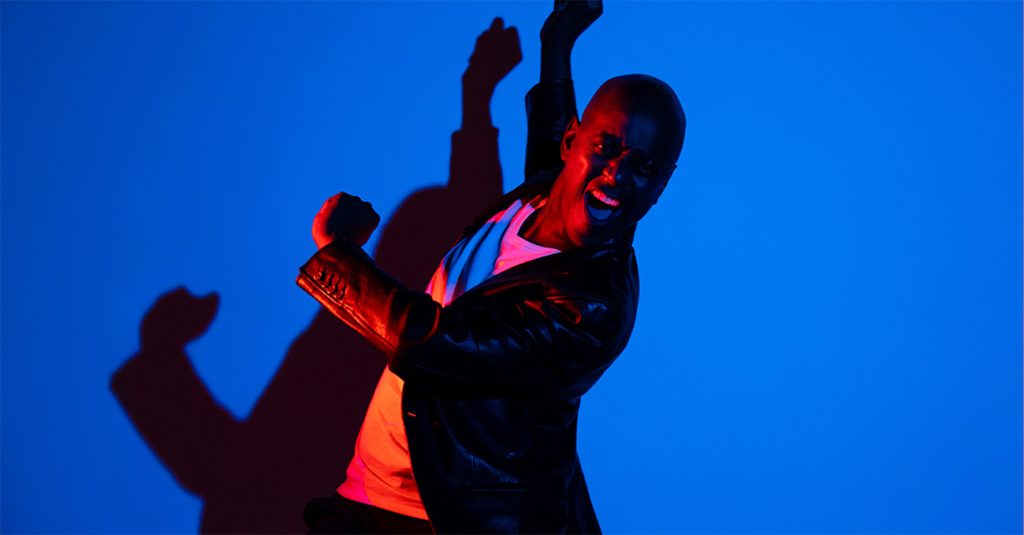
Sydney Festival: Temperament series | Andrew Bukenya: Bach in Colour
27 January, 2024, The Neilson, Pier 2/3 Walsh Bay, NSW
The Sydney Festival is presenting an interesting series of seven concerts, broadly based around the music of JS Bach. In this, the fourth of these concerts, the charismatic Andrew Bukenya and his Vocal Ensemble presented an interesting program of unaccompanied vocal music, with works by Bach and various composers who influenced or were influenced by Bach.
There was no printed or online program so it was sometimes difficult to know what was going on.
Two choirs, positioned either side of the audience for the opening of the concert, performed a dramatic antiphonal work by Heinrich Schütz. There were many thrilling moments here, but unfortunately there were signs that the work was under-rehearsed. This was manifest in quite a few precarious entries, particularly in the lower voices, and subsequent fumbles. Later in the program Bukenya complimented the choir for putting this program together on only two rehearsals (audience applauds). While this might be an impressive feat from the choir’s point of view had the performance been up to a professional standard, the said rehearsal schedule was decidedly inadequate for such complex music. The blame for this must be squarely levelled at the producer/musical director.
There were however beautiful moments, particularly amongst homophonic works. “Bring me all your dreams” by the African-American composer Christopher Harris, was like a Bach chorale but with lush modern harmonies. Two pieces from Mendelssohn’s Elijah were engaging, as were the works by Clara Schumann and Fanny Mendelssohn and the Negro spirituals from Michael Tippett’s oratorio “A child of our time”. The latter featured impressive solos by one of the tenors.
Most thrilling was the arrangement of Psalm 57 by Betty King, which got a deservedly rousing ovation from the audience.
Like the Schütz however, the other contrapuntal music by Palestrina and Bach (the motet “Singet dem Herrn”) were all somewhat in disorder, exacerbated by Bukenya not giving several important queues to the choir. It must be said however that some members of the ensemble were exceptionally well prepared and had obviously done a great deal preparatory work themselves before the group rehearsals.
The final work on the program, the organ Fugue in G minor BWV 578 sung à la Swingle Singers, was thrillingly joyful thanks particularly to many of the female voices, who proved to be the backbone of the concert. They knew their parts well, and sang expressively with clear strong voices and precise intonation. A few of the males also knew their parts well, but unfortunately did not have strength of voice to hold the sections together.
Bukenya might be well-known and by force of his personality, colourful clothing and exuberant conducting did a great job getting the audience excited, but this is no compensation for being seriously underrehearsed. I did enjoy much of this concert; it was a well chosen program and there were thrilling moments, but one cannot but wonder how much better it would have been had someone like Roland Peelman, Erin Helyard or Paul Dyer conducted it. Tickets for this shortish concert were not cheap, and in the final analysis, razzmatazz is no substitute for a professional standard of musical performance.