Sydney Chamber Choir | Connections
28 September 2025, Verbrugghen Hall, Sydney, NSW
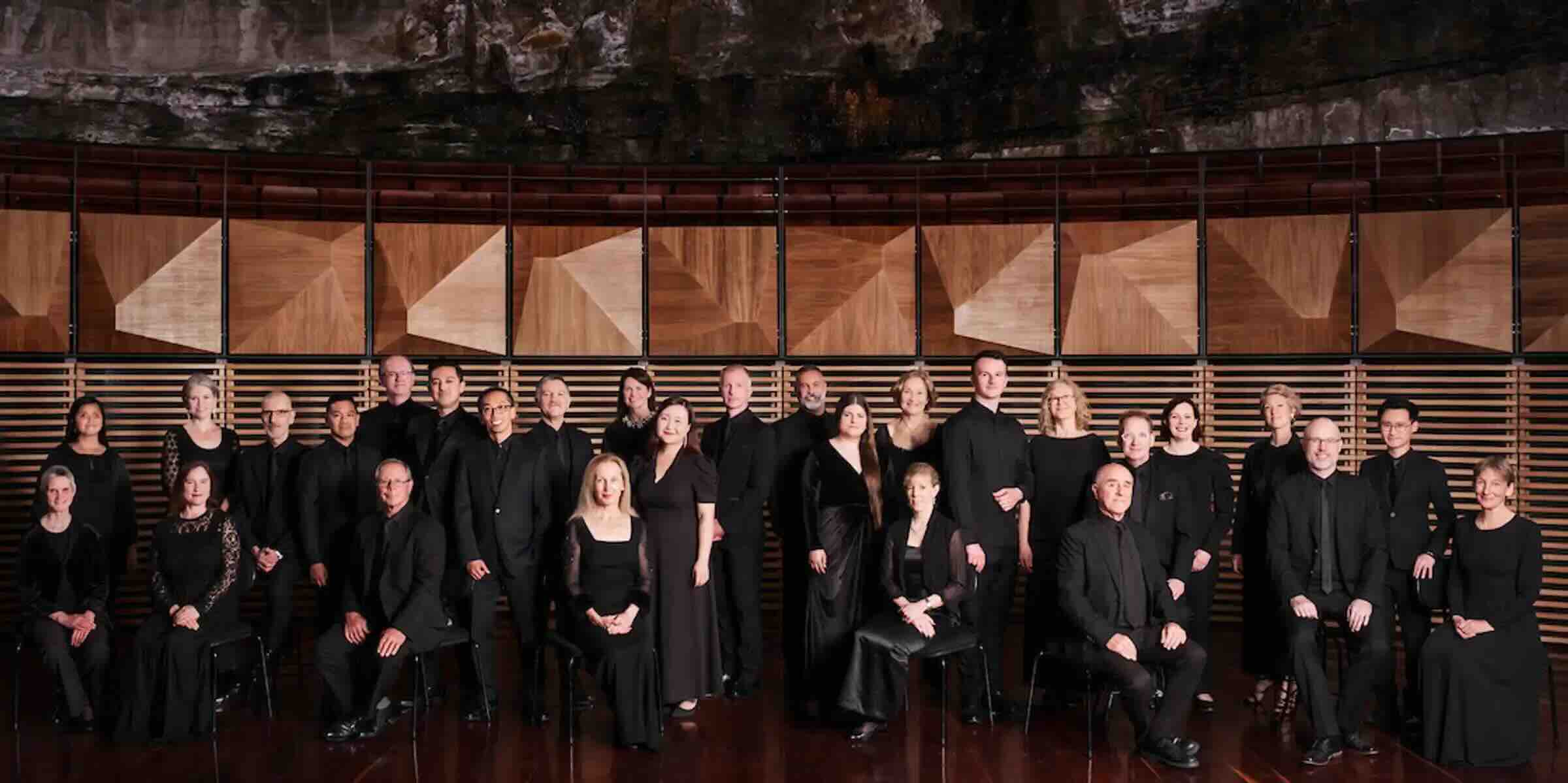
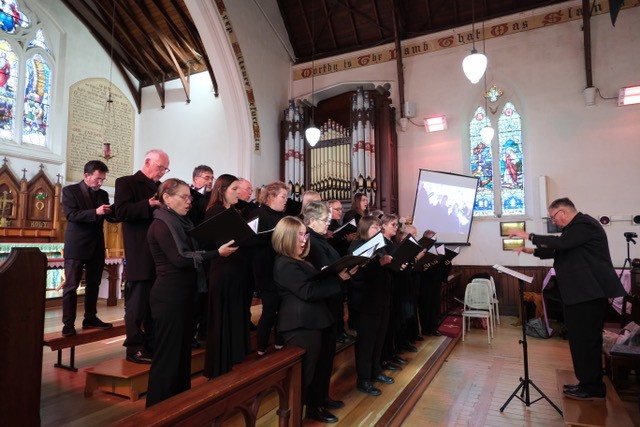
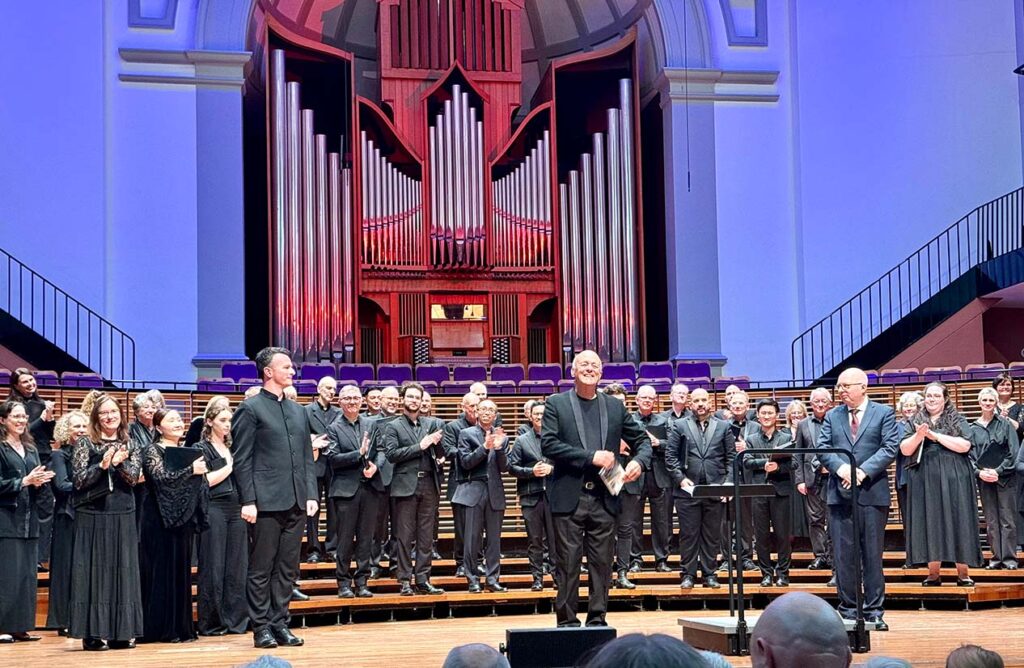
The Sydney Chamber Choir marks its 50th year in 2025 and what a year of celebrations it has been so far! This concert was as much a reunion as it was a performance. President Chris Matthies opened proceedings by welcoming 22 former choristers who were joining the ‘regular’ ensemble, some were from as far back as 1975 when the choir first formed at Sydney University. It set the tone for the afternoon – a gathering across generations, voices past and present and a heartfelt sense of belonging which I felt genuinely extends to us, the choir’s audiences.
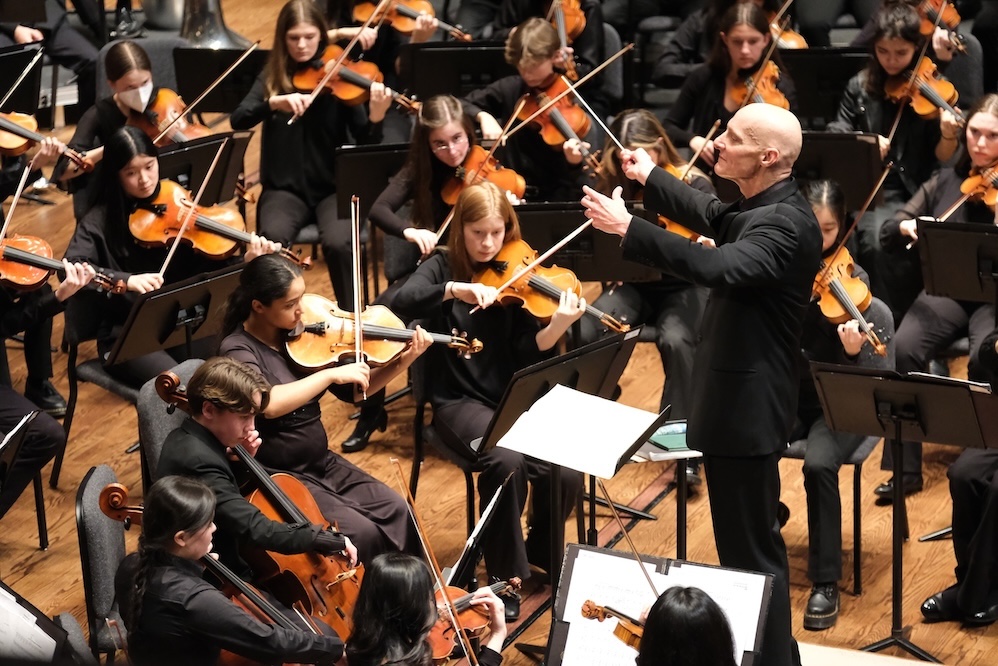
Three conductors took the stage in turn — Paul Stanhope, Nicholas Routley and Sam Allchurch — each shaping a distinct set. They carried forward a lineage that includes the late and much loved Richard Gill, reminding us that in fifty years only six musicians have guided this choir. The journey they offered was defined not by chronology but by connections, linking teachers and students, composers and performers, past voices and present ones.
Stanhope
Paul Stanhope began with Nigel Butterley’s Surrexit Dominus, a strong, bright opening with diction so clean the printed text in the program was almost redundant. This was chamber choir singing at its best: transparent, energetic, driven. Aija Draguns’ Dawn of Creation followed, its drones and earthy colours evoking the red desert landscape, just as the program promised. It also stood as a reminder of the opportunities Australian composers now have, thanks in no small part to Stanhope’s own teaching at the Conservatorium, and to choirs like this one in their commitment to commissioning new works.
Sīsāks’ Benedictio was a highlight: a rapid bass chant under the women’s voices spiralling overhead, it included dynamic and tempo shifts that had the singers visibly rocking along. Love it!
Stanhope’s set closed with Ēriks Ešenvalds’ The Long Road. Here the full choir joined, with bird calls, whistling and delicate chimes shimmering through the texture. A quartet of soloists floated above glowing harmonies and the long silence at the end was as eloquent as any note. Luminous.
Routley
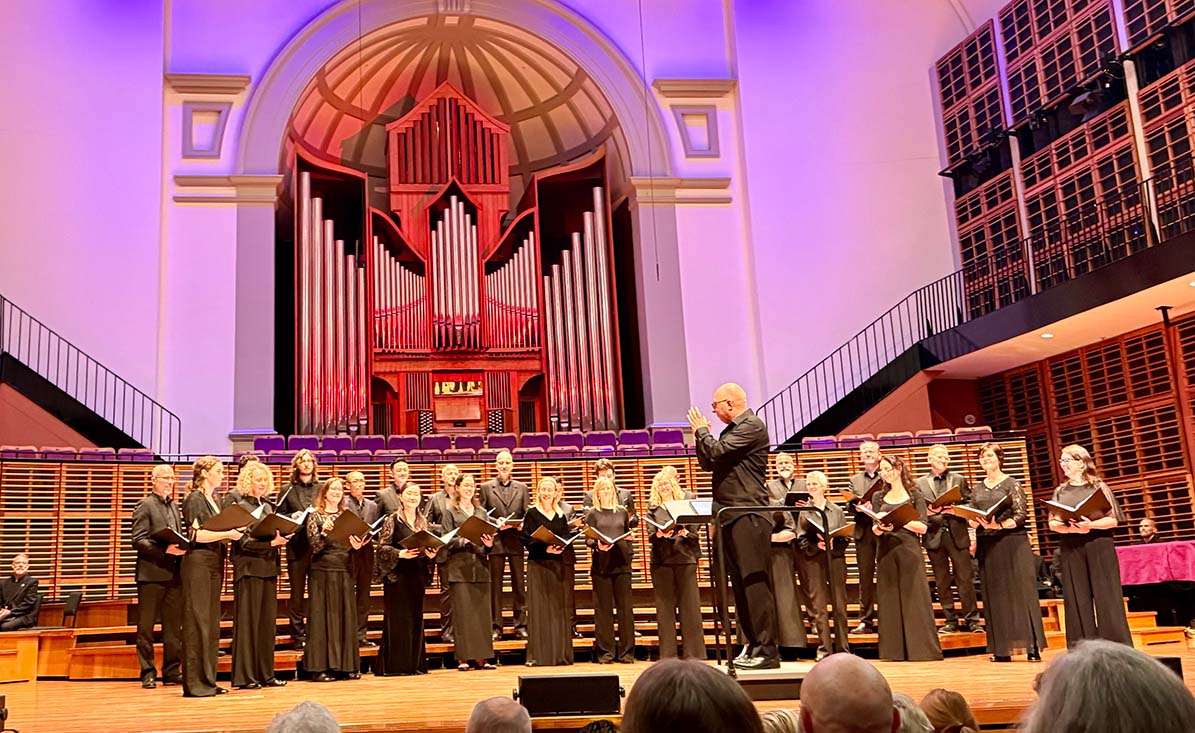
Founder Nicholas Routley then took the helm, conducting both Renaissance and modern works. Clare Maclean’s Et Misericordia shimmered with plaintive solos from within the choir and the glorious sonority of 50 voices, and how cool that the composer (a past SCC member herself) was singing in the alto section, another beautiful connection. When the text turned from questioning God to “I know that my redeemer liveth,” the choir’s sound shifted from the complex, sometimes dissonant, canonic lines to a sort of ecstatic harmonic revelation. Very moving.
Brumel’s Sicut lilium acted as a short palate-cleanser, all pure lines and elegance, before Routley’s own larger-scale Sicut lilium plunged us into a dense, insect-buzzing sonic world. Voices whistled, chanted, breathed and hummed in a work that was both natural and mysterious. Jess Ciampa on marimba clanged like church bells, pulsed like a heartbeat, sometimes echoing the melody, sometimes standing apart, always perfect.
Josquin’s Agnus Dei (from Missa L’homme armé super voces musicales) showed the structural games of Renaissance polyphony: canonic soprano and alto lines offset by a beat, the bass line sung backwards (I mean how do the singers even do this stuff!?). A clever intellectual puzzle producing radiant music.
Allchurch
Current Artistic Director Sam Allchurch brought the focus back to the present. Meta Cohen’s meteora, inspired by her sister Leona’s poem, is a piece I’ve admired before. Its conceit, two lovers separated but gazing at the same stars, never loses its poignancy. Here, sung by the smaller chamber choir, the ecstatic high notes at the climax were brilliantly stratospheric.
Harry Sdraulig’s Evening Star, a setting of text by Edgar Allan Poe, was warmly schmaltzy in all the best ways, tender and lyrical, a reminder of how great choral writing often embraces poetic storytelling.
The program closed with Joe Twist’s Sunrise on the Coast with Sebastian Maury stepping forward for a rich solo and the full choir humming like rolling mist beneath, the music grows absolutely luminous at the text “let there be light.” It was a radiant ending to the concert and a fitting way to celebrate both continuity and new creation.
Reflections on 50 years
What struck me most was how each conductor shaped their set differently: Stanhope with clean modernism and Baltic shimmer, Routley with imaginative soundscapes and early polyphony, Allchurch with an embrace of contemporary Australian voices. Together they painted not just 50 years of the choir, but also 50 years of evolution in Australian choral music itself, an evolution spearheaded by groups like Sydney Chamber Choir (bravo SCC).
I found myself envying the conductors. To stand before this sound, projected directly at you, alive, complex, radiant – what a privilege that must be. For us in the audience, too, it was a privilege to celebrate five decades of music-making with so many familiar faces, both off and on the stage.
And Sydney Chamber Choir has many qualities worthy of celebration: above all their excellence, their sense of community and belonging, and their fearless embrace of Australian music. With four composers present to hear their works performed, today that legacy felt alive and thriving. Here’s to the next 50!