BackStage Music | Children of the Resistors
February 1, 2026, Oxford Arts Factory, Darlinghurst, NSW
Children of the Resistors was less a concert than a sort of temporary ecosystem. Over five hours, across two spaces, BackStage Music offered a platform where experimental musicians could showcase new work, test ideas and share them with a curious, engaged audience. You could arrive for the long haul, dip in, disappear for food, or quietly recalibrate your ears before returning. That flexibility meant the night could be experienced in different ways, without pressure to see or hear everything.
The first thing I encountered was CAxRA, solo, framed by stark black-and-white visuals. It was immediately immersive. Standing close, the bass didn’t so much hit as embrace, the sound wrapping around the body while light carved space on the screen behind her. Synthetic textures, processed voice and evolving structures unfolded patiently, and the crowd responded instinctively, drawn forward into the sound to stand inside it.
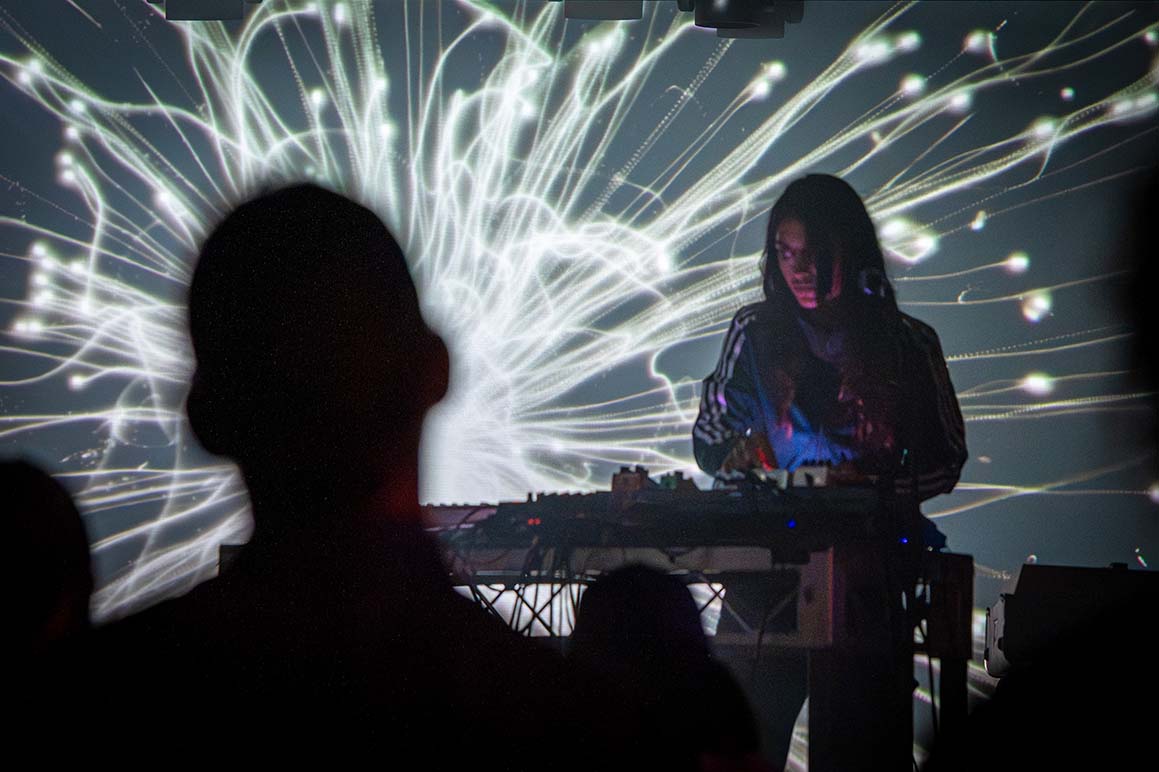
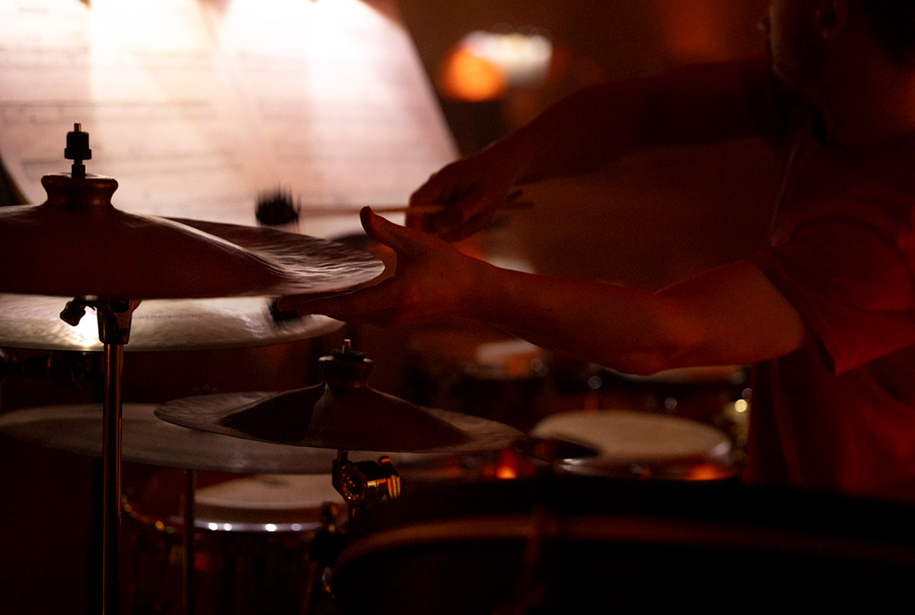
Next came BATTERIE, the solo project of Jared Underwood: drum kit, synths, electronics, semi-prepared and unapologetically risky. Video-game logic was the dominant vibe – jagged, handheld AV cutting between angles and perspectives, matching the muscular, improvisatory energy of the sound. At times it felt like being inside a game, grabbing stars and mushrooms mid-level. Crucially, the AV and lighting for most of the works presented tonight weren’t decoration but collaborators in the art.
One of the most confronting moments came from Mia Kanda-Franklin’s LIGHT//SOUND. Two figures in black capes moved slowly through a coded landscape of light — sensors, photovoltaic cells perhaps? — producing sounds that felt part Geiger counter, part ‘pew-pew’ futurism. The performers searching the space with beams of light, the audience instinctively retreating, at times it was genuinely unsettling.
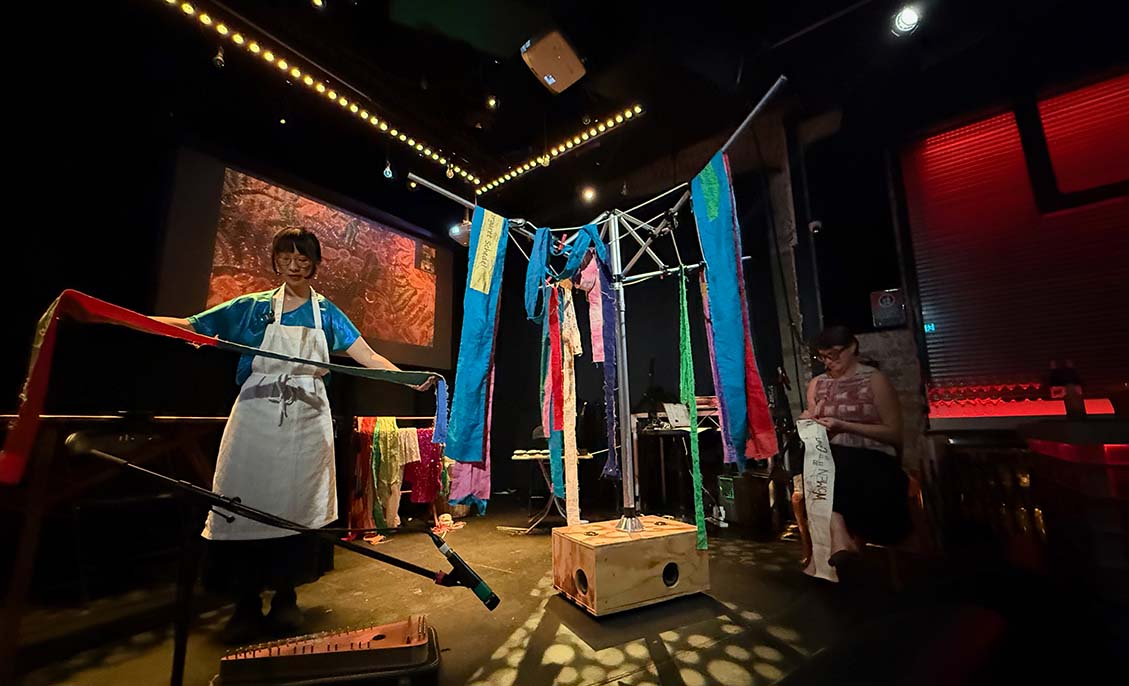
A significant anchor of the night was Women’s Labour, brainchild of Jocelyn Ho, a multi-year project exploring gendered work in the home through interactive installation and performance. Here, the central instrument was a rheostat concealed inside a Hills hoist that emitted sounds as it turned. Irons, embroidery, grandmotherly chairs, what looked like baby monitors (or perhaps receivers, transistors), all became sound-making tools. Women in aprons stitched, ironed, looped and repeated.
The first movement, Body of Resistance, felt the most overtly composed, with embroidered words from inventor Mary Grenwald’s work hanging from the rotating hoist. The closing line, “women’s work is called craft while men’s is called art”, landed firmly. In Networking Houseworking, Zoom calls, sensors embedded in embroidery hoops and bursts of ear-blasting electronics blurred labour, surveillance and connectivity. I wasn’t always sure what it was trying to say, but perhaps that was the point. The final movement, Killjoy Practice, invited audience interaction: ironing, tuning, listening, looping. Bella Rahme’s bowed harp sounded beautifully fragile against the electronics of the iron, colour shifts producing changes in pitch. Everything gets ironed – hair, body, clothes – and the cycle never ends.
There was also humour. Niamh McCool’s Electric Blanket Dreams was absurd, intimate and oddly comforting. Watching someone lie beneath an electric blanket while temperature and movement altered the soundscape felt a bit ridiculous but after a while, I stopped trying to decode it and simply felt ‘warm’. Cosy and baffling at once.
As the night deepened, so did the volume. Selkie and the Sinewaves brought post-punk theatricality: synths, heavy beats, satire and shadow play. The singer, submerged behind a lit bathtub screen, sang in silhouette, creating compelling visuals. It was clever, it was loud. One line offered at the end summed up the evening perfectly: it doesn’t really need to mean anything – it’s what you make of it.
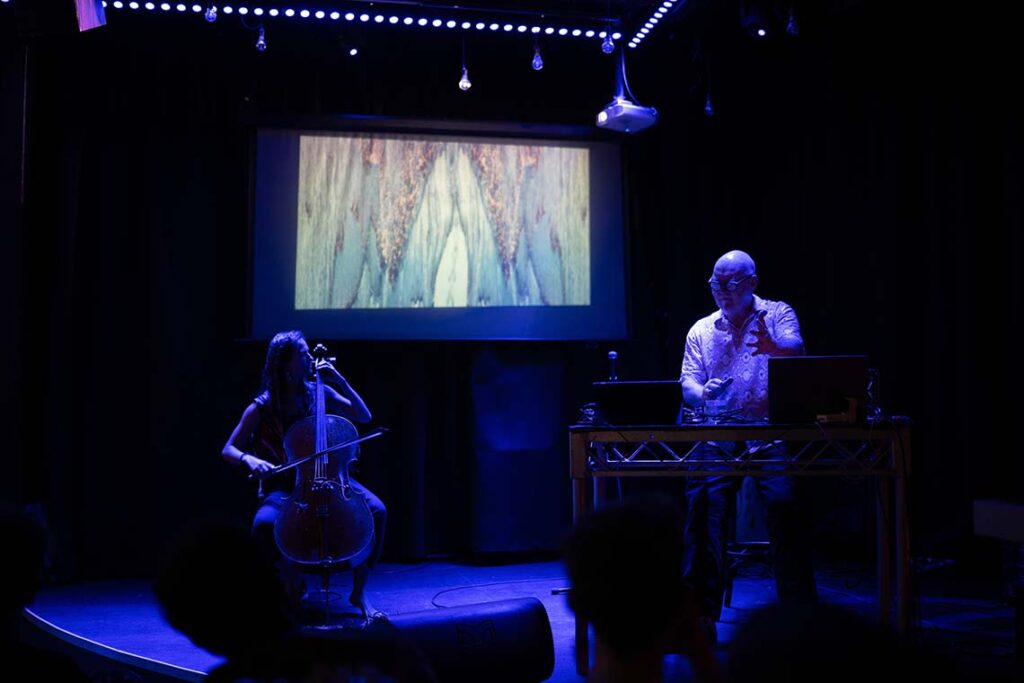
My personal highlight was the collaboration between Freya Schack-Arnott and visual artist Tim Gruchy. Barefoot and intensely focused, Freya drew every imaginable sound from her improvised cello, bowing near the bridge, creating harmonics, loops – while Gruchy shaped responsive visuals with his hands, theremin-like. Sound and image evolving together in real time.
At times it was so loud it hurt; at others, introspective and beautiful. Not melodic, not always “nice”, but profoundly musical. You could see both artists listening hard, shaping the improvisation with their ears and their bodies. Mesmerising.
I didn’t get to sample everything, I’ll just have to come back next time! Arketek, the late-night electronic duo, looked formidable from a distance, grainy hardware-driven soundscapes paired with heavy AV, but it was time for me to move on.
What stood out most here was opportunity. Experimental musicians rarely get this much space, time and technical support. Over this mini-festival, artists watched each other work, collaborated, shared risk, absurdity, seriousness and fun. None of it would have functioned without the tireless lighting, sound and AV teams, whose work was always beautiful.
Congratulations to Damien Barbeler and Lamorna Nightingale for making it happen. Children of the Resistors wasn’t traditional classical music but it just might be where some of its future foundations are being laid.