Musicians of the SSO: Sounds of Australia
2 May 2025, Utzon Room, Sydney Opera House, NSW
PROGRAM:
Brenda Gifford: Walimbaya (Return)
Aaron Wyatt: Cirrus
Hollis Taylor and Jon Rose: Palm & Ragonesi (World Premiere)
Christopher Sainsbury: From the Deep
Brenda Gifford: Mungala (Clouds)
Nardi Simpson: Burruguu (Time of Creation)
ARTISTS:
Musicians of the Sydney Symphony Orchestra:
Benjamin Ward, double bass
Jaan Pallandi, double bass
Alexander McCracken, clarinet
Sophie Cole, violin
Joshua Hill, percussion
Dana Alison, flute
It is not often that you go to a chamber concert of all contemporary pieces and each one is bristling with life and totally engaging. This was the case with the “Sounds of Australia” concert given by members of the SSO in the Utzon room of the Sydney Opera House.
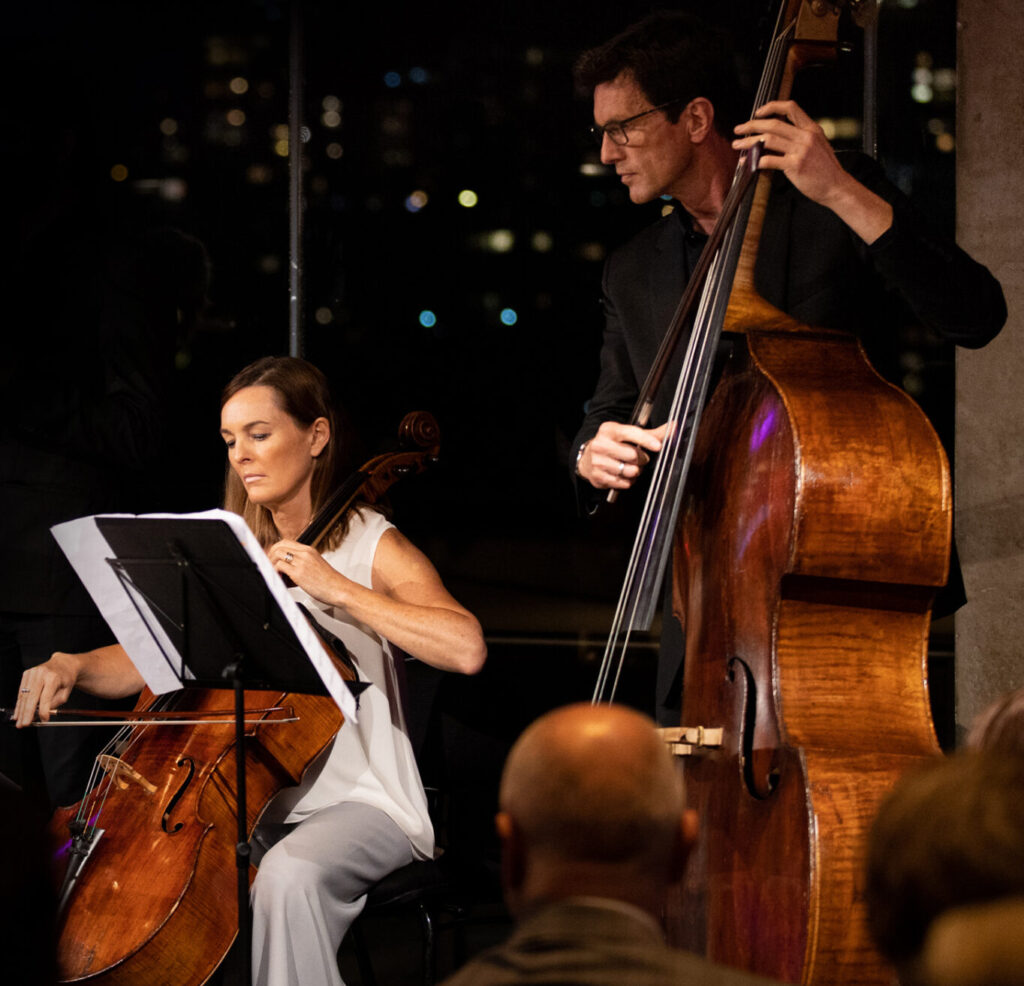
Brenda Gifford’s Walimbaya (Return) for solo double bass begins with a strong drone and double stopping harmonics overlaid. It is astounding how much Ward was able to make his instrument sound like a didjeridoo. Thus it begins as ceremonial, but breaks suddenly into melody which starts the traditional journey on foot through the remarkable landscape from the top of Kosciuszko to the sea. Wide melodic leaps hint at a country full of surprises, while arpeggios feel like a bubbling creek gradually turning into a strong river and ultimately broadening out to an estuary and, left with fading harmonics on the bass, a tranquil sea. Gifford’s work is engagingly evocative and Ward’s rendition of it assured and convincing.
Aaron Wyatt‘s work Cirrus for bass clarinet, vibraphone, violin and double bass was inspired by a bright blue sky on a cold day during the Melbourne Covid lockdown. The initial atmosphere is one of tranquility and just allowing the sky to be what it is. Other sounds creep in, perhaps wind, and then ostinatos on violin and clarinet representing a train. There is a feeling of uncertainty but the urban and natural world seem to interface without contradiction. The etherial stillness in a strange way reminded me of Vaughan Williams’ The Lark Ascending.
Christopher Sainsbury’s From the Deep is the only work on the program not specifically associated with the Australian landscape, but its spirit is there. He teaches composition at the ANU School of Music in Canberra and in 2016 established “Ngurra-Burria: First People Composers” and is a mentor of young indigenous composers. The work is an étude or study for solo double bass, harking back to a more innocent time. This engaging work treats the bass as a lyrical instrument, reminiscent of the Bach partitas for solo violin, with its melodies containing large leaps and multiple voices implied in the single melodic line.
This was the world premiere of Hollis Taylor and Jon Rose’s work called Palm & Ragonesi. A co-commission between SSO and Ensemble Offspring, the piece is named after the location in Alice Springs where the Mparntwe (Pied Butcherbird)’s delightful and sophisticated melody was recorded. Taylor writes that “humans are new on the block vis-à-vis the invention and perception of melody”. The recording of this beautiful and primordial melody formed the foreground of the work and the live clarinet and double bass interacted with it during the bird’s “rests.” Melodic elements such as inversion, echo, augmentation, transposition and counterpoint, are borrowed from the bird’s own melody. Some of the interjections even had a jazzy feel. A delightful work that could not help but put a smile on your face.
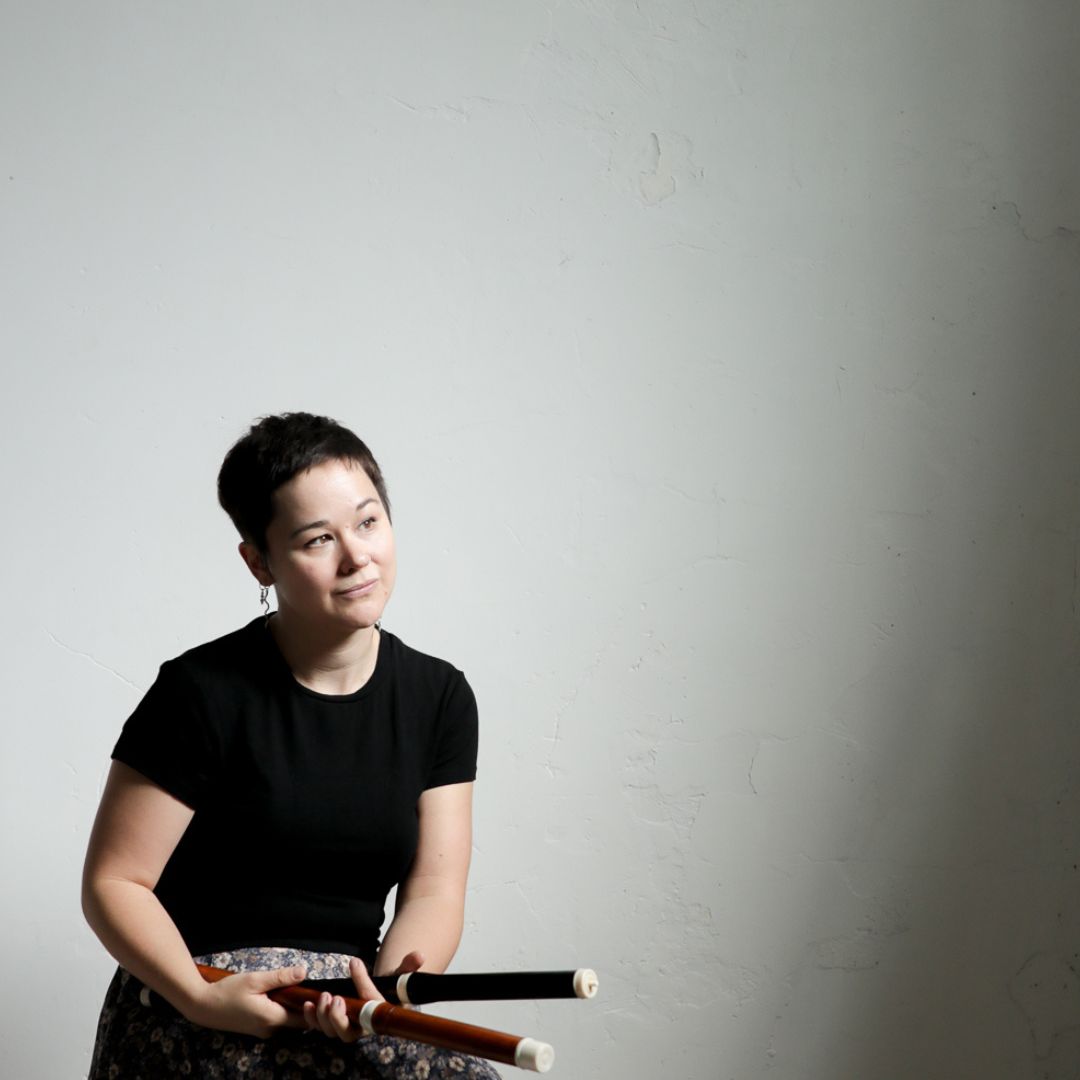
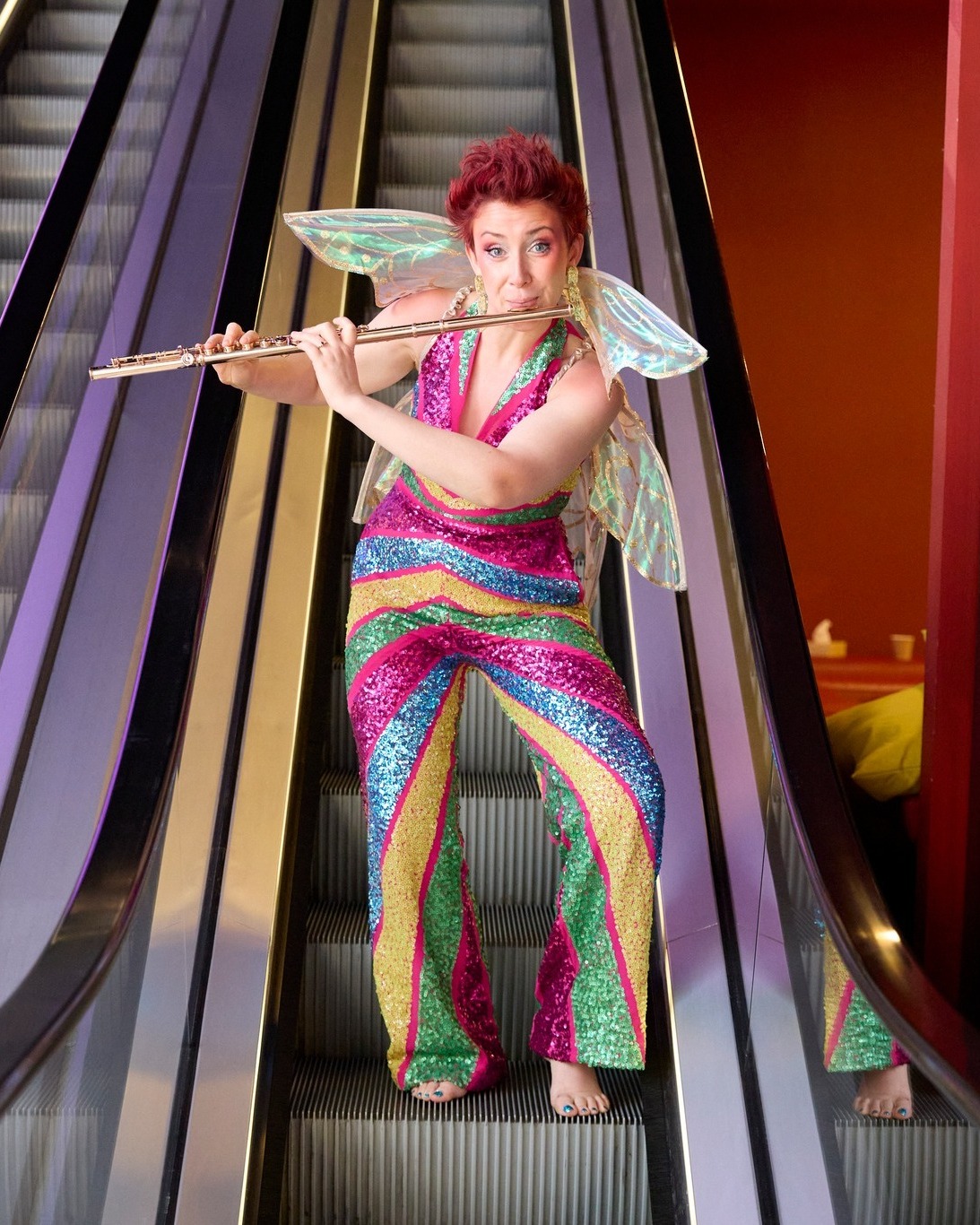
The inspiration for Brenda Gifford’s Mungala is watching storm clouds gather over the sea followed by gentle rain. The work is scored for alto flute and percussion (clap sticks, a rattle and finger cymbals). Many techniques were used to great effect to evoke the atmosphere; singing into the flute, flutter tonguing, breathy whispers and tapping keys without breath applied. Dana Alison gave a performance with focus and conviction of this evocative work.
Nardi Simpson‘s piece Burruguu (Time of Creation) was performed by the full ensemble and also included vocalisations. Sound emerges out of the void and a rather indistinct texture of instrument playing low in their range gradually builds until the clear flute timbre cuts through to give focused direction. Short sounds punctuate the silences as gradually more organisation emerges from the chaos. Descending melodies reminiscent of indigenous vocal music begin to emerge, with the characteristic descending from the fifth to the home note. The frenetic motion towards the end eases back to just a single double bass playing harmonics from the harmonic series and diminishes ultimately into silence. This work conveys the idea that creation is not a once-off event, but is constantly present; always was and always will be.
Every piece on the program showed a deep connection with Australia’s natural landscape with which the audience could immediately identify. This concert is particularly heartening in several respects. Firstly the health of indigenous composition in Australia represented by these special works (it should be noted that the majority of compositions in this concert were commissioned by or written for Ensemble Offspring) . Secondly the tenacity of the SSO in general, and Benjamin Ward specifically, in committing to bring this special program together. Thirdly the consummate skill of the performers. And lastly the obvious sophistication of the audience, so open to and engaged with these new works.
Australian music is obviously in good hands and I hope to see many more concerts of this type.