Pinchgut Opera | The First Murder
May 23, 2026, Roslyn Packer Theatre, Walsh Bay, NSW
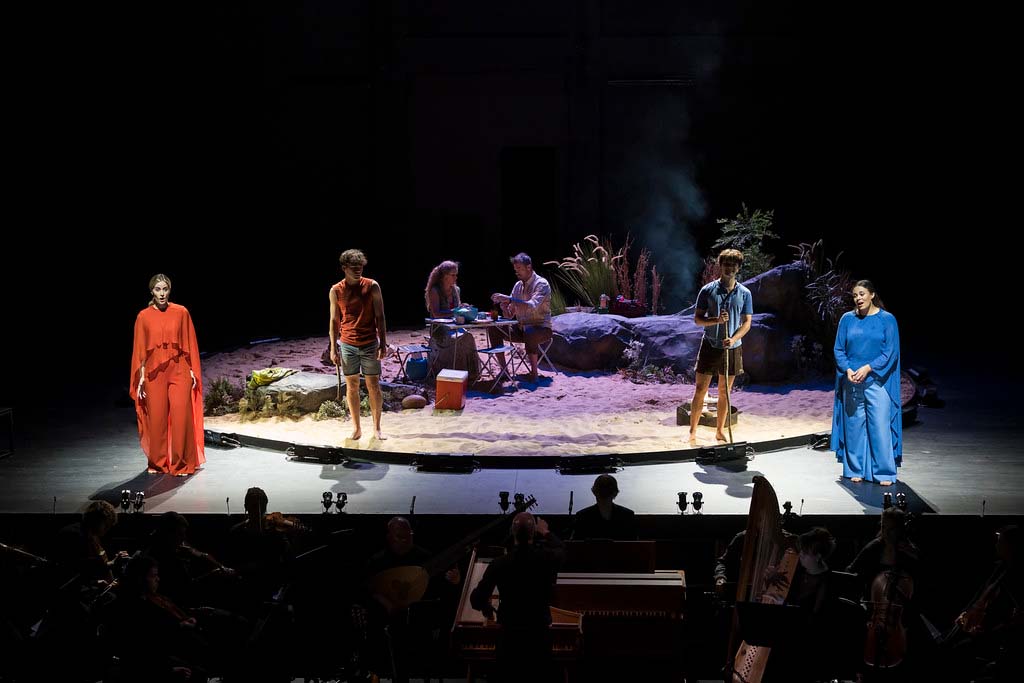
Pinchgut’s invitation was simple and rather bold: “To understand the world we live in, let’s return to where it began.” In The First Murder, that beginning was not a exactly the Garden of Eden, but a scrubby Aussie beach campsite: sand, rocks, flannel flowers, an esky and a family trudging in as if arriving for the kind of remote coastal holiday many of us will recognise immediately.
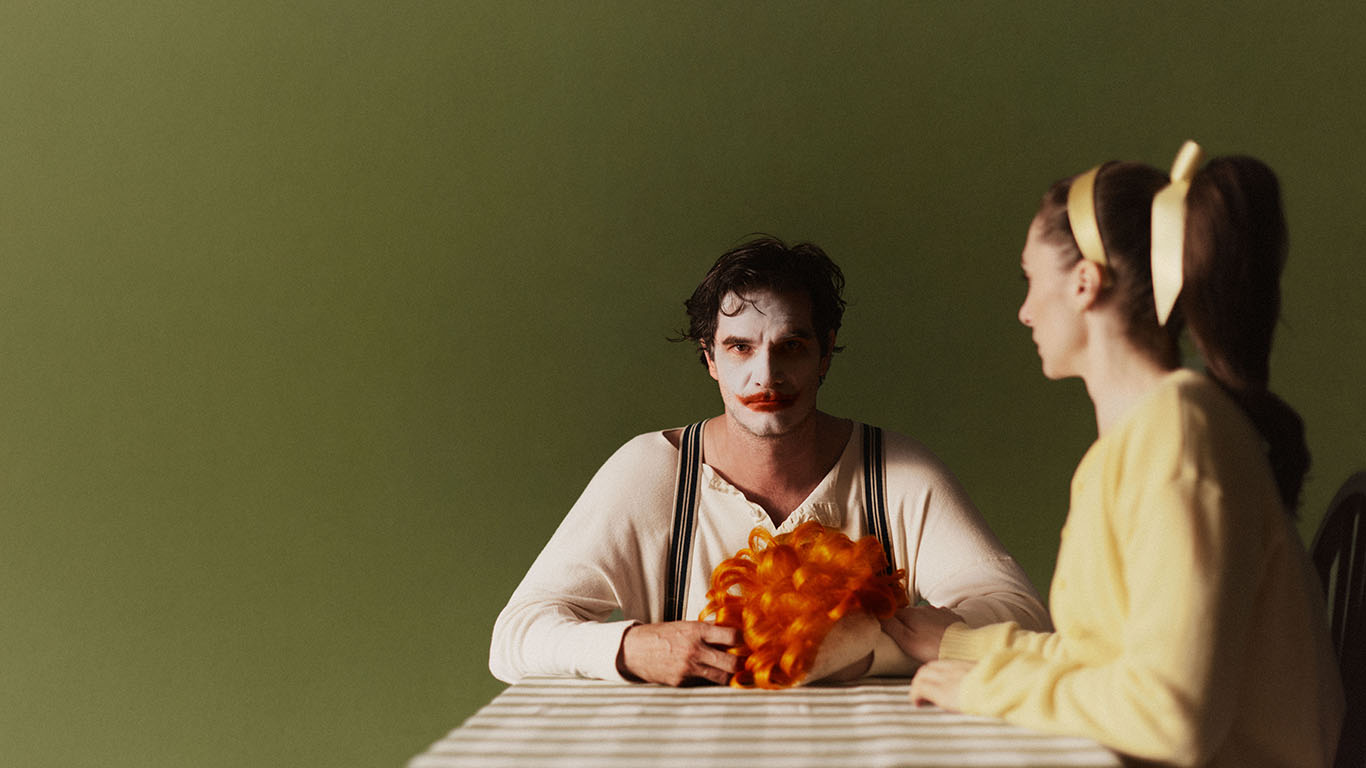
It is not the setting one expects for Alessandro Scarlatti’s 1707 sacred drama Cain, ovvero Il primo omicidio, a retelling of Cain and Abel. But that is precisely why director Dean Bryant’s production works so beautifully. Rather than leaving Adam, Eve, Cain and Abel as distant biblical icons, Bryant and set designer Jeremy Allen bring them close up. They become a family trying to recover from trauma. Eden is already lost. The first parents have been exiled. Their children are growing up under a shadow of guilt and punishment.
A few bars of solo violin emerged from darkness, inky blackness dissolving into a storm-dark sea. Then, through one of those magical technical transformations Pinchgut does so well, the screen became transparent, the mist cleared and we found ourselves on the beach. As the family began to unpack, the smallest domestic details told us everything. Mum approaches with sunscreen: one son accepts it happily, the other resists with teenage disdain. We knew immediately who was who.
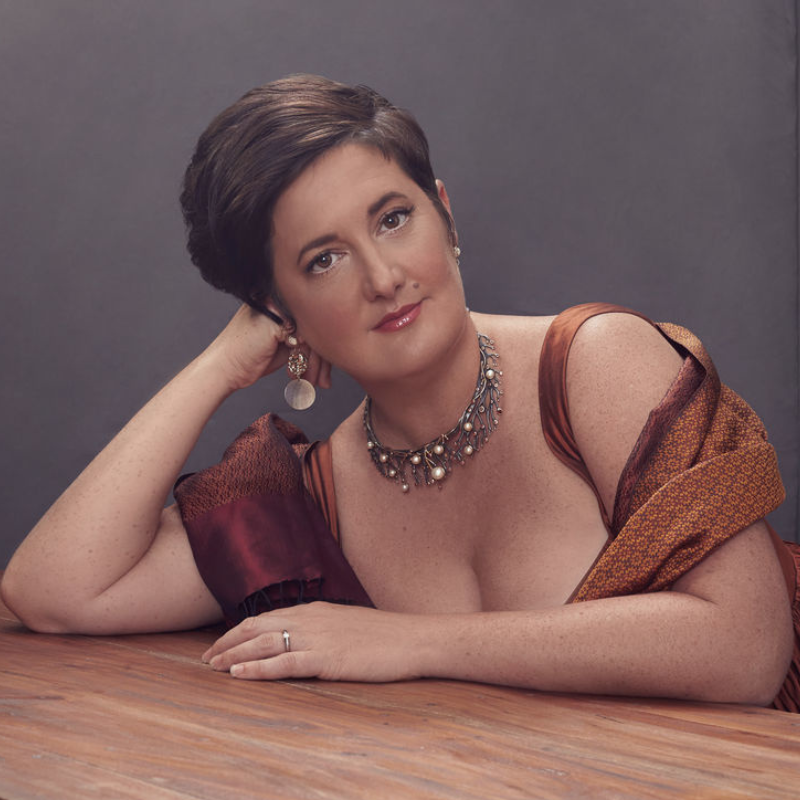
Sara Macliver’s Eve was profoundly moving. Troubled from the beginning, she carried grief in her body and in the colour of her voice. Her lament for the lost garden and the punishment now facing her family had a beseeching tenderness that gave me goosebumps. When she pleaded for mercy on her sons, the strings seemed to hold the dread beneath her, soft and ominous, while her voice rang above them with aching clarity.
Kyle Stegall’s Adam was clear, strong and beautifully poised, his phrases seeming at times to hover in the air, already carrying the weight of what this family had lost. Their duet was finely balanced, the Orchestra of the Antipodes always present but never overwhelming.
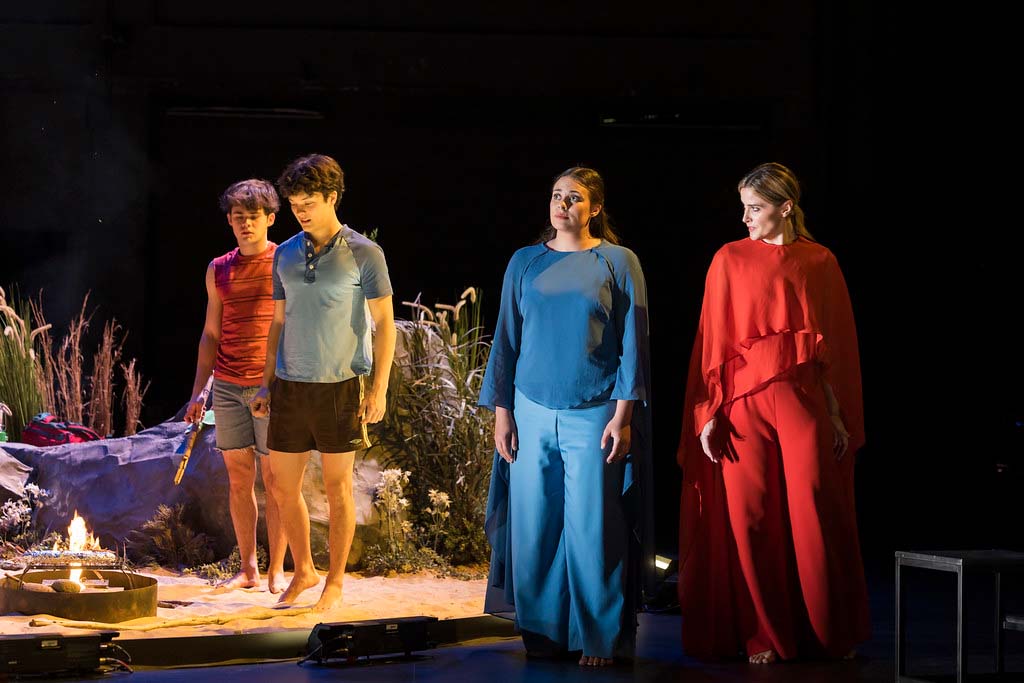
The casting of Cain and Abel was especially astute. Madison Nonoa’s Abel sounded exactly as Abel looked: innocent, calm, sweetly open-hearted. Ashlyn Tymms’ Cain had a darker, more inward intensity, the mezzo line carrying his sullenness and growing resentment. On stage, the young actors Ty Arnott and Ewan Herdman gave the brothers physical life, while the singers seemed to reveal their souls. That doubling could have been distancing, but here it was used to devastating effect.
Colour helped too (Abel in blue, pure and gentle, Cain in red, earthly, fiery and increasingly dangerous), as did the excellent acting – when Abel’s sacrifice was accepted and Cain’s failed to take flame, we saw the family rejoice and Cain deflate. God appeared through live video, pure light and sparkle, given real authority by Stephanie Dillon’s rich, commanding voice. The filmed and live projections gave both God and, later, Lucifer an elemental quality, as if these forces were rising out of sea, smoke, fire, light and darkness.
And then came Lucifer.
Freddy Shaw’s Lucifer was genuinely exciting: velvet tongued, smiling, beguiling and dangerous. Helyard’s continuo changed temperature around him. The camera image flamed, the screen shifted and glitched and suddenly Lucifer was not just on stage, but inside Cain’s head. Conductor Erin Helyard’s choice to colour Lucifer’s continuo with the regal, a small reed organ with a nasal, infernal rasp, was thrillingly theatrical. When Helyard physically moved from the harpsichord to the regal, the sonic world changed with him, growing crunchy and sinister.
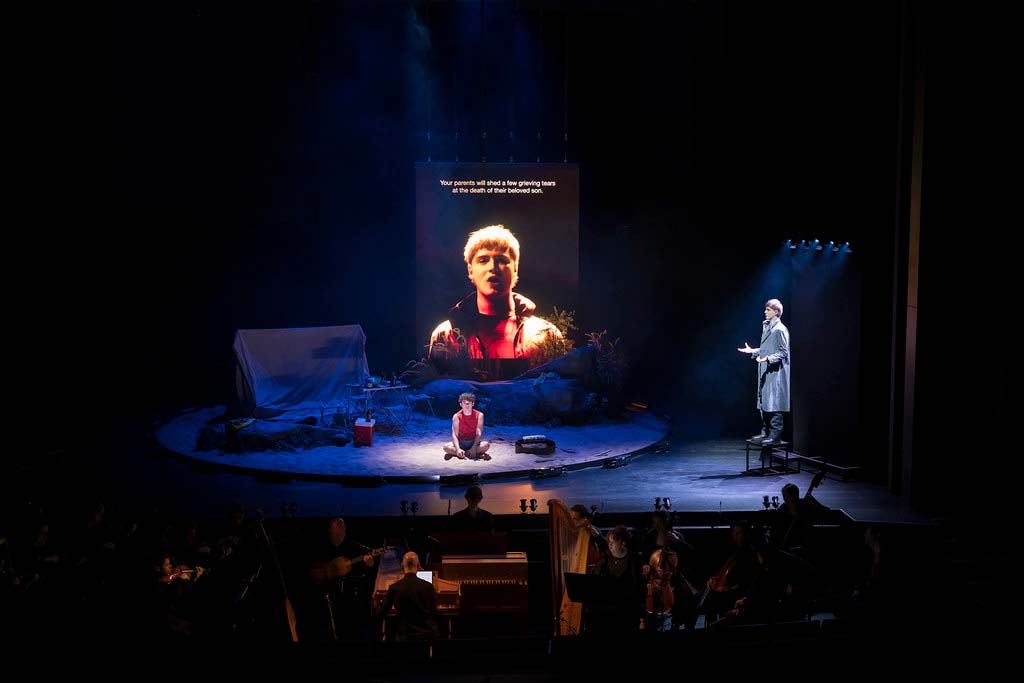
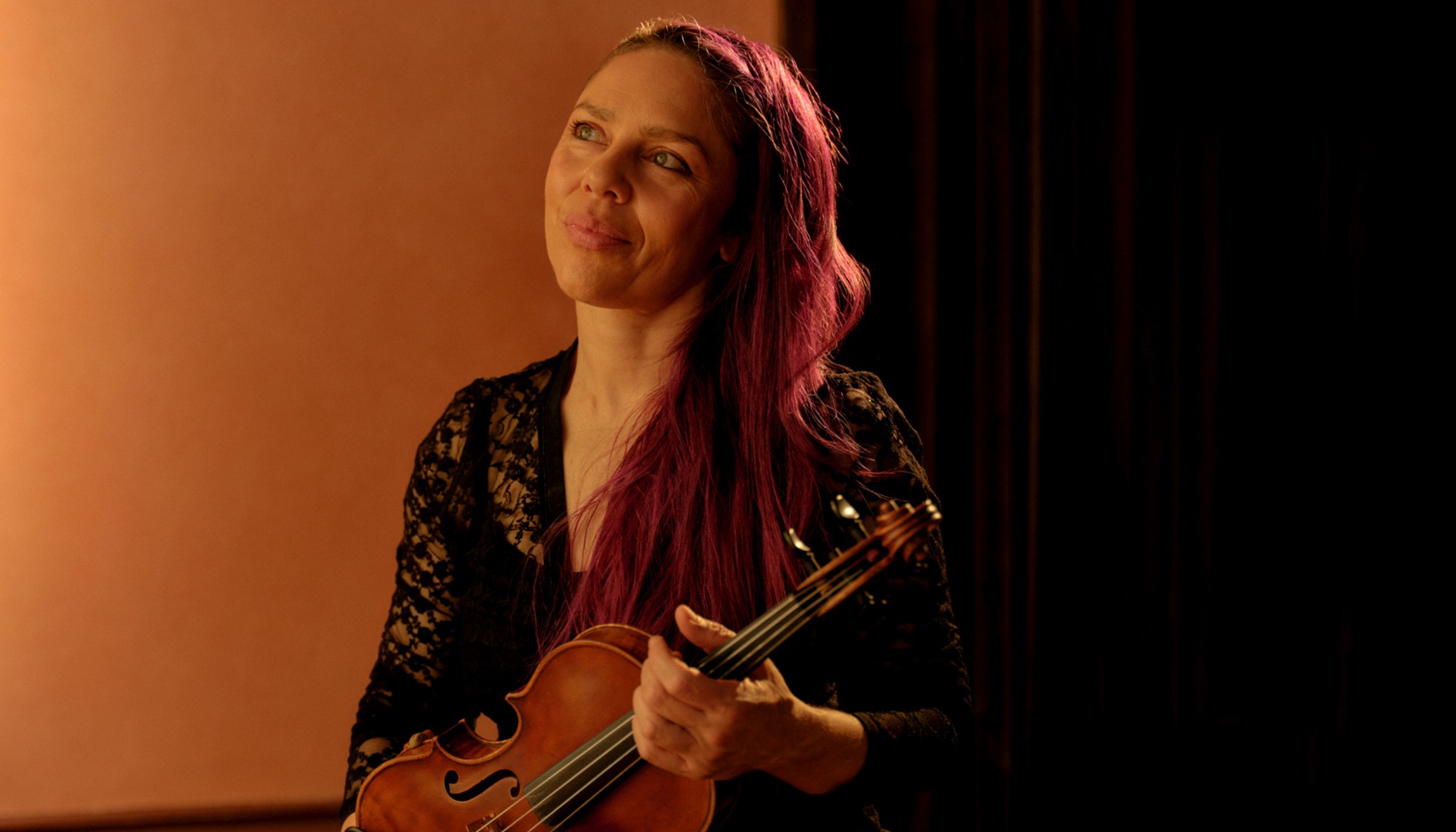
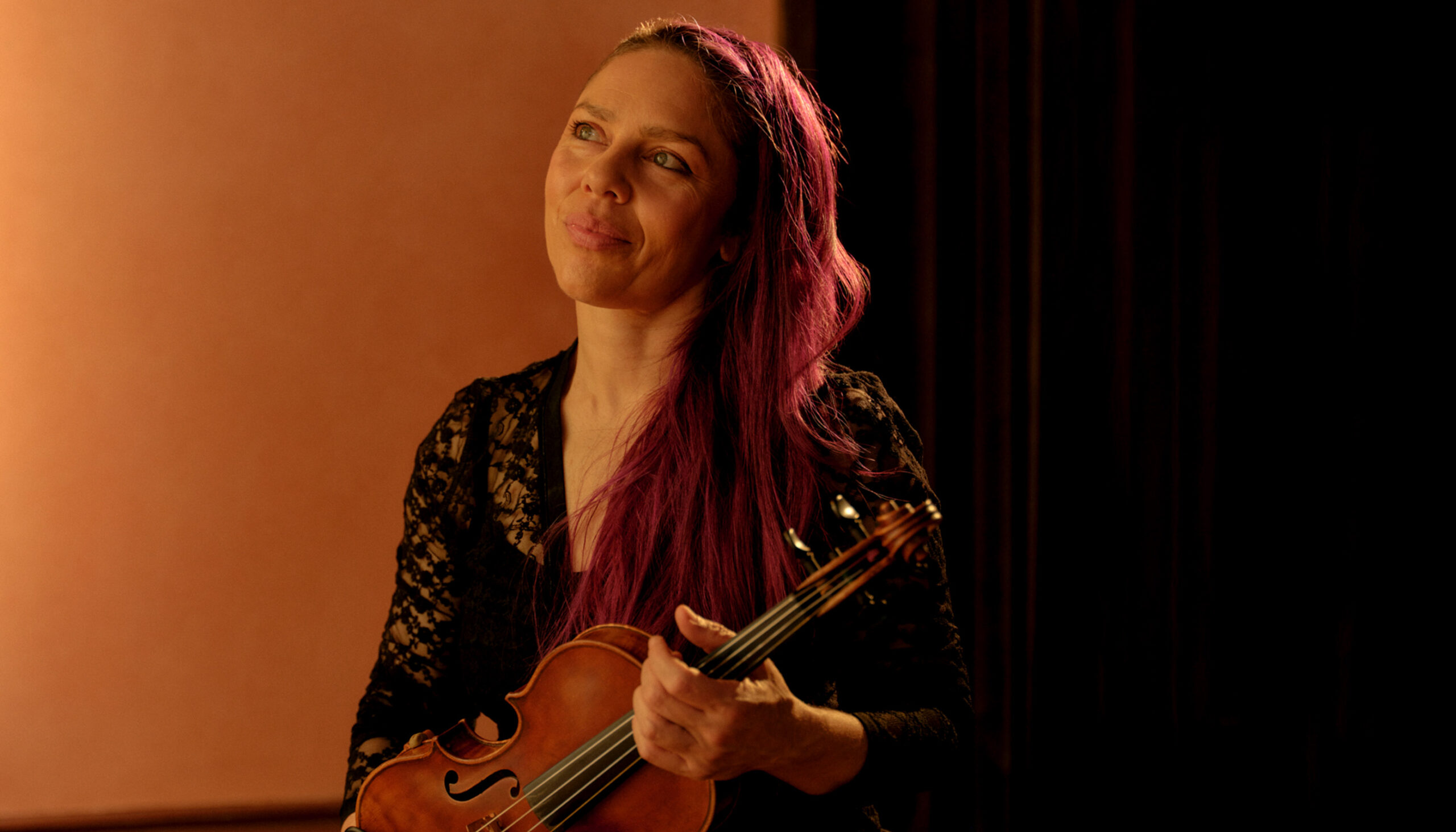
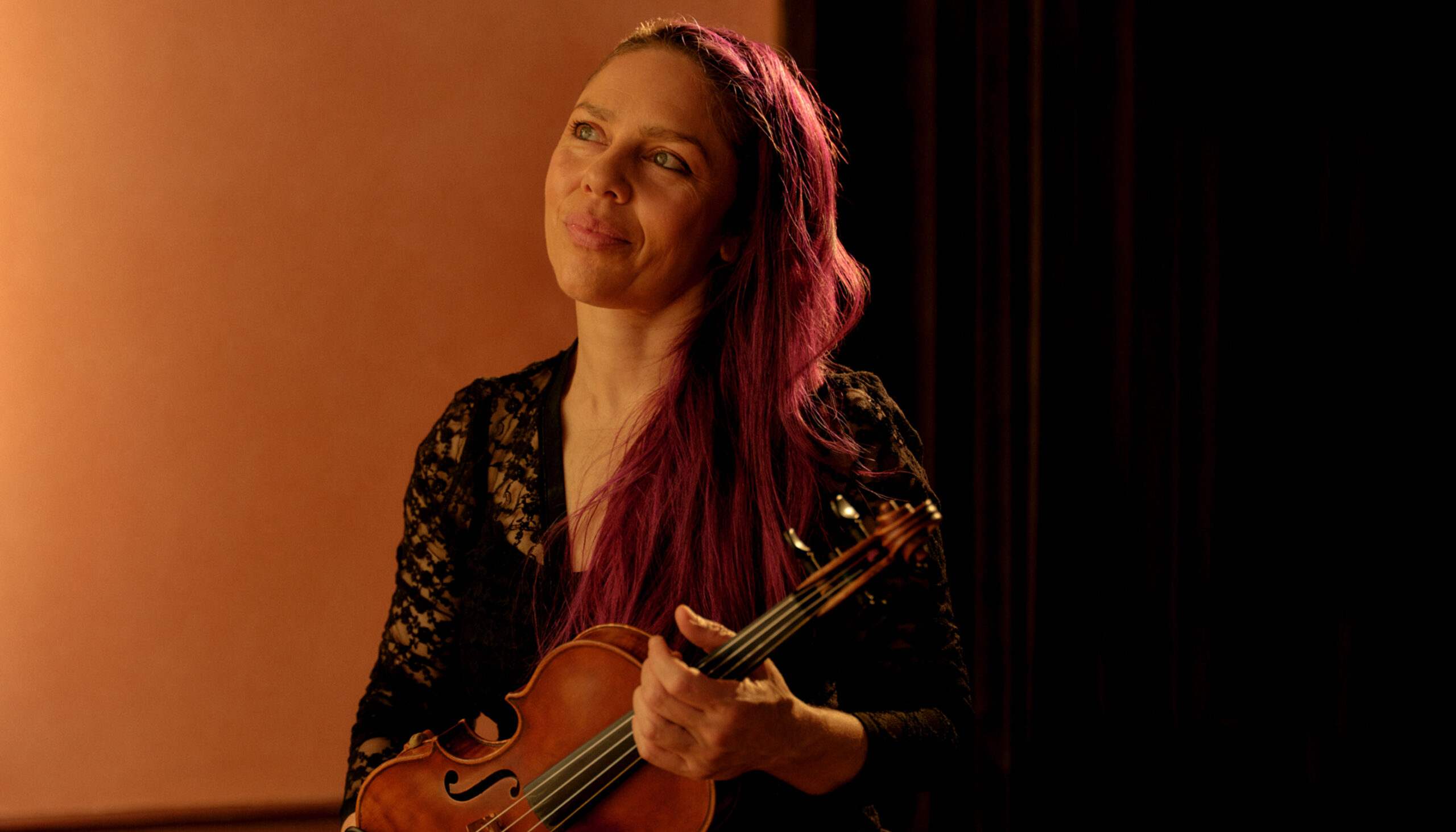
Matthew Greco’s violin solos, often set against the continuo, were exquisite throughout – small moments of brightness, fragility and desolation threading through the score. Helyard himself seemed to hold the whole work in his hands, gently conjuring the music out of thin air. Truly magical.
One of the production’s most devastating sequences came as Cain led Abel away from the campsite. The brothers’ duet, referenced in Helyard’s conductor’s note, is built on a familiar Baroque da capo structure: the libretto returns, but the meaning has changed. At first, Abel’s trust is complete, “there is no guide like my brother”, but once Cain’s murderous thoughts have entered the music, the return of the brotherly text becomes poisoned. Shannon Burns’ movement direction made this slow journey almost unbearable to watch. Abel saw only love and guidance while Cain’s body was twitchy, full of discomfort and dark intent.
No longer just a story about a family on a beach, this became the instant when ordinary human feelings: envy, resentment, wounded love, first curdle into violence.
In Act Two, Scarlatti’s word-painting became almost physical. When Cain asked why the stream murmurs, Tymms’ voice seemed to murmur with it; when the leaves fluttered, the vocal line and continuo had the irregular, wind-tossed quality of something falling through air. Cain hears nature as disturbance, consequence and force. Abel hears rest, humility and calm, furthering the rift growing between the brothers in Cain’s avenging mind.
After Abel’s death, the music turned quickly from triumphant violence to judgement and torment, with God and Lucifer both addressing Cain, and finally to grief. Abel’s voice returning to his parents from beyond death, accompanied by harp, violin and continuo, was sublime. Hannah Lane’s harp grounded the texture in something tender and otherworldly, while the strings caressed the pain. Macliver’s final maternal grief was heart-wrenching; Greco’s flourishes took on a weeping, desolate quality.
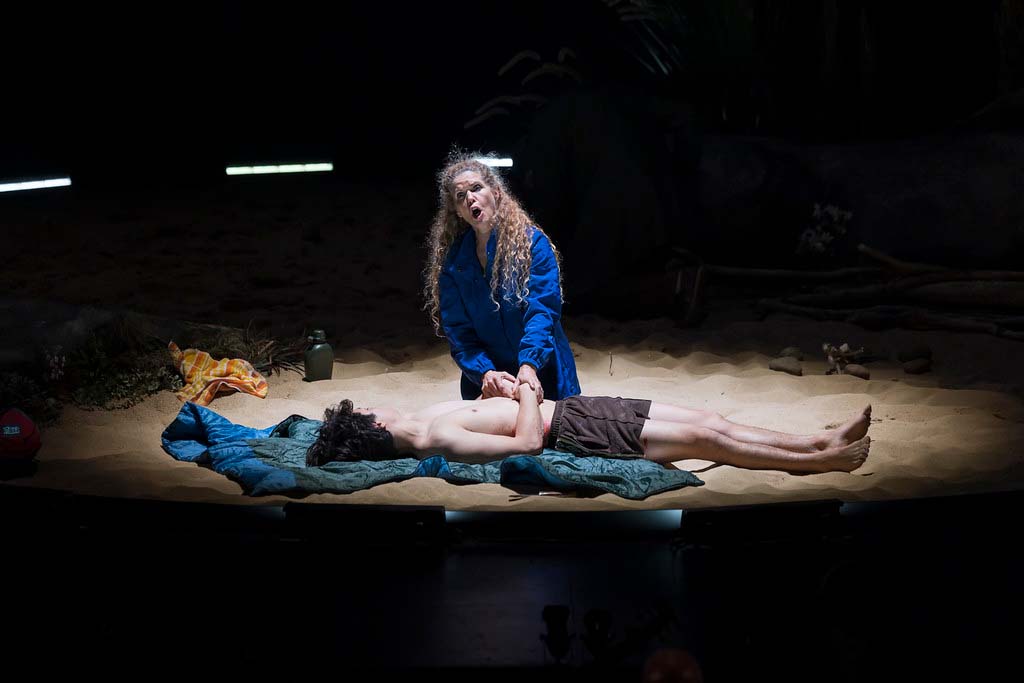
The ending offers theological consolation. God says, “Non perdo l’amor” (“I have not lost my love for you”) and promises a Redeemer will be born from humanity’s line. Adam and Eve accept this hope, though emotionally it is hard to let this consolation erase the cost. Abel is dead. Cain is exiled. The family is broken.
Yet Pinchgut’s production allowed love to remain, bruised but present. Scarlatti’s sacred drama was transformed into a meditation on family, jealousy, grief, punishment, forgiveness and the fragile possibility that love might survive even the first murder. It has stayed with me long after the curtain fell, not only because Bryant’s staging made the story so immediate, but because Scarlatti’s music was so exquisite: luminous, expressive and alive to every shift of feeling. Pinchgut has a gift for bringing us lesser-known works that turn out to be fascinating and glorious. This was certainly one of them. Bravo!
Photo Credit – Anna Kučera