Australian String Quartet | Convergence
October 21, 2025, The Neilson, Pier 2/3, Walsh Bay, NSW
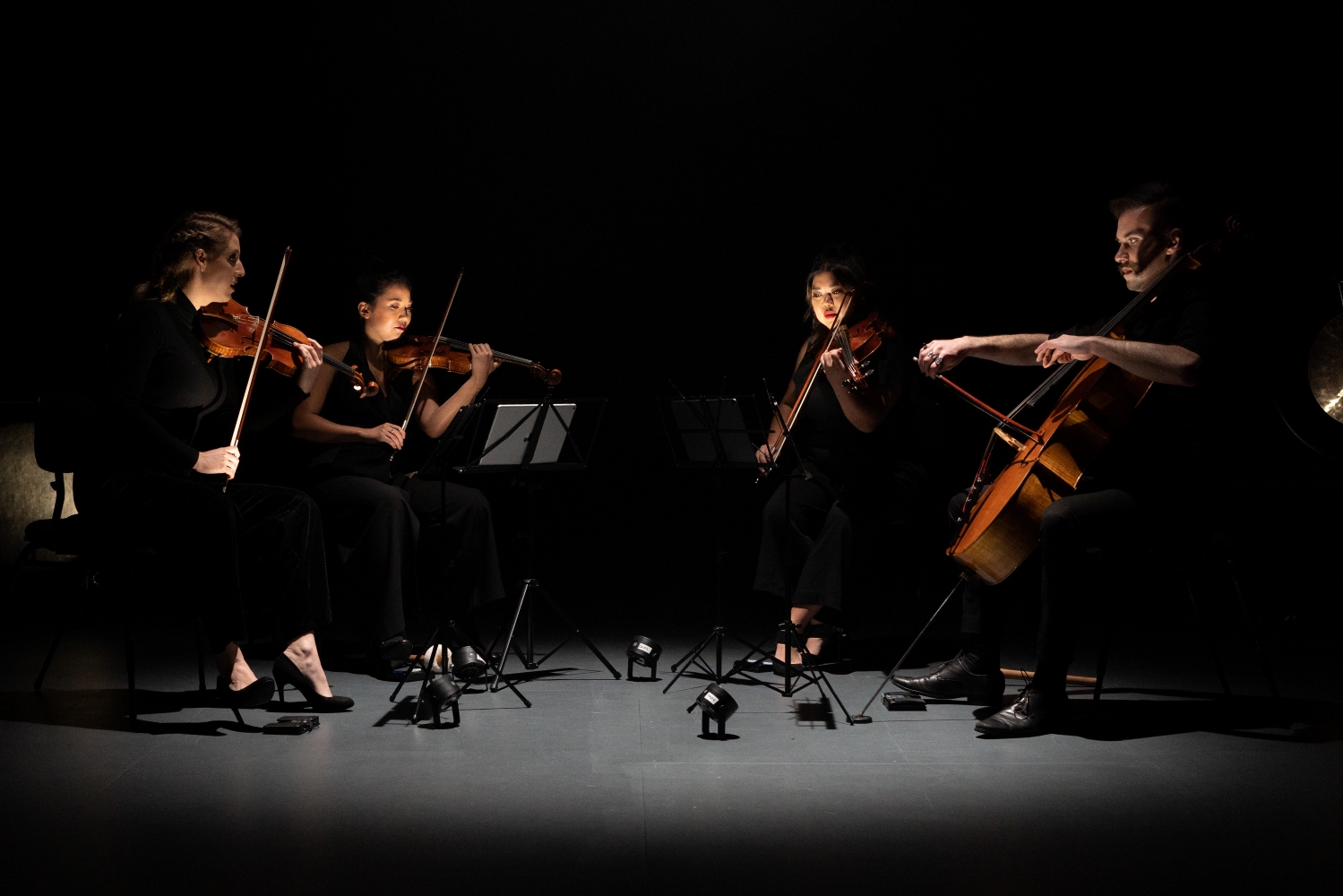
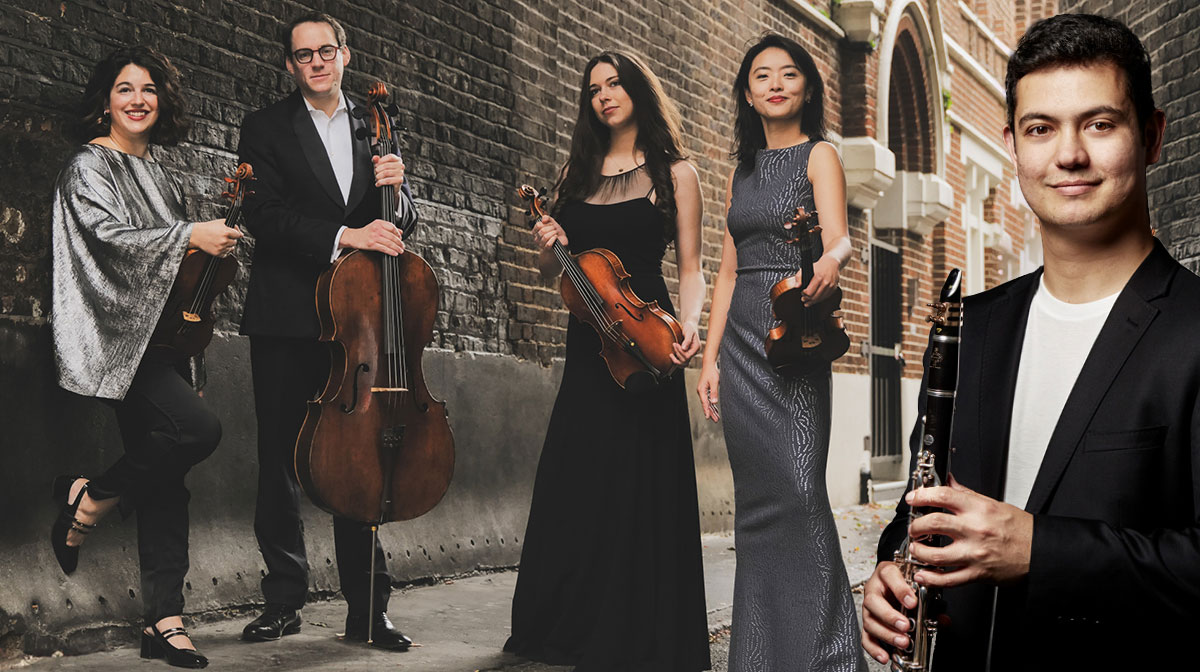
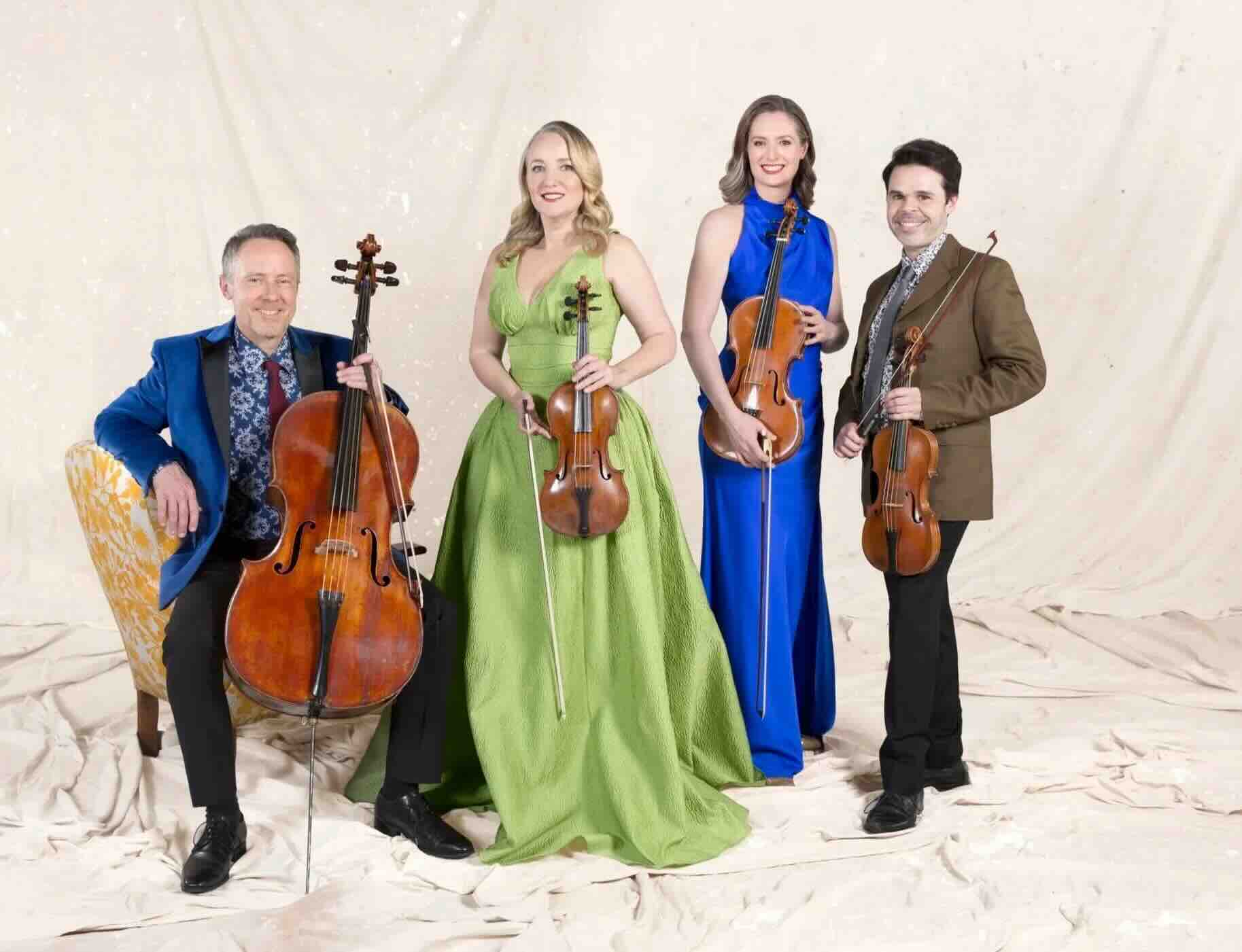
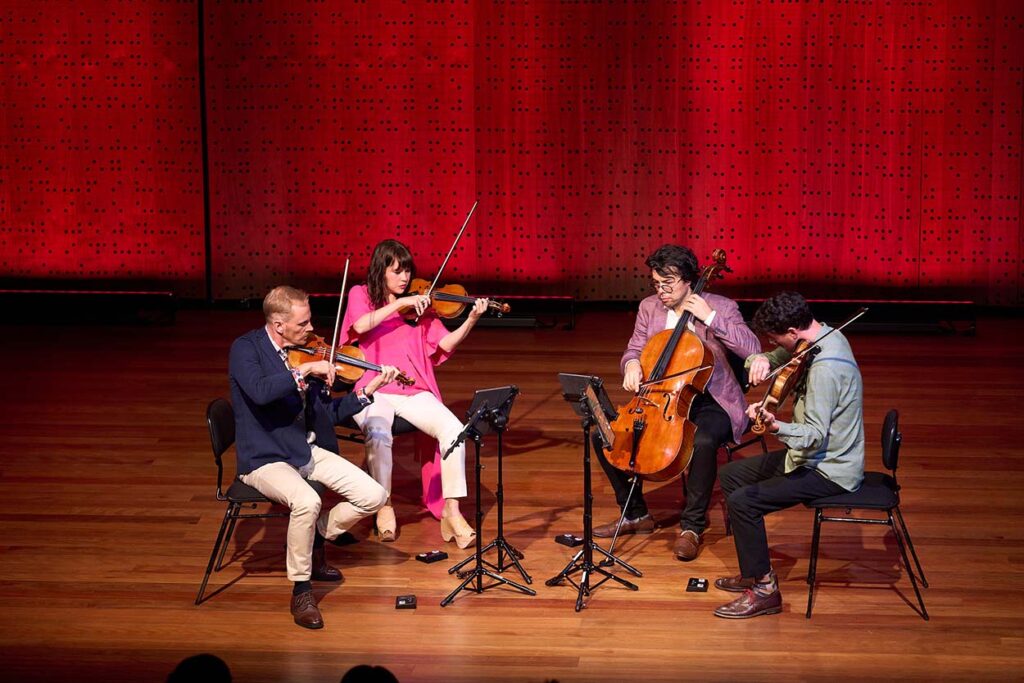
There’s something that feels just right about hearing a string quartet in The Neilson. The warm wood panelling, the intimacy of the space, the sense of shared stillness between audience and performers, even from the balcony it feels close. It’s the ideal setting for the Australian String Quartet, now celebrating forty years of music-making, to present a program that was, as violinist Francesca Hiew wryly put it, “a big one”: two monumental quartets by Britten and Schubert, followed a contemporary Australian work by Paul Stanhope.
Stanhope’s Elegies and Dances is a work the ASQ knows intimately, having recorded all three of his quartets as a trilogy. It begins in quiet mourning, the lower strings emerging from nowhere with a weeping, human quality. The music sighs and aches, the sound colours exquisitely blended. Then the tone shifts: the dances burst through, rhythmically charged, full of accents, cross-rhythms and sudden jolts of energy. Violinist Dale Barltrop, described by Hiew as the “aggravator”, leads the charge with percussive bowing and wood-on-string effects that send the ensemble spiralling off course before they regroup in the beautifully mournful closing elegy.
Visually and sonically, it’s compelling music taut and modern. The contrasts of stillness and frenzy feel almost theatrical, with flashes of humour amid the disquiet. To my listening there’s a vaguely Northern European edge here, reminiscent of Janáček perhaps, but filtered through an unmistakably Australian sensibility. The ASQ’s precision, warmth and unity make this music sing: furious in pace, yet deeply expressive.
From the contemporary to the mid-twentieth century, Benjamin Britten’s String Quartet No. 2 (1945) followed. Written to mark the 250th anniversary of Henry Purcell’s death, it pays homage to the English Baroque master while asserting Britten’s own distinctive voice. The first movement unfolds in expansive gestures, pastoral and serene, with shimmering glissandi and richly voiced textures. The second movement turns inward, its muted timbres creating an almost orchestral density, driven by insect-like scurrying across the strings and full-bodied, strident chords that seem to expand far beyond four instruments.
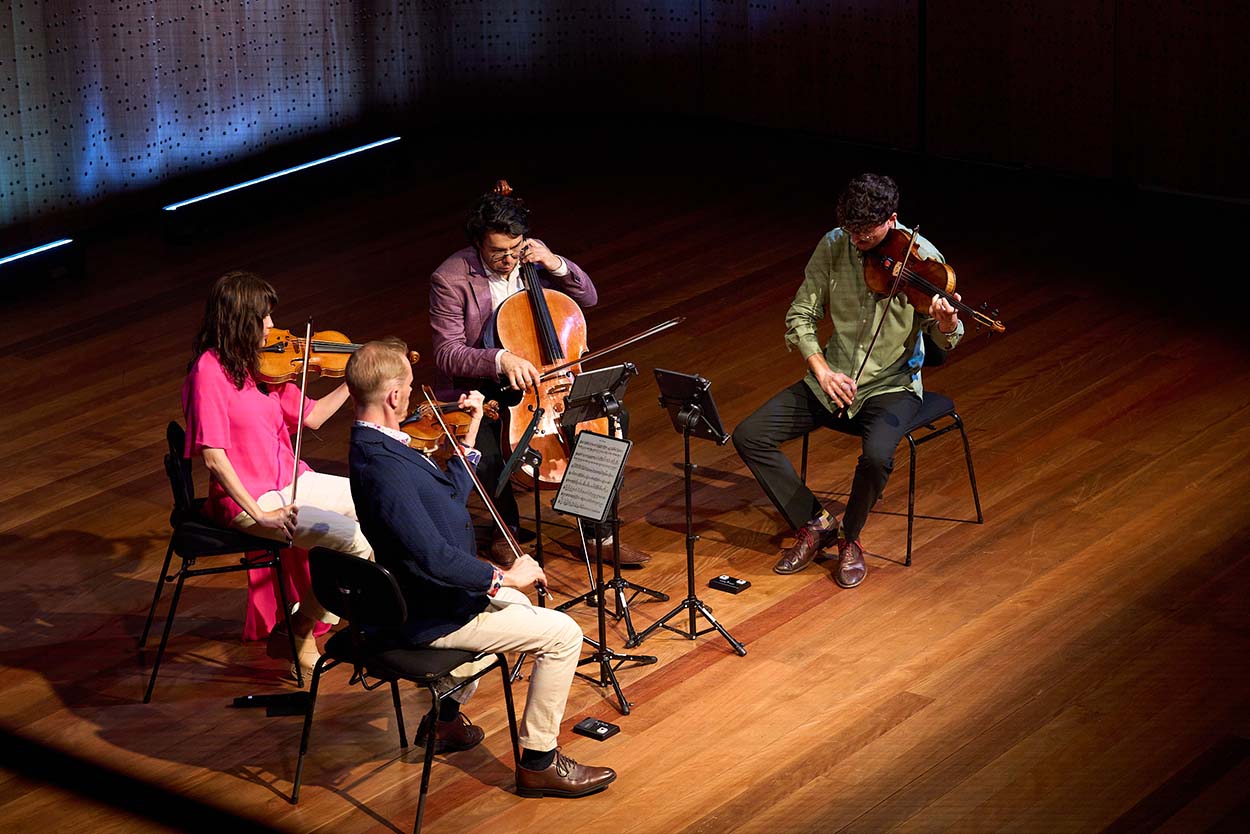
The finale, titled Chacony, is the heart of the work: a monumental set of 21 variations over a repeating ground bass. Here Britten’s love of variation form and his Purcellian style come together. The ASQ handled it with remarkable control, building layer upon layer of tension, the sound gathering weight before erupting into radiant C-major chords. An exhilarating conclusion.
After interval came Schubert’s String Quartet No. 14 in D minor, Death and the Maiden, a favourite of the quartet’s repertoire for decades. Written in 1824, a year after Schubert’s diagnosis with the then-fatal syphilis, the work is haunted by mortality. The second movement’s theme, a set of variations on his own 1817 lied Der Tod und das Mädchen, transforms the dialogue between the terrified maiden and the gentle, inevitable figure of Death into pure instrumental drama. In the song, Death promises peace; in the quartet, Schubert wrestles with that promise, turning tenderness into anguish, defiance and finally release.
The ASQ captured that emotional arc beautifully. Their ensemble playing was cohesive – from the opening Allegro to the aching lyricism of the Andante con moto there was clear transparency of tone with only subtle looks and breaths keeping the players moving as one. In the Scherzo, rhythmic vitality took over – biting, fierce and sharply articulated. Then came the Presto finale, a tarantella-like dance in 6/8, wild and unstoppable. The ancient folk belief that frenzied dancing could drive out death gives this movement its desperate energy; here, it felt like Schubert’s last, ecstatic refusal to succumb. The quartet’s momentum never faltered and their sound seemed larger than four instruments should allow.
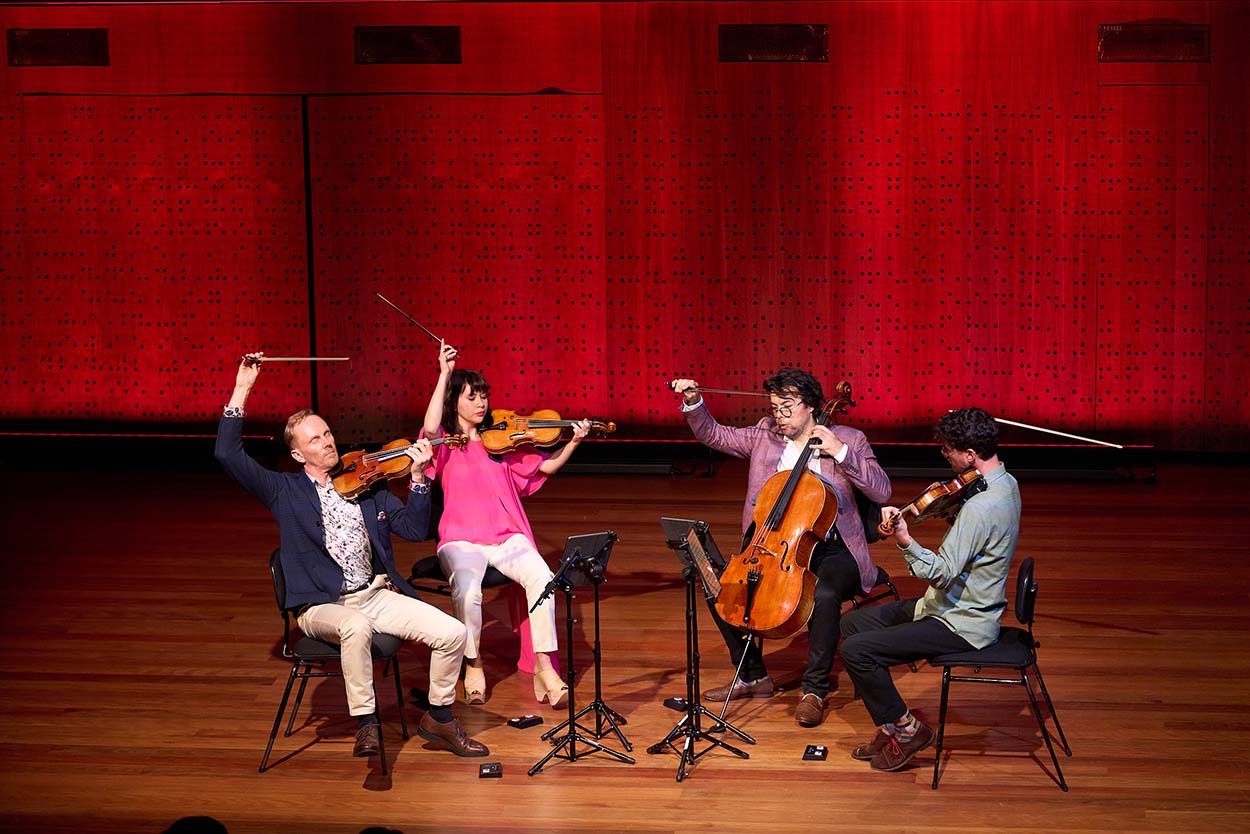
As a 40th-anniversary celebration, Convergence was perfectly chosen. The program traced a lineage of musical voices, from Stanhope’s modern Australian expressiveness to Britten’s mid-century brilliance and Schubert’s Romantic intensity, each exploring grief, beauty and transformation in its own way. The concert was well attended, with that familiar ASQ warmth extending into the post-performance gathering – Voyager Estate wine in hand, a toast to forty years of artistry… and a heartfelt hope for forty more.