Backstage Music | Midnight Static
December 6, 2025, The Living Room Theatre, Marrickville, NSW
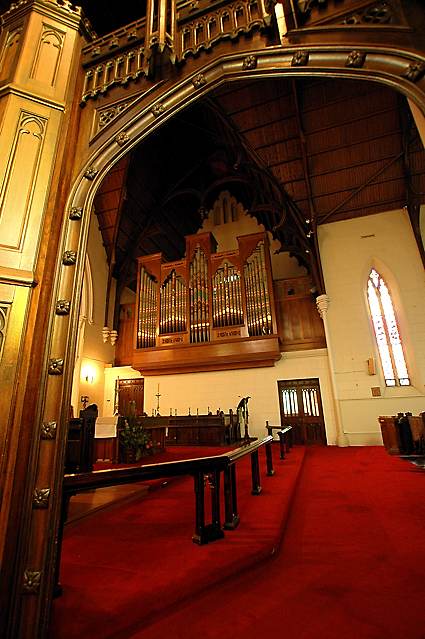
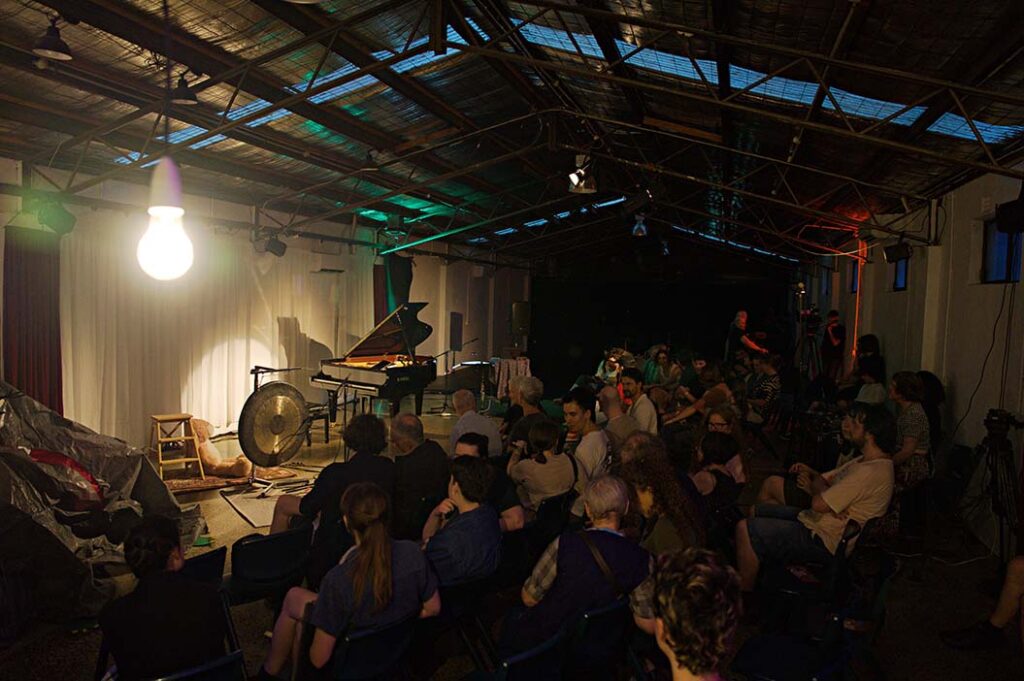
On Saturday night, Backstage Music hosted their final concert of 2025 in the brand new, dynamic venue, The Living Room Theatre in the heart of Marrickville. Curated by Damian Barbeler and Lamorna Nightingale, the evening was a spirited program of bold new voices and esteemed practitioners of the 20th-century canon. As featured performer Ronan Apcar noted when describing the “in-between places” of George Crumb’s Eine Kleine Mitternachtmusik, the theme of thresholds and transitory states emanated sensitively throughout the music and this beautiful new space. The Living Room Theatre stands out for its incredible depth while preserving a palpable intimacy that welcomed a packed house ready to receive fearless music-making.
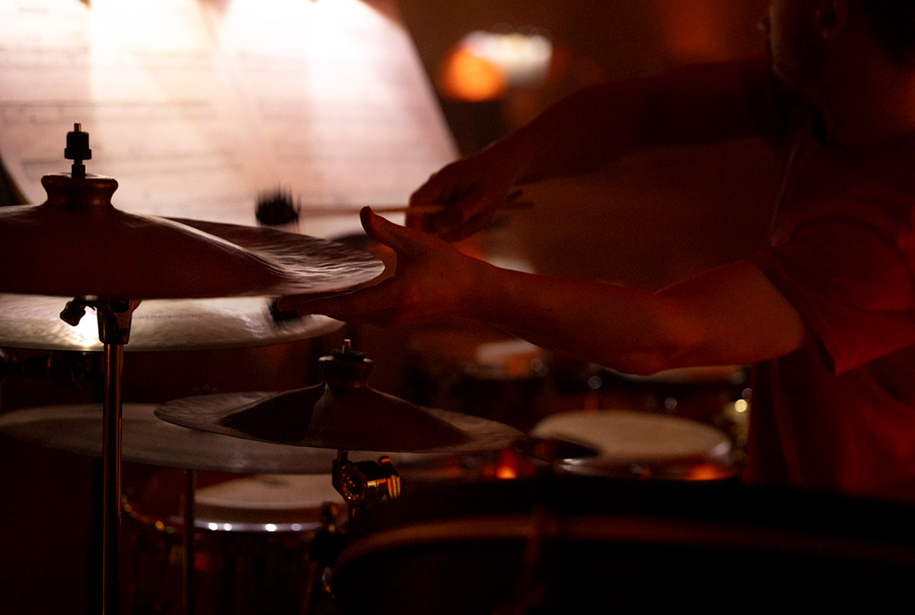
This space was utilised most effectively in the opening work of the night, John Cage’s work Four6, performed by a new ensemble, Dogtooth, led by one of Backstage Music’s interns, Aidan Eccleshall. The quartet surrounded the audience in a spatialised formation where the performers created a delicate ecosystem of 12 unique sounds curated by each respective musician, as designated in the score, where Cage specifies merely approximate start and stop times for each of these sounds. After Lamorna initiated the opening ‘Silence’ to begin the piece, the quartet communed over the rich biodiversity of unique instrumental techniques, electronic processing, field recordings and various sound apparatuses. Mina Johansson delivered a booming dialogue between raucous gargles and tender trills on the Tenor Saxophone, ricocheting across the space through distorted delay effects, amplified by Aidan Eccleshall’s throaty Clarinet multiphonics and microtonal fixed media. Percussionist Rosie Bennett underpinned this exchange with a lyrical exploration of friction against various Tam-Tams and drums with superball mallets and shoe brushes, often complementing this textural bed with stark pulsations of soft mallets on snare drum. Drummer Jarrah Zavier brought this sound world full circle with vigorous bursts of energy on the kit, reminiscent of an Elvin Jones solo, intercut with Zavier repeatedly launching car keys up into the air, continually walking the line between extreme force and grace. The addition of field recordings of the Eastern Whipbird solidified this captivating commune across onlookers, offering a highly sensitive interpretation of one of Cage’s masterworks from a brand new ensemble I’m sure we will be hearing more from in the near future.
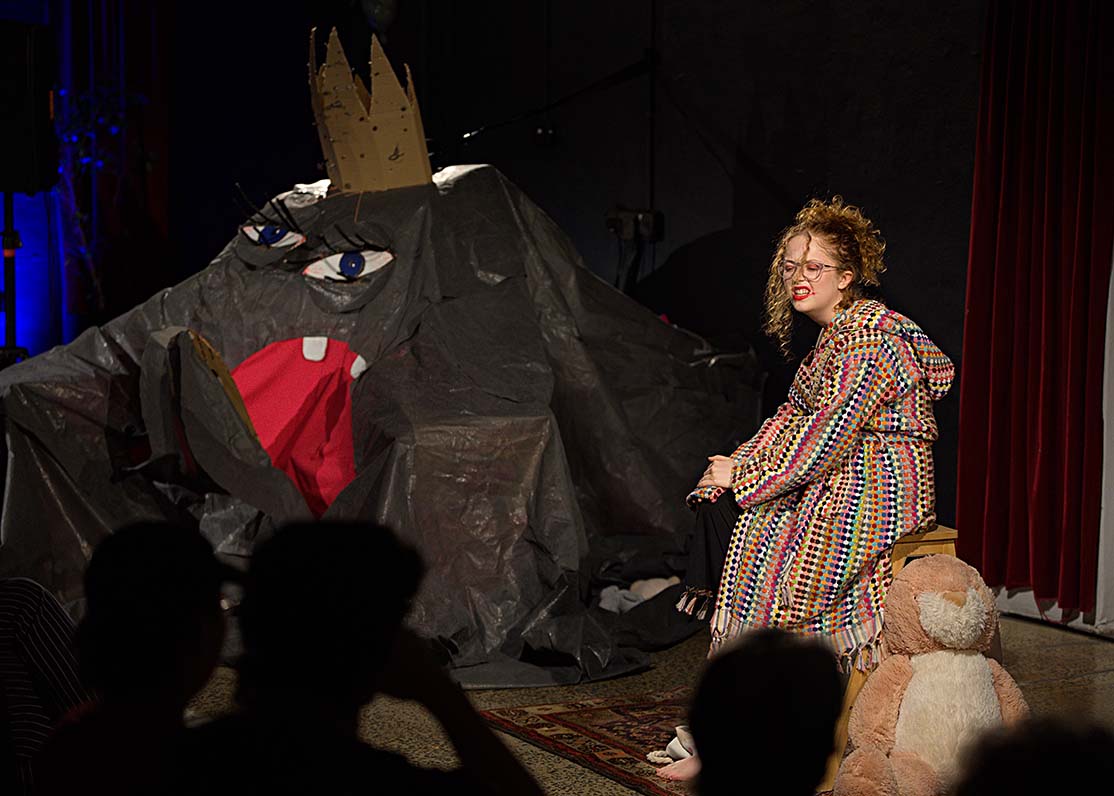
Continuing this audacious lineup of up-and-coming artists was the premiere of a striking new miniature opera, My Pet Rock. This daring new absurdist theatre piece, produced by students Tashi-Louise Laurie Flint, Holly Gallagher and Jeremy Smith, takes a child’s imaginary friendship with a pet rock all the way to middle age, where a drunken rant regarding a messy custody battle spirals into a farcical dialogue on the concept of self and memory. Flint, who voices the enormous pet rock puppet, cleverly involved both audience interaction and the lack thereof to deliver a witty portrayal of an illusory therapist who only succeeds at belittling their patient and audience alike while throwing up various memorabilia from their childhood. Alongside the processing of Flint’s voice to that of a booming premonition, Smith’s soundscape of dizzying drones and textures disorients you just enough to both settle into the absurdity and, in the next moment, wake up from that strange slumber. Gallagher’s captivating portrayal of a middle-aged woman going through a divorce provides a surrogate for the audience, as her concerns go from her husband’s mounting lawyers to what her pet rock will regurgitate next, from various old childhood toys to ridiculous caricatures of herself, before finally entering the mouth of the rock herself. The audience was gripped from start to finish, at one moment in hysterics and in the next, satisfyingly flustered, giving the night a delightfully surreal contrast.
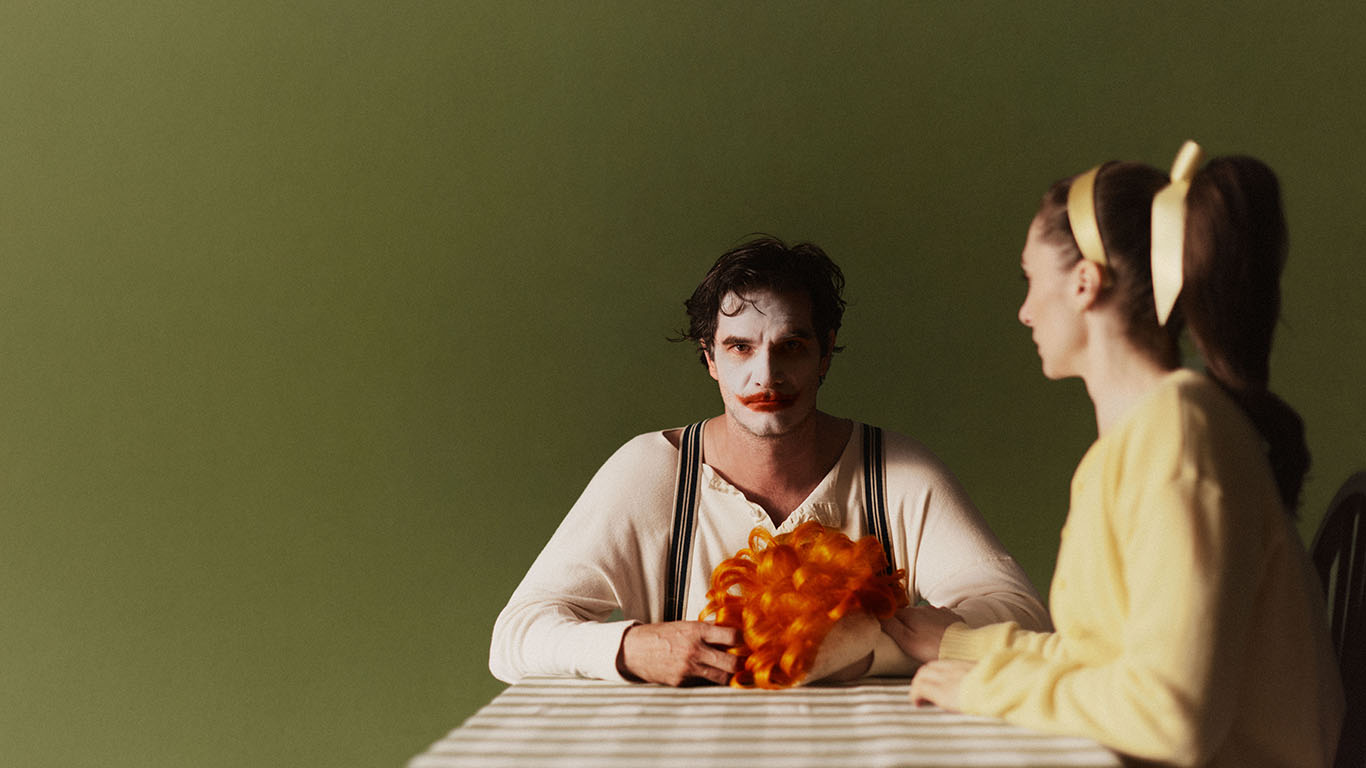
The daring theatrics continued in what could be described as the standout of the evening, selections of George Aperghis’ Recitations, performed masterfully by acclaimed Singer, Actor, Performance Artist and Clown Mitch Riley. Before the audience could cease their applause, Riley clumsily galloped on stage, launching straight into Recitation 1, flitting between panic and pleasure in an instant. The audience was gripped throughout the entire performance, as Riley expertly threaded stuttering syllables and fragments of phrases in all kinds of languages, injecting this “hot-potato” of meaning with an arresting obsequity, not dissimilar to an Andy Kaufman routine. In between excerpts, Riley provided insights into the nature of the work and the score, using simple diamond shapes to construct evolving loop-based structures, with incredibly detailed rhythmic and pitch material to dance erratically between the threshold of traditionally sung passages and dramatic vocalisations. I was particularly taken by the 2nd Recitation, where the addition of a new cell would dramatically modulate the feeling and meaning of what we had just heard before. Riley’s virtuosity as an actor really shone here, taking this concept further using the physicality of his performance to invert the expression of a deep exhalation or a rhetorical question from that of a tyrant to a desperate man.
The second half of the program continued with an improvisation between Riley and pianist Ronan Apcar, presenting a spontaneous interpretation of Kenneth Slessor’s poem Five Bells. The reputation of the poem was audibly acknowledged by the audience upon hearing the title, setting the scene for an incredibly thoughtful meditation on grief and the infinite regress of bell tones expanding across Sydney Harbour. Ronan began the piece by plucking the piano strings at the upper register of the piano, setting up a pulse of bells with disturbed resonances. Riley showcased his virtuosity as a singer here, effortlessly crossing registers throughout long, sustained phrases, creating an expansive plane for Apcar to develop cold piano harmonics in the lower register, succinctly setting up the sound world that would occupy the remainder of the evening. At one point, Apcar dragged a glass up and down the piano strings, seemingly summoning a ghost of Riley’s melancholic falling melodies, showcasing two incredible artists completely in sync.
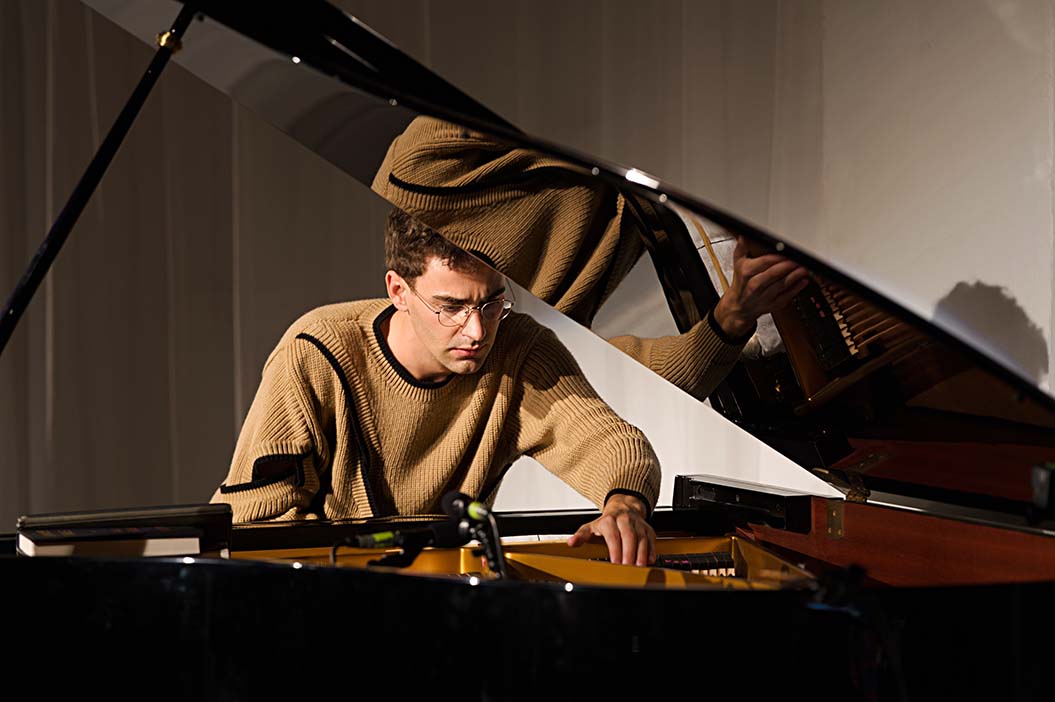
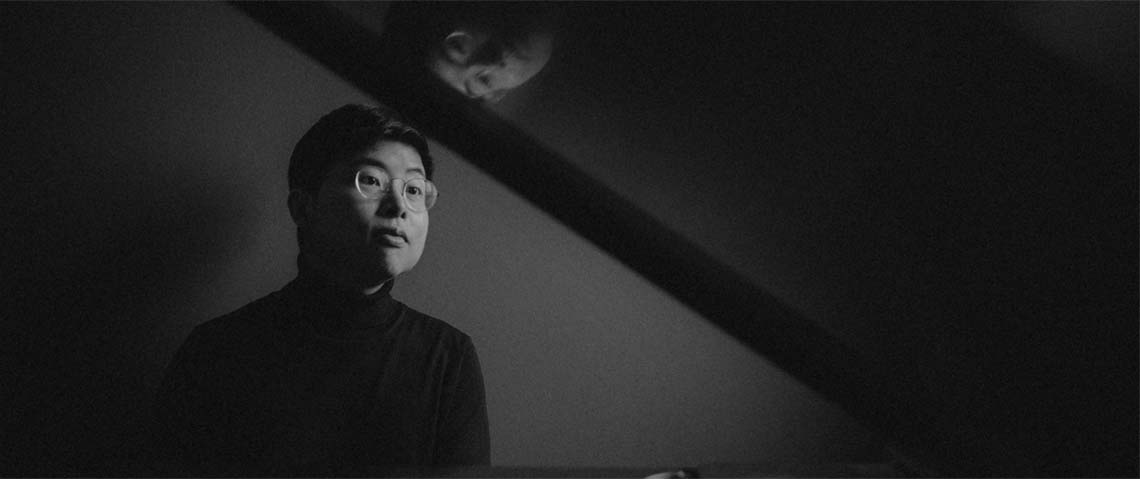
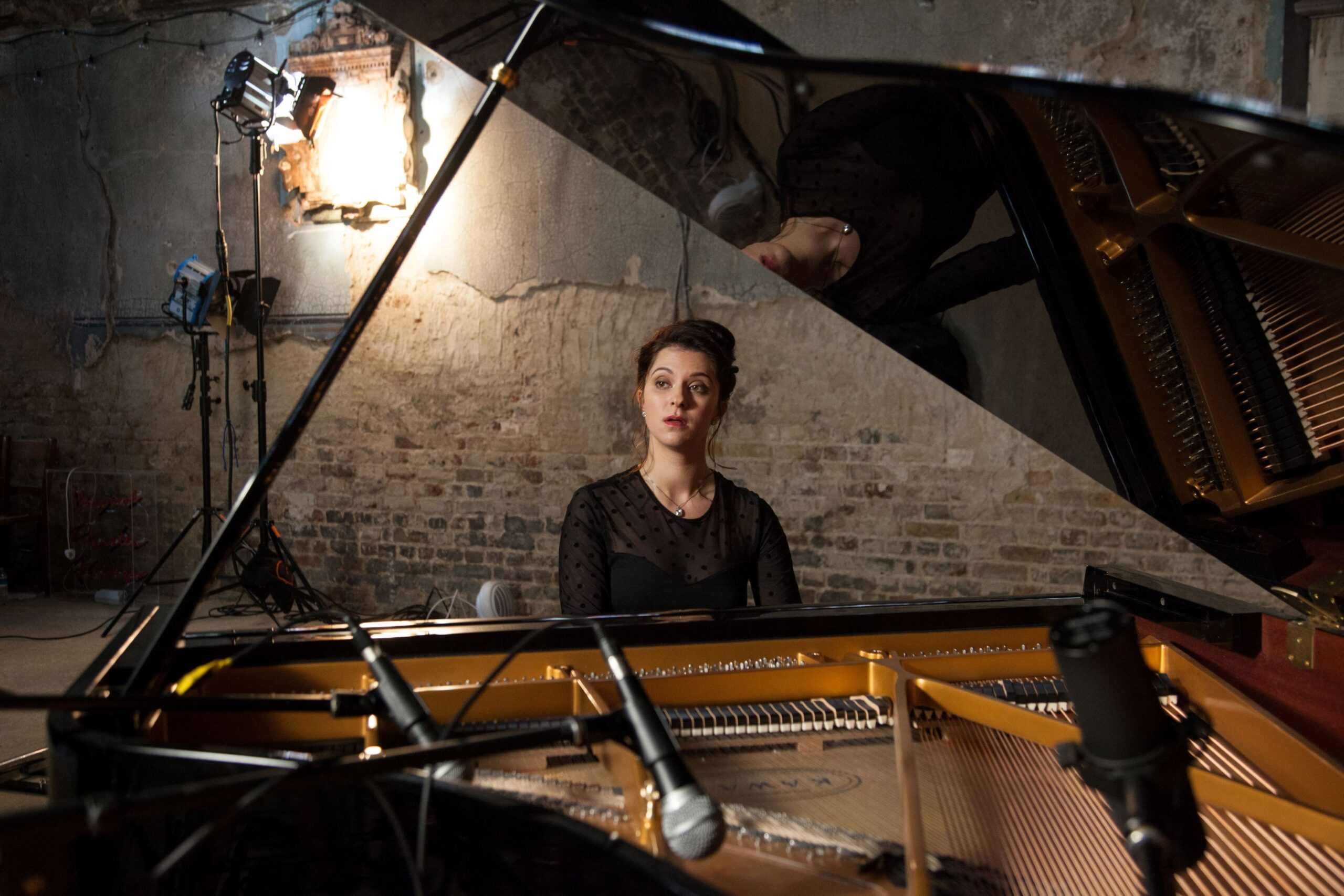
Apcar closed out the program with George Crumb’s Eine Kleine Mitternacht Musik (Little Midnight Music). A play on Mozart’s Eine Kleine Nachtmusik, Crumb uses the melody of Thelonious Monk’s Round Midnight as the impetus for a poised exploration of the border between the keys of the piano and the inside of the body of the piano. Marrying a classic Jazz melody with dazzling extended techniques, Apcar exposes a pianistic underworld, with aggressively articulated piano gestures met with sharp cut-offs, initiating the start of a whole new expression within the resonances inside the piano. Apcar’s agility and intricacy leaping in and out of the piano with mallets and his fingernails constantly brought your attention to this twilight space at the border between the piano keys and strings. However, Apcar’s performance was never jolty or cumbersome, effortlessly gliding between playing techniques, stringing together disparate sound sources, musical eras and disciplines, exposing an entrancing ink wash of sounds from the future, the past and everything in-between.