Forty-Five Downstairs Chamber Music Festival | BRAHMS, LISZT & MENDELSSOHN: Hungarian Fire and Italian Light
28 April, 2026, Forty-Five Downstairs, Melbourne, VIC
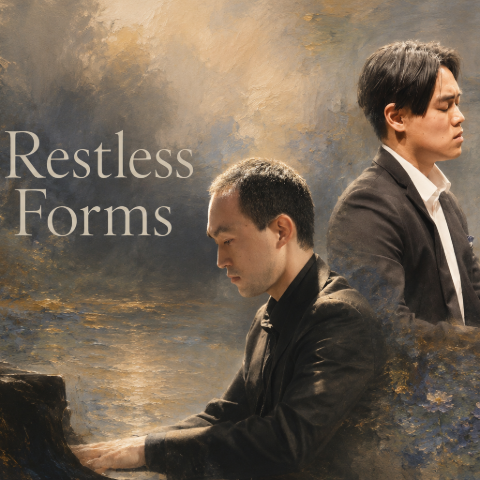
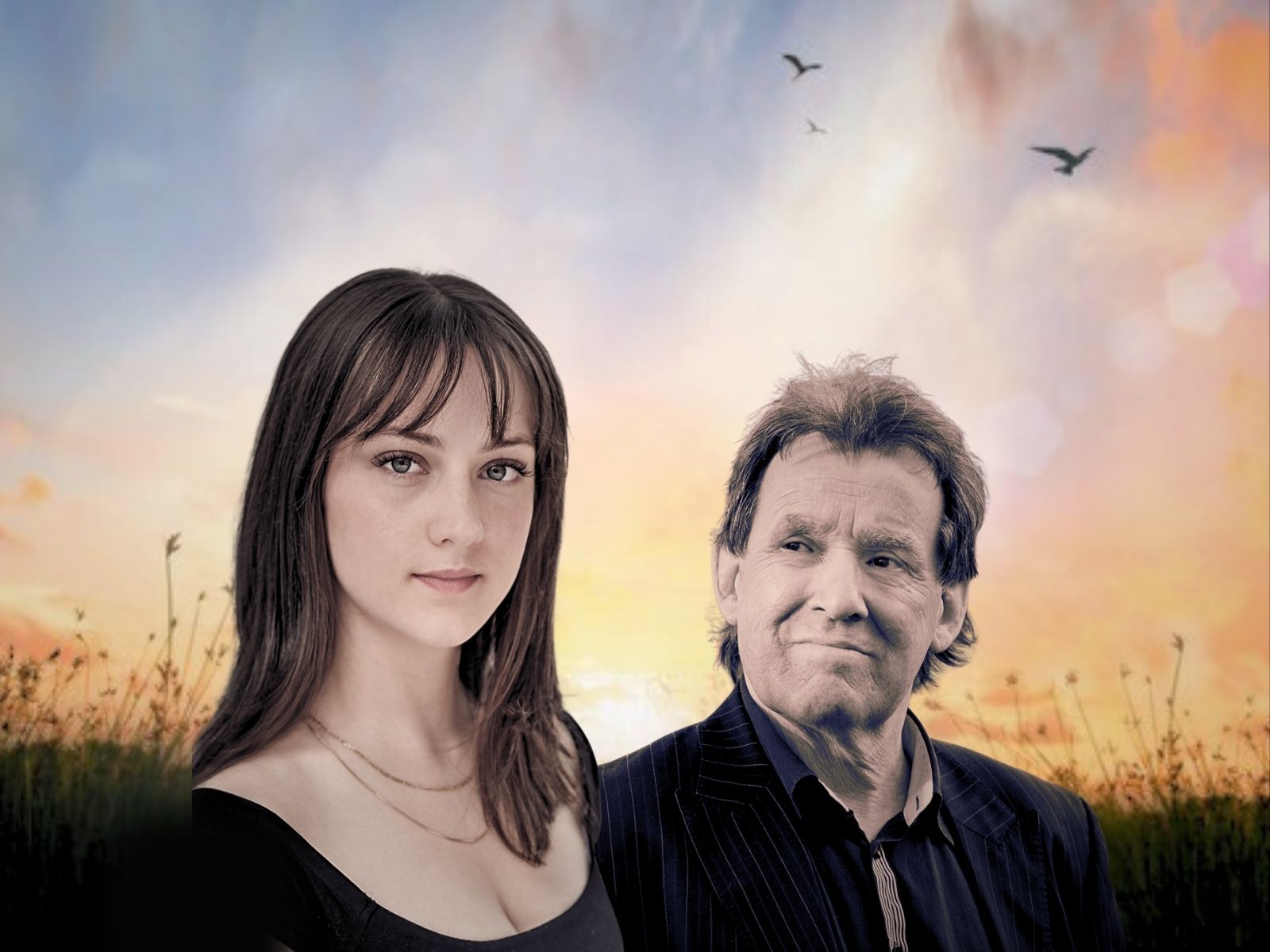
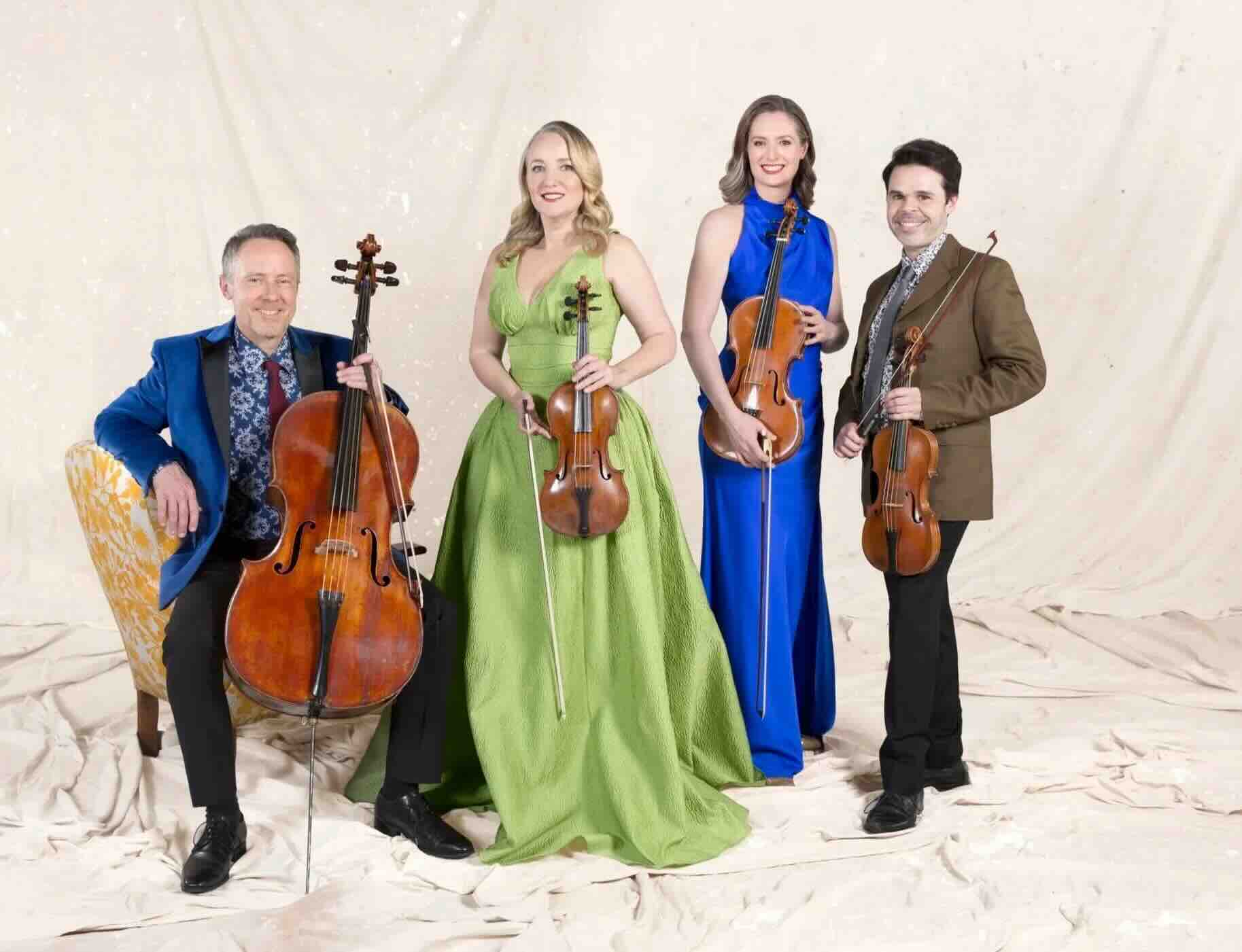
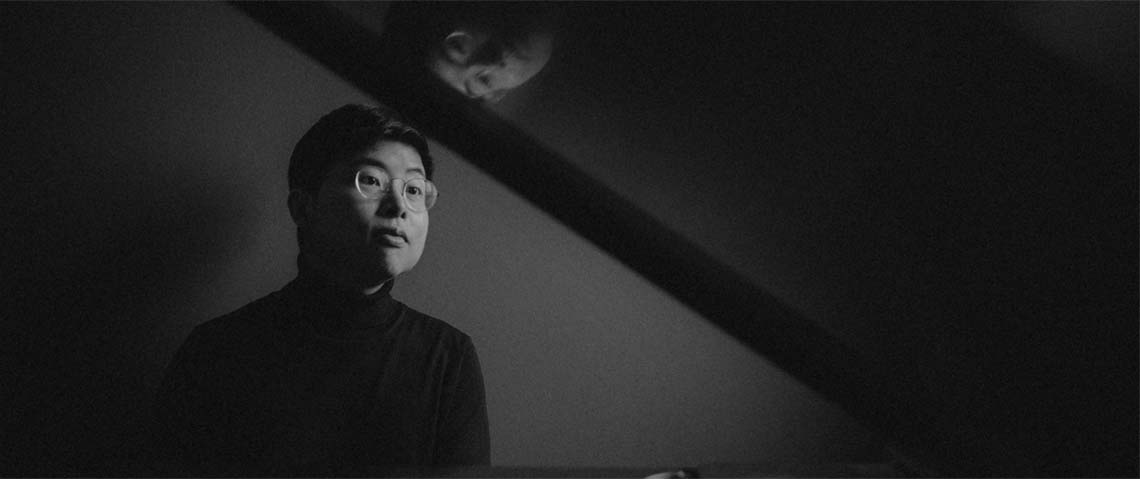
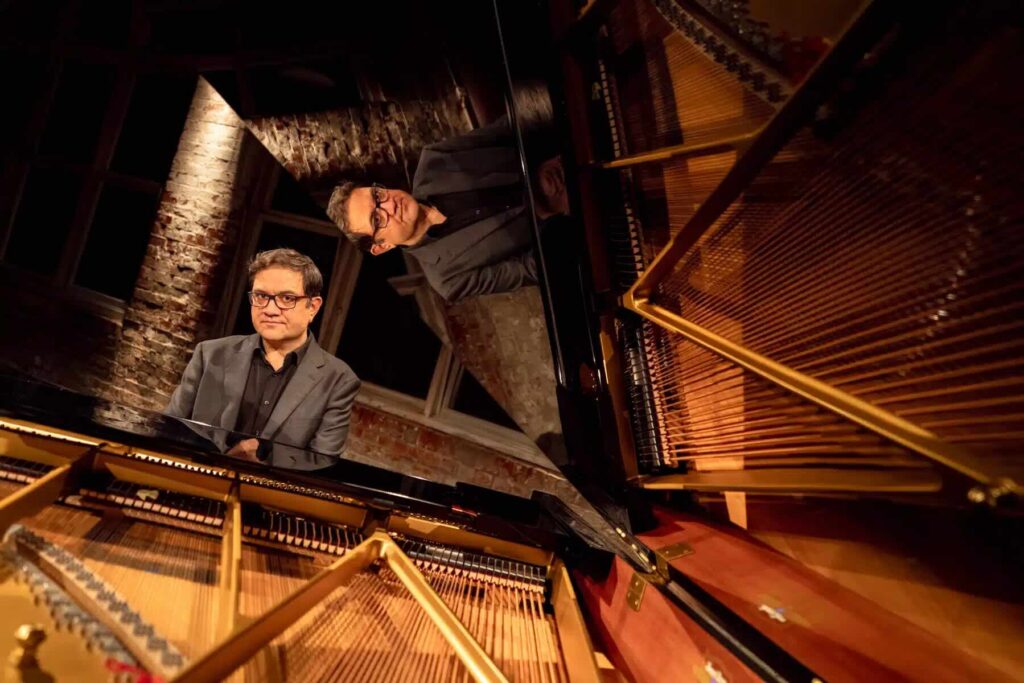
Coady Green – Piano
Ricardo Roche Idini – Piano
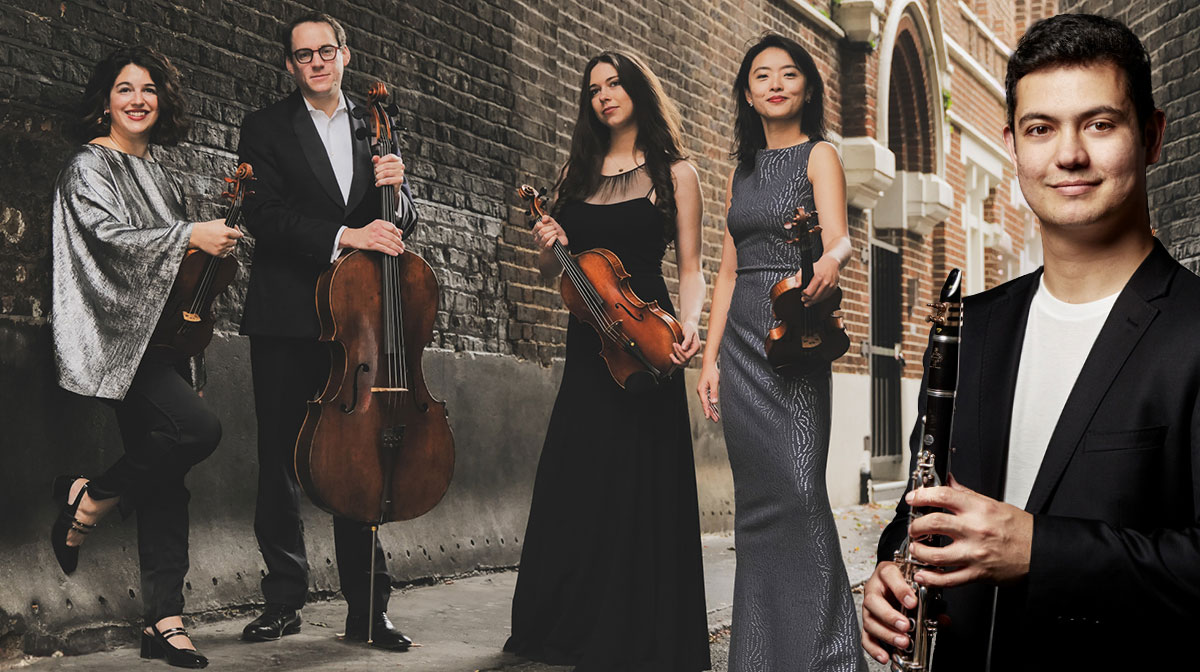
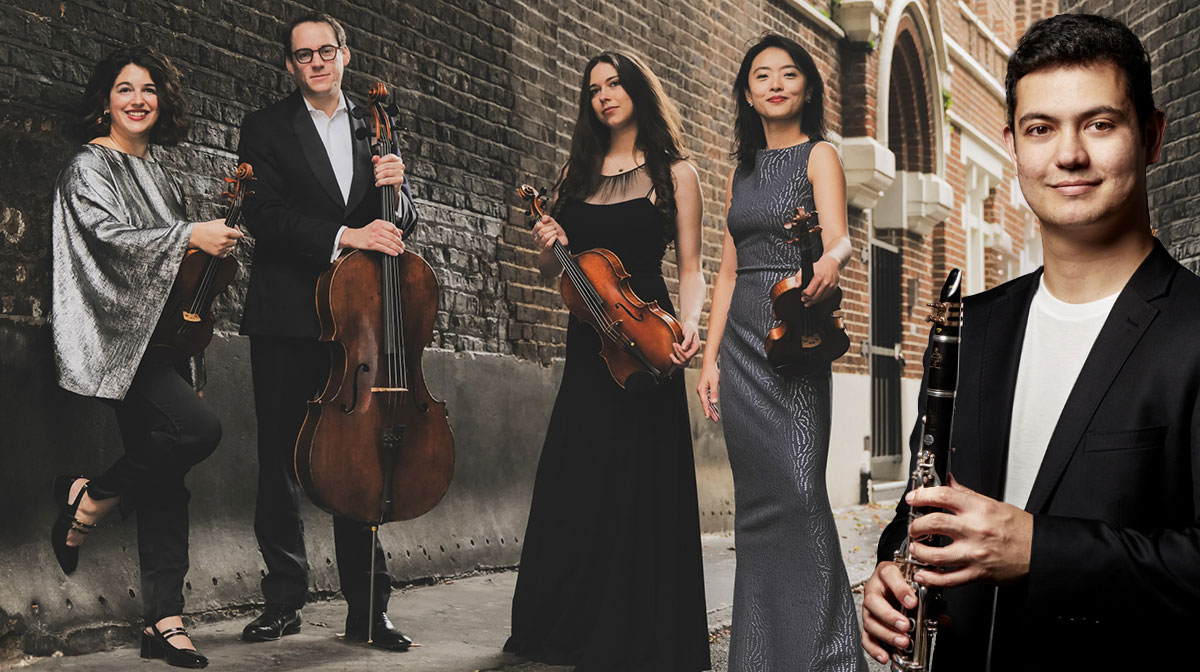
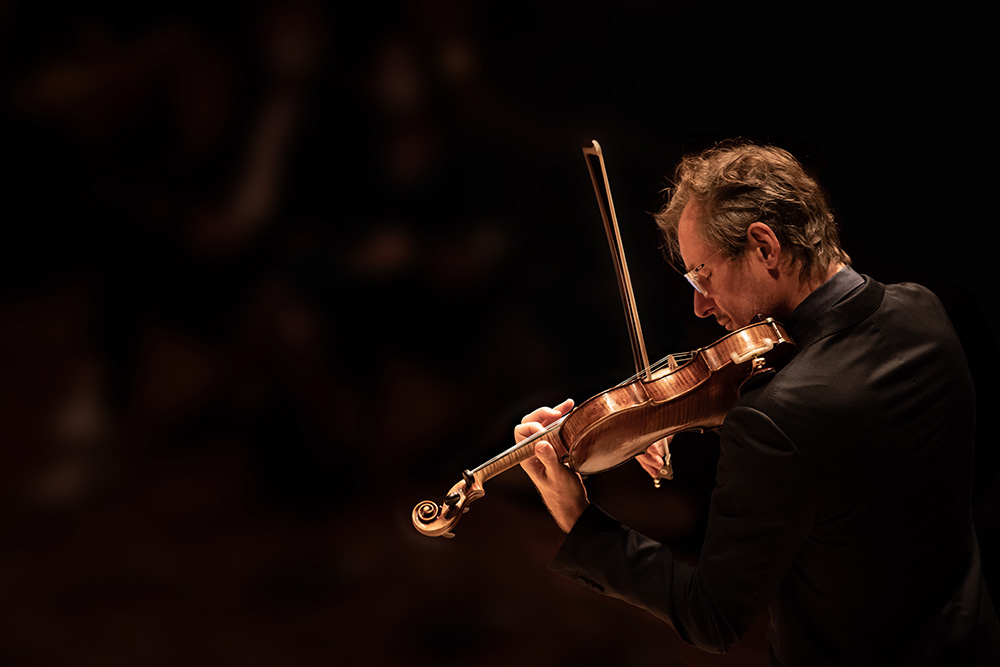
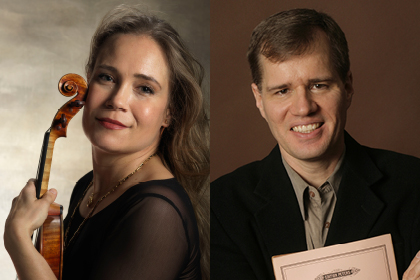
Sophia Kirsanova – Violin
Josephine Vains – Cello
Hungarian Dances by a German/Austrian (Brahms); Hungarian Rhapsodies by Liszt, who couldn’t speak Hungarian; Italian music from another German (Mendelssohn) and a wild Hungarian violinist, lurking in the wings (Remenyi): what could possibly go wrong? – Nothing, musically, in this beautifully selected programme by Coady Green, but the musical politics are interesting, and at times confusing, particularly when nationality comes into it.
Brahm’s First book of Hungarian Dances, including the vigorous and famous No, 5 in G minor, started the show, telling us that the combo of piano duet, violin and cello – arranged by Friedrich Hermann, back in the day – would make a delightful evening. These pieces are tuneful, mellifluous, with sharp contrasts of slow & fast and, often, a typical three-chord ending. The pieces, written in several instalments, by Brahms, were his most popular and profitable compositions and it’s easy to see why.
But how did Brahms, that reserved man, with his quiet charm, come to hit on creating such colourful music from a land foreign to his background? Enter Ede Remenyi,(see Note 1) a fiery Hungarian violinist. Touring Europe, with the very young Brahms as his piano accompanist, it seems that the Hungarian played such music with the German on that trip and, much later, these dances were the result.
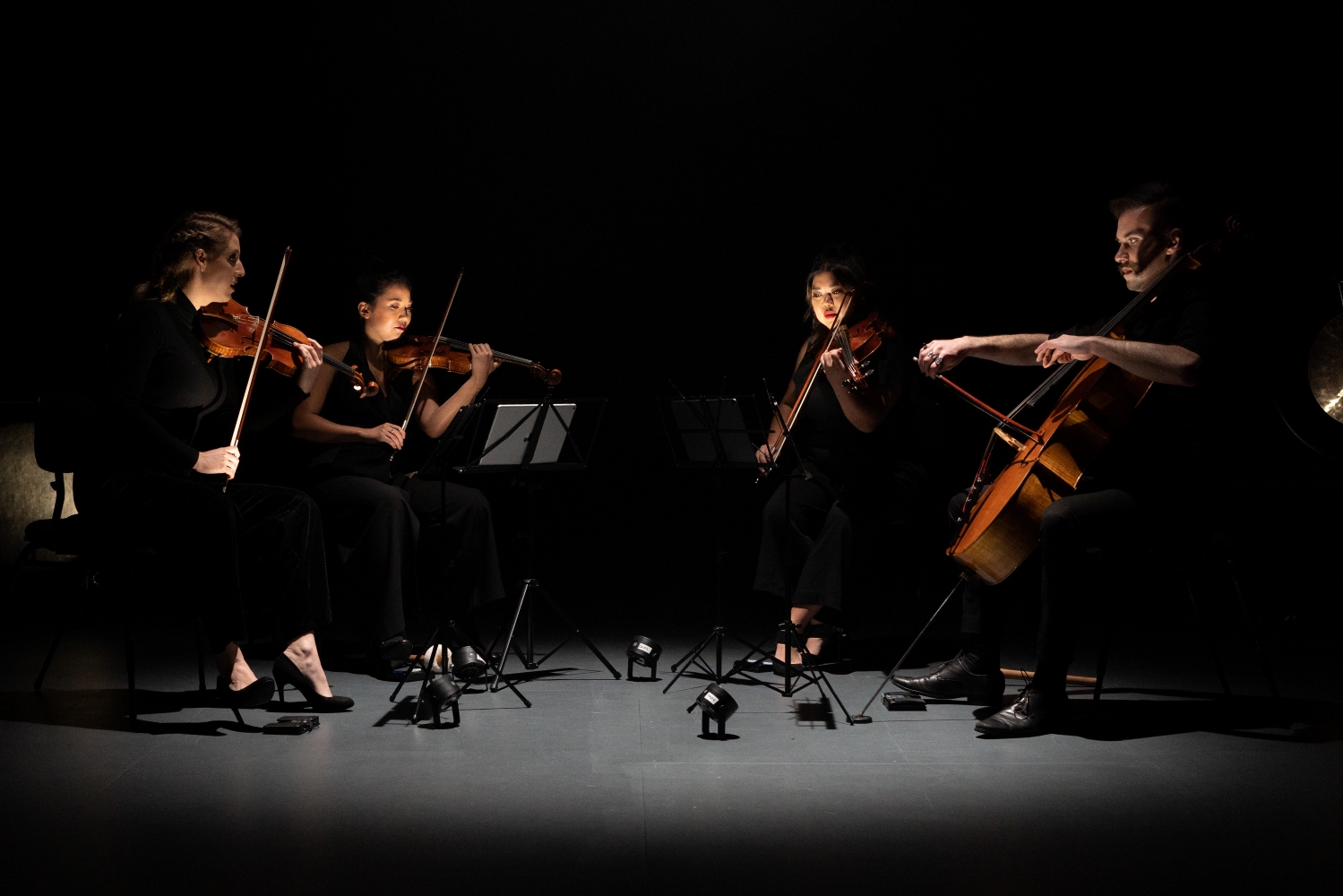
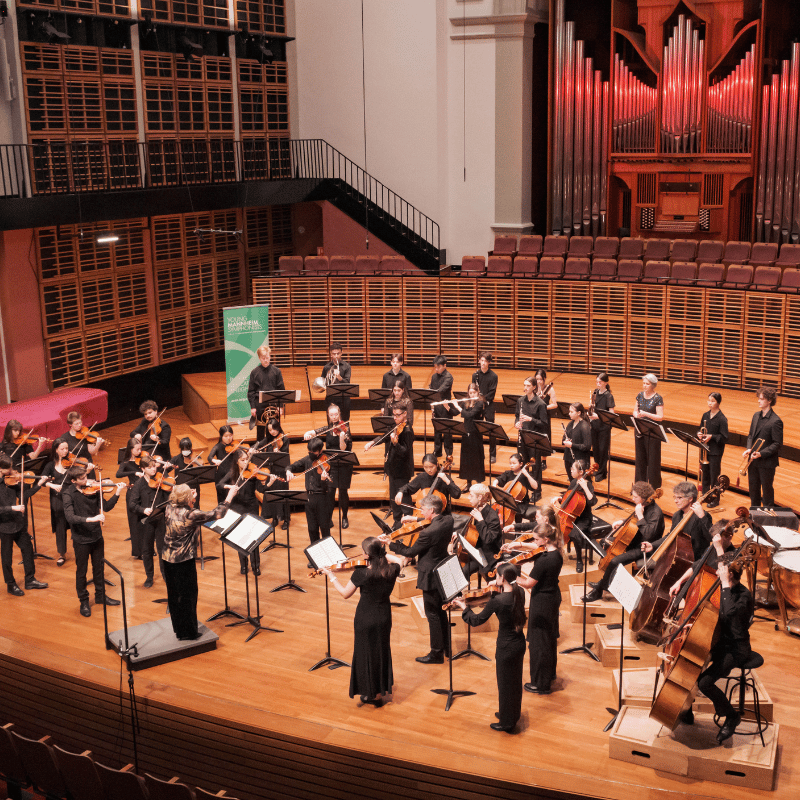
The third Book of Dances – Coady says that the second one seems unavailable – finished the first half, and the ensemble work of all four musicians was impeccable; Sophia with her polished, expert violin playing; Josephine alternating melodies with her and playing sonorous bass lines as well, and Ricardo and Coady keeping a steady four hand commentary – blending the upper and lower regions of the grand piano beautifully. Musicians are exposed in such small groupings as this was, but all shone in the setting and I was charmed to hear details that might be missed in the playing of a larger group.
Both pianists featured solo in two of the Liszt Hungarian Rhapsodies (see Note 2) in duet form, arranged by the composer. These versions were almost written by a committee: Franz Doppler, a friend/colleague of Liszt arranged six of the solo piano originals for full orchestra, with Liszt’s close supervision and Liszt then re-arranged Doppler’s take into the duet pieces. Coady and Ricardo took no prisoners in these versions, with the full orchestral sound that Liszt got from the piano, and Coady was kept very busy with the brilliant primo (upper) part, full of runs and arpeggios. Ricardo, in the forte, bass melodies starting both Rhapsodies gave us a very robust introduction to the fast and brilliant Czardas endings. The second Rhapsody, No. 2 ( in both solo and duet versions) had Liszt following Doppler’s version closely, even keeping the false start Doppler introduced in the latter part, which had this reviewer smiling.
After interval, we heard all musos in the arrangement, by Carl Burchard, of Mendelssohn’s Op. 90. “Italian” Symphony. I did wonder beforehand, how this work for large orchestra would translate into a mixed quartet form, but the answer was: perfectly. The joy of a smaller group – many and varied works would have been played like this, in salons and homes, especially in the 19th Century – makes for hearing details and musical moments that get lost in large orchestral groups and much bigger spaces.
The downstairs studio at No. 45, with the audience being close to the performers, is ideal in its intimacy and Coady’s chatty introductions to pieces brings us closer to the music and to the performers. Coady Green has a musical magpie approach to programming, choosing repertoire from here, there, & everywhere, often in formats like this night’s set-up, and I, for one, am very glad to have such a musical treasure, working so hard and so productively in Melbourne, both personally and with such brilliant colleagues.
NOTES:
1. Ede Remenyi was a magnetic & somewhat erratic musical figure; the facts of his life, until quite recently were either disputed or unknown. A Catholic convert from Judaism he, and all other Jews were forced to take German surnames by the Austrian Emperor, and he took “Hoffmann” as his; Remenyi is a Hungarian version of it = hopeful. Exiled from Hungary after the 1848 uprising against the Austrians, he toured with the young Brahms in 1853 and during the tour introduced Brahms to Liszt in Weimar. Did Brahms note the Gypsy scale at the beginning of Liszt’s Sonata, which Liszt was asked to play for his guests? Probably not, as Liszt saw that the young German had nodded off during the recital, which did ruffle Liszt’s feathers: after all he had just sight-read an “illegible” manuscript of a Brahms’ Scherzo – Brahms was too nervous to play it himself – and made appreciative comments as he played. Liszt & Brahms were poles apart in both personality & musical approaches to composition and eventually joined opposing camps, Liszt, proudly, to the sarcastically-named “Music of the Future” and Brahms to the more conservative symphonic style of Schumann etcetera. However, they both caused a musical splash with Hungarian Dances (Brahms) and Hungarian Rhapsodies (Liszt).
Remenyi was a mobile musician who toured America twice, and died there relatively young. In the 1880’s he visited Asia, South Africa and Australia. The historic house and garden, Buda, in Castlemaine, Victoria, has some mementos of his trip; the property was owned by a prosperous Hungarian jeweller, who settled there and built it; hence the name. We think of Australia as isolated in the 19th C but nothing could stop Remenyi, a force of nature, getting here: not bad for a man Brahms called “a dreadful liar!.”
2. Liszt’s 15 Hungarian Rhapsodies, published around 1850, preceded the Brahms’ pieces by decades. Liszt, a proud Hungarian, saw them as a national epic, but got himself in hot water because of them and his book on the Gypsies and their Music in Hungary. He had left Hungary as a child to study in Vienna then reside in France, with French as his first language; any Hungarian he knew as a child he’d forgotten and, in any case, the family spoke German. Liszt’s mistake? He confused Gypsy music with “authentic” Hungarian folk tunes, much to some Hungarians’ disgust. The Gypsies took music from anywhere and, often not able to read music, played folksongs and recently-composed original music in the same style, and made it their own. After Liszt’s death in Bayreuth in July, 1886, there was a proposal to send his body for burial in his homeland, but Tisza, the Premier, (an early Viktor Orban type ) said in the Hungarian parliament that Liszt couldn’t speak the language and wasn’t a “real Hungarian”. In many ways Liszt was a totally European figure, going everywhere in his touring years, but loving his homeland and promoting it whenever he could. And so his tomb is still in Bayreuth and was bombed in the Second World War, destroying the overhead structure; a side note to his son-in-law Richard Wagner’s great Opera House. When it comes to ethnicity and nationality, things can get very, very messy, can’t they?