Melbourne Bach Choir | Carmina Burana
19 September, 2025, Melbourne Recital Centre, VIC
The Occasion
And so on a Friday evening mid September when much of Melbourne is enveloped in this phenomenon of “AFL final season”, your humble scribe took it upon himself to venture forth to the Melbourne Recital Centre and enjoy the fine offerings made available by the Melbourne Bach Choir in their rendering and reimagining of the glorious Carmina Burana by Carl Orff.
The Venue
As a child growing up in Melbourne in the late 60s in the early 70s, I can firmly remember that the Royal Festival Hall and the Dallas Brook Hall with the primary venues of choice for the larger concerts. During my absence from Melbourne (while living abroad in London for 35 years), the Southbank project was developed and indeed the centrepieces of artistic culture and excellence with the emergence of the Hamer Hall and the State Theatre adjacent to the National Gallery of Victoria.
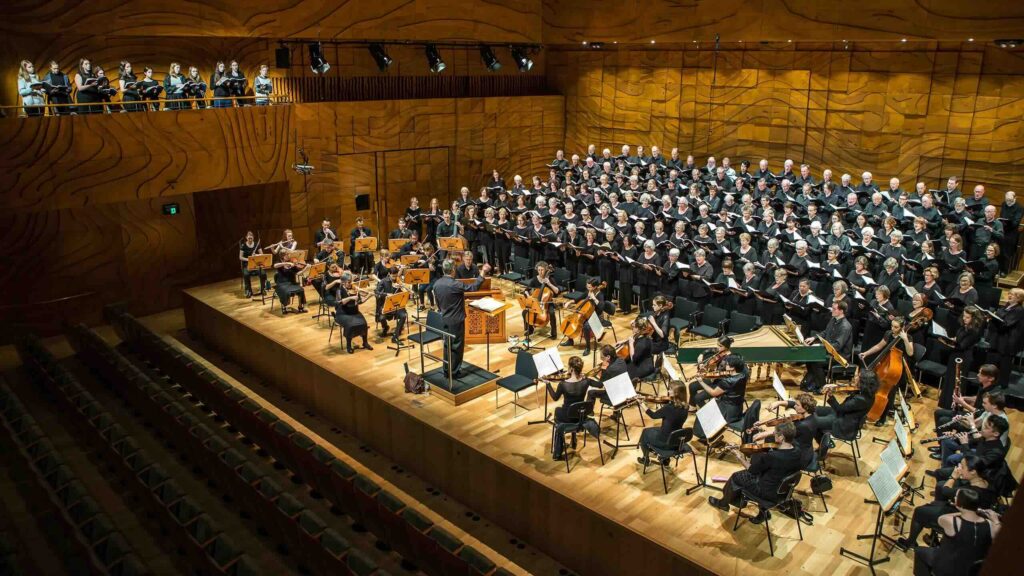
In more recent times between 2006 and 2008 we witnessed the construction and emergence of a new rival for artistic excellence in the Melbourne landscape, namely, the Melbourne Recital Centre (MRC). This formed part of a $75 million Victorian government project. The MRC features the 1001 seat Elizabeth Murdoch Hall and a small salon and boasts state of the art acoustics and a unique honeycomb like exterior. The detail and acoustic environment created within the main hall, in the pursuit of acoustic excellence, are formidable and create a world class concert centre. Nestling opposite the ABC broadcasting Centre and situated in Melbourne Southbank arts precinct and serving as a major venue for live music. The centre opened its’ doors in February 2009 coinciding with Premier John Brumby, in his celebration of the 100th birthday of the venues’ founding patron, Dame Elizabeth Murdoch.
The Composer
Carl Orff, the composer of tonight‘s mesmerising performance, occupies a rather dubious place in the pantheon of a great classical composers. The Carmina Burana, is certainly his most well-known and most performed work. He also occupies a very central place in music education, whereby he developed a percussion technique in order to educate children and introduce them into the labyrinthine and magical world of music. Orff himself was born in 1895 to an upstanding Munich family of scholars. After the First World War, Orff became a partner in the Munich Günther School. The program that he devised combines movement and music as the main sources of education.
He was inspired by the works of Bartok, Schönberg, Stravinsky and other contemporary composers. Politically he was considered a ‘lefty’ and had many Jewish friends, including the great Kurt Weill who later fled Germany to live in New York and never spoke German again. In time, Orff abandoned all associations with his dubious Jewish background, his leftist political ideology, and emphasised his newly found loathing of the dissonance of 20th century German music and indeed, the spontaneity of contemporary jazz. Instead, he emphasised his own enormous appreciation of German folk music. This was then adopted by Hitler as a calling card and instruction manual for correct German participation and aesthetic sensibilities for contemporary composers. The debate rages until this very day as to whether he himself was a Nazi but was considered to be Hitler’s “court composer”.
The Featured Work
Like many great works, raided, looted and pillaged from the back catalogue of the classical repertoire, Carmina Burana is often recognised immediately as being the music that is used for the Old Spice ad. Let me be perfectly clear, it is a far worthier and monumental construct, than a mere splash-on cologne jingle. Orff himself pillaged into a mediaeval 13th century manuscript of poems and plays found by a Benedictine monastery and in 1937 set about composing his famous Cantata. Orff was inspired by the opening lines of “O Fortuna”, about the fickle goddess of fate. He selected 24 poems from this massive Benedictine canon and organised them into this scenic Cantata. The Carmina had its debut in Frankfurt in 1937.
The Controversy
To this very day the controversy continues to rage on about whether or not Carl Orff, his educational percussive method should be taught to children and whether the Carmina Burana (CB) should be performed because of his dubious affiliation with the Nazi party. CB was itself banned for a period as a result of the works often candid sexual innuendo and because of the fact it became Hitler’s welcoming signature piece and it elevated as an emblem for the Third Reich youth culture. To be clear, Orff himself was not a card carrying paid member of the Nazi party and unlike Herbert Von Karajan, did not dismiss this as – “oh everyone was a member of the Nazi party. It was like being a member of the ski club.”
The Performers
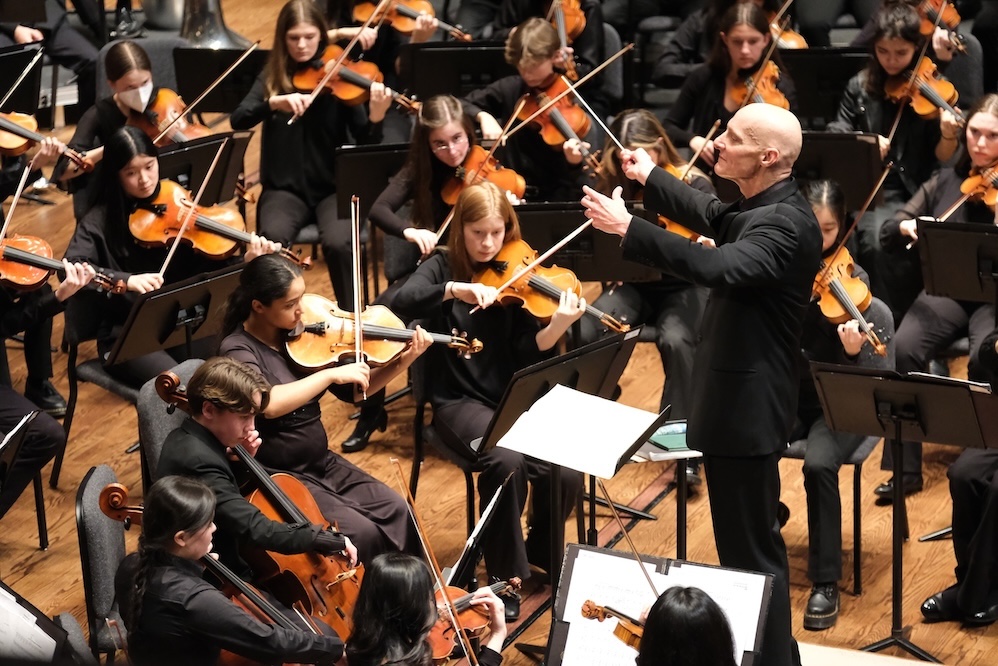
Let us not be intimidated by the epic construct of major compositional works. This is reminiscent of the Reduced Shakespeare Company in England which sets about performing all Shakespeare’s works in two hours and has two performers. This may not be as Shakespeare intended his work to be performed, but is a damn good night out. Similarly, let us not bow to budgetary considerations when it comes equally to having a vocally wonderful good night out. Apart from enormous human vocal resources the CB also requires a large scale orchestra featuring flashy percussion and brass. However, the enormous compositional scaffold and musical architecture of the CB is in no way an impediment for such an ambitious organisation as the Melbourne Bach Choir (MBC). The choir was formed in 2005 to perform a concert of JS Bach’s magnificent St. Matthew Passion and has remained at the core of the choir’s repertoire along with other significant choral works. Artistic Director, Rick Prakhoff seems to cast a spell of ubiquity over the burgeoning young music scene in Melbourne. The MBC is composed entirely of amateur musicians. I again doff my cal in admiration and support of the lofty ambition that Rick Prakhoff brings to his musical programming. Looking ahead I note that the MBC will be performing “Our Christmas Fanfare” on Saturday, the 6th of December 2025 at 3pm at Saint Johns Anglican Church, Camberwell. Something to mark down in your Christmas shopping basket.
The Performance
What an absolutely exhilarating and uplifting performance. The fact that the piece is sung in Latin sets us back in history, back into a time steeped in religious fervour, conjuring spirits and the like. Our conductor, Mr Prakhoff, led us through a jolly collection of folksy vignettes, all imbued with the right amount of joy, menace, simplicity, virtuosity, bravado, and excitement. These small modal morsels combine to create this glorious cantata. The piece that we experienced was without full orchestra, but instead was arranged for a reduced orchestra, featuring two pianos and multiple percussion as the stars. However, the real soul of the show were the two vocal ensembles – the Melbourne Bach Choir and the Australian Children’s Choir. Our three soloists gave virtuosic performances of very demanding vocal parts. The bulk of the heavy lifting was sung by our bass baritone, Christopher Hillier, who worked his way through immensely difficult material with mischievous gusto. Our beautiful soprano, Jane Magão, bedecked in a lush, green, translucent satin frock, also gave a spirited performance of an equally difficult part for soprano. Our male tenor, Robert Macfarlane, who had somewhat of a brief cameo, came out festooned in a honeycomb, Noel Cowardesque smoking jacket, and set about with great comedic endeavour as he handled some rather difficult top end and falsetto counter-tenor writing.
On an evening, which centred around AFL magic being performed at the G, there was certainly plenty of magic on display at the Melbourne Recital Centre. Congratulations to one and all.