Phoenix Collective Quartet | The Art Music of Joe Hisaishi
17 May, 2026, The Utzon Room | Sydney Opera House NSW
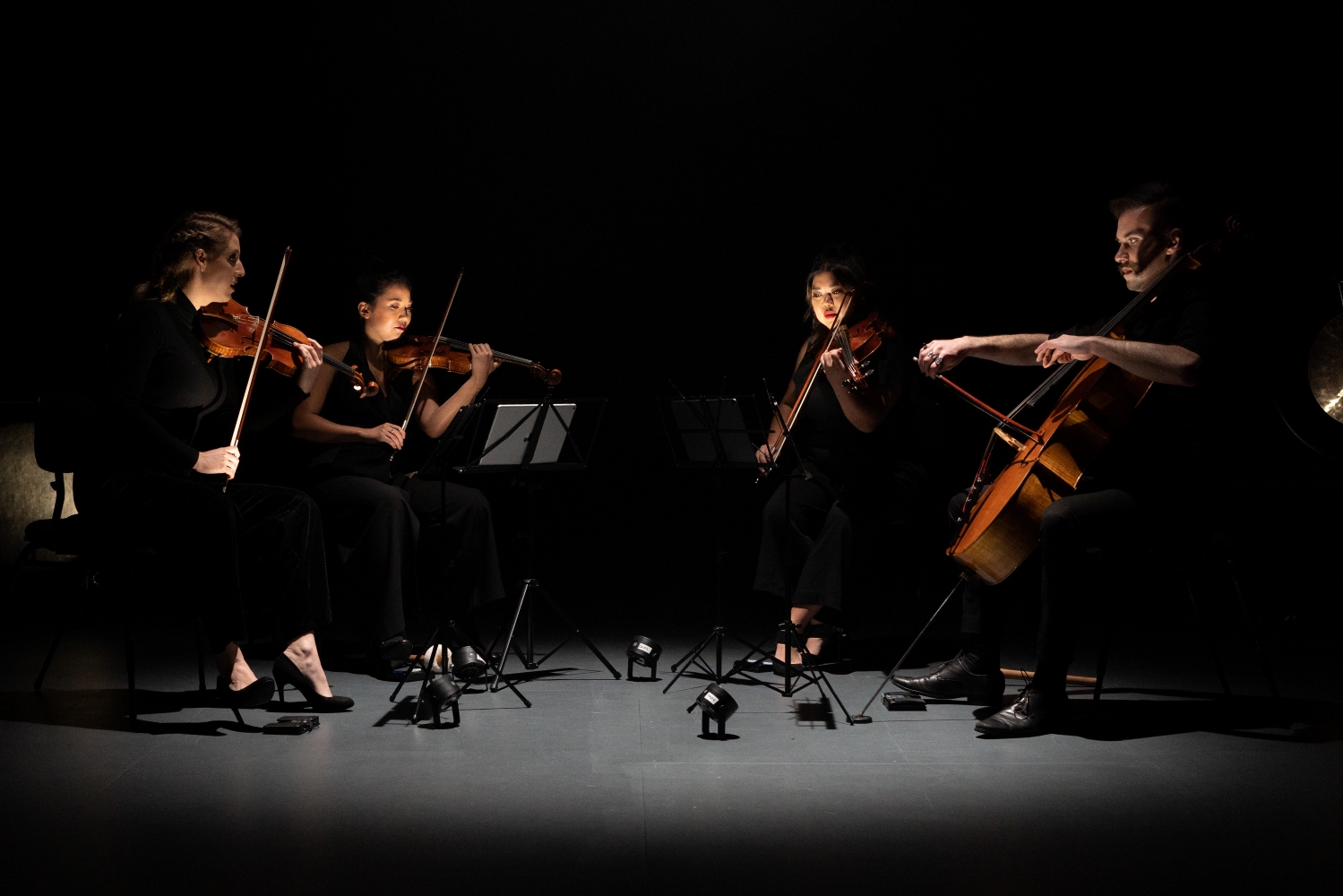
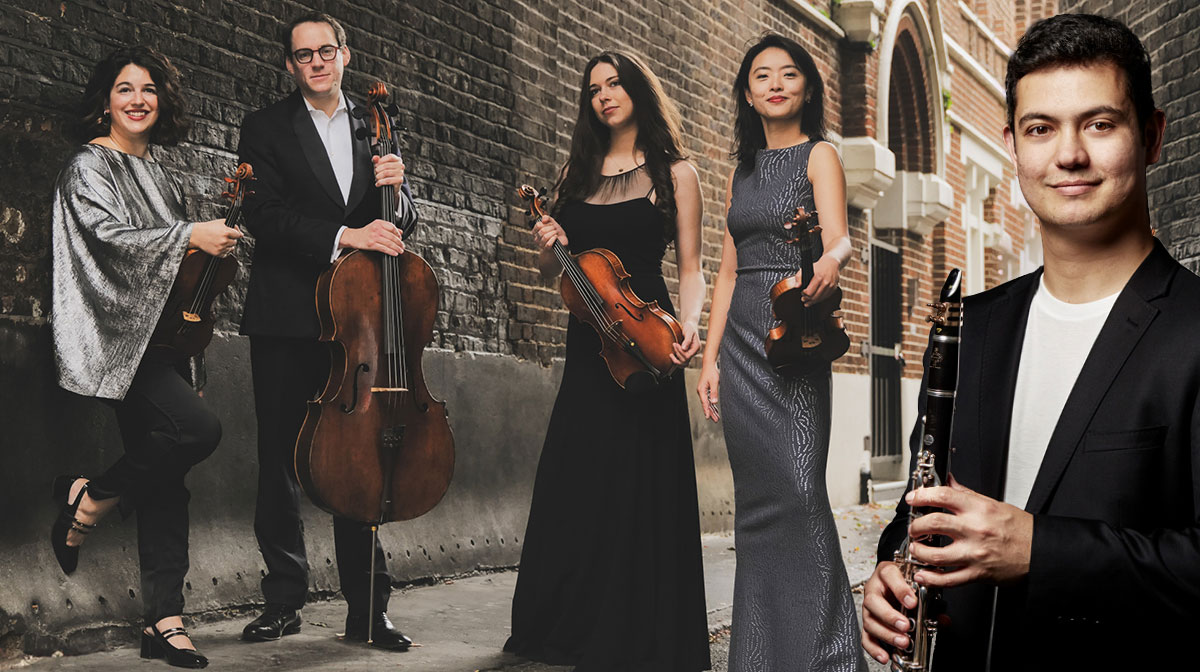
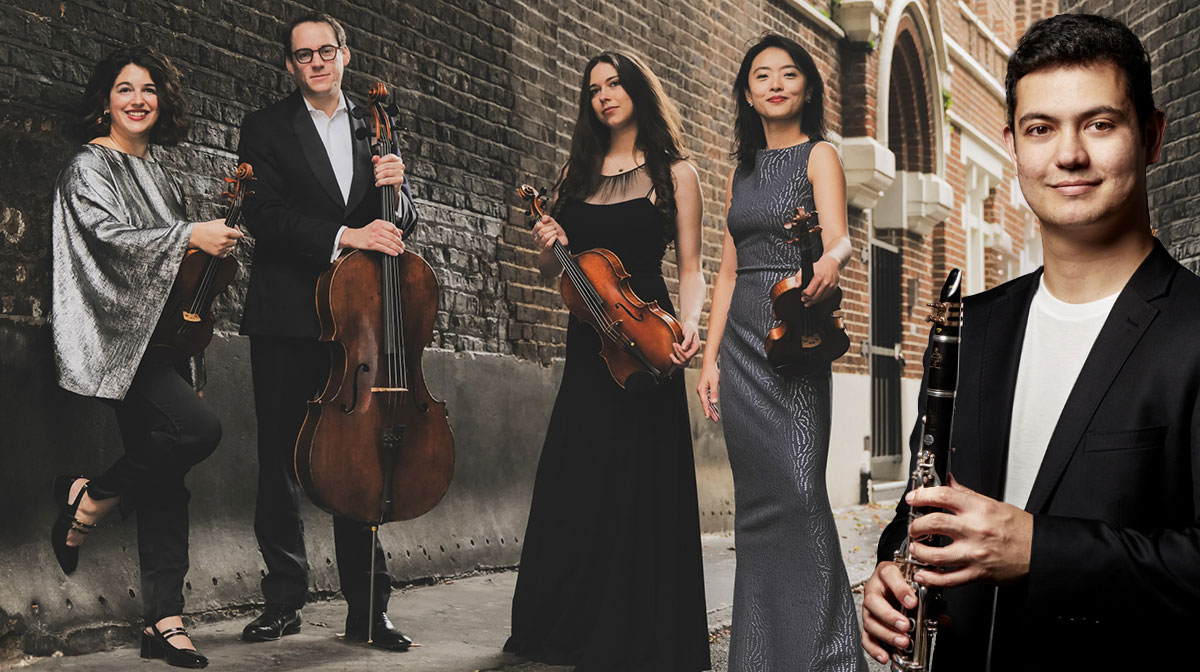
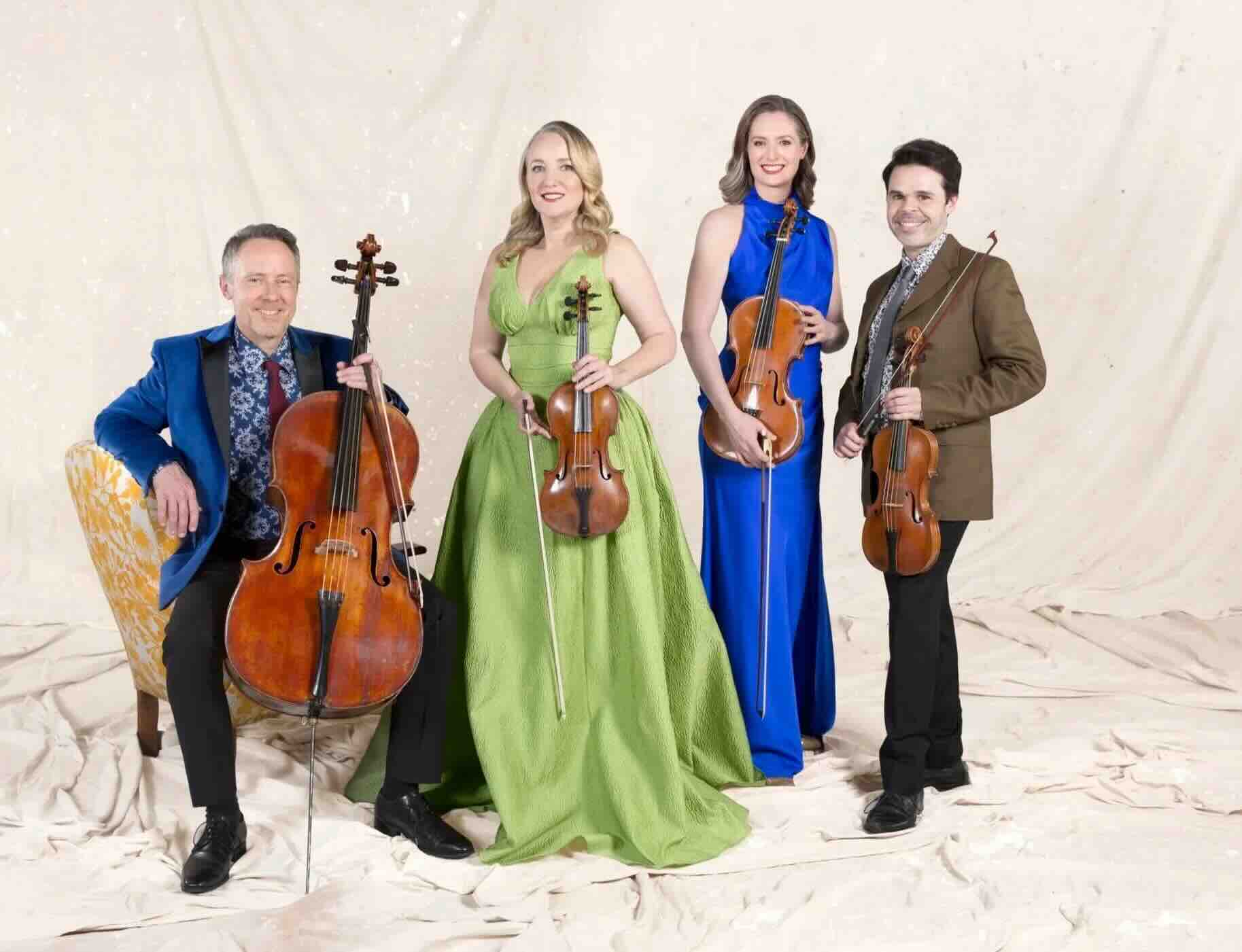
As devotees of soirées at the Utzon Room, Sydney Opera House heed, the early bird gets the best seats. Packed house with 20 minutes to go before the accomplished members of the Phoenix Collective Quartet strode onto the stage floor. Behind them, grey sky reflected in the still waters of Sydney Harbour while silent vessels plied their courses trailing ribbons of white churn. For their first 2026 concert, the Collective opened an enchanted gateway to the celebrated Studio Ghibli composer Joe Hisaishi, the world’s best known anime scorer responsible for the blockbuster films such as Totoro, Spirited Away and Howl’s Moving Castle.
The afternoon concert featured Hisaishi’s String Quartet No.1 – each movement of this complex and beautiful piece is a response to artwork by legendary graphic artist, MC Escher whose mysterious views of illusion and playful trickery is counterparted by the genius of Hisaishi’s musical architecture.
Selections from his best-loved anime scores completed the program full of whimsy, quirky fun and musical discovery. The influence of jazz and Japanese electro-pop is evident in his scores of musical language exploring art, which has an entirely different flavour to his sweeping cinematic scores. The performance began with Wave, a melodic sway of fluid notes that percolated the room, followed by Mononoke Hime from Princess Mononoke, themes from Kiki’s Delivery Service and Madness from Porco Rosso.
The collective delivered some of the most beautiful melodies, requiring the skill and discipline of this admired quartet, launching into String Quartet No.1, a four-part inscription that is Joe Hisaishi’s signature composition – Encounter, Phosphorescent Sea, Metamorphosis and Other World. Written in 2012, it was inspired by the composer’s exploration of the artworks of Dutch artists Vermeer and Escher. The quartet is based on a commission for an exhibition by art expert, Shinichi Fukuoka, who created digitised artworks aiming to show how Vemeer’s artwork would have looked in his own time, which Hisaishi’s music was designed to accompany. The four works became the String Quartet No.1 which extrapolates Escher’s mesmerising fractal artwork, his detailed and visual illusions which are reflected in the almost mathematical complexity of Hisaishi’s composition. Offering delicate chords that ripple like grass in the wind to melodies in the strings that soar into the blue infinite sky, there is no music that can readily make your imagination take flight like the music of this impresario. His contemporary music unites his gift for orchestration with inspiration drawn from Romanticism to Baroque. Listening to the unrestrained magic is a boon to the senses, ‘picturesque’ when describing Maestro Hisaishi’s Swept Away. Immersion in his music is a treat, considering this iconic music has been the soundtrack to people’s lives for decades.
The first movement, Encounter, is based on the highly tessellated graphic showing divergent circular evolution of dark and light humanoid grotesques merging into a reflective pool. The composer embodies this extra-dimensional artwork through a controlled cadence and mathematical rhythms. The movement is unusual as it starts with a near unison passage, progressing through various iterations of the theme, which is subsequently flipped. With the second movement, Phosphorescent Sea, atmospheric harmonics and glissandi express the tranquility of Escher’s lithograph of the same name. Escher’s Metamorphosis explores the graduated transition of one shape into another which in Hisaishi’s creation, a series of modulations in which the material is presented in different rhythmic contexts. The final movement, Other World, is based on a wood-engraving showing a Renaissance-style interior where perspectives seem to shift into various segments of the room. Hisaishi’s use of hocketing — dividing a single figure between several players, showed the mastery of difficult scales by the Phoenix Collective’s musicians, reflecting the idea of multiple perspective expressed through strong ostinato, while the dreamlike, alien nature of the landscape is portrayed through long, dovetailing pitches at the opening of the movement.
I am grateful for the explanatory notes provided through the Collective because the interpretation of Hisaishi’s work is not so much music but brilliantly constructed aural manifestations of Escher’s landscape of the mind. This is highly complex piece for the musicians to execute explained Pip Thomson violin 2, “something to experience but not necessarily whistle after the performance”. For the final pieces the Collective enthusiastically launched into the classic themes ‘Name of Life’ from Spirited Away, ‘Merry-Go-Round of Life’ from Howl’s Moving Castle, ‘Ask Me Why’ from The Boy and the Heron, finishing with the vivacious ‘Melody Road’ from My Neighbour Totoro. The applause was electric and heartfelt by the enthusiastic cadres of fans of these wonderful melodies that bounced around this reviewer’s head long after the successful performance concluded.