Concertos for Two Harpsichords
Melbourne Digital Concert Hall
Monday 15th November 2021
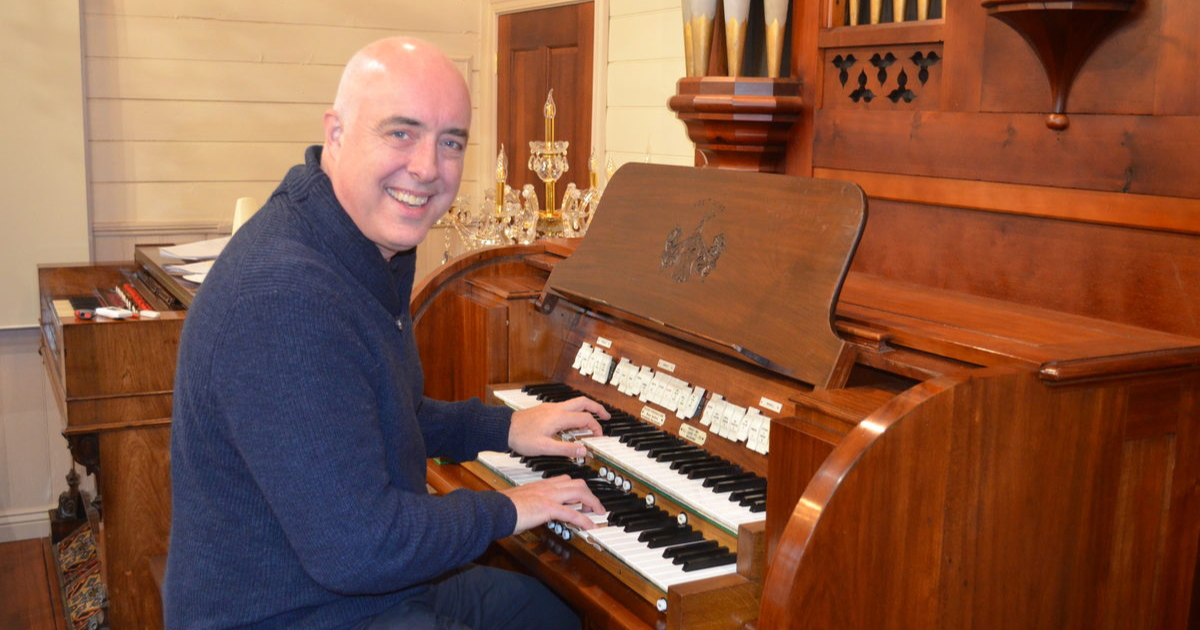
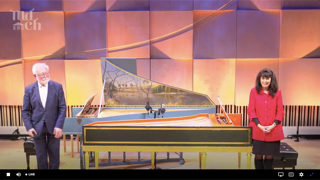
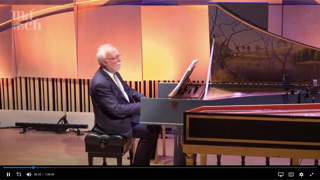
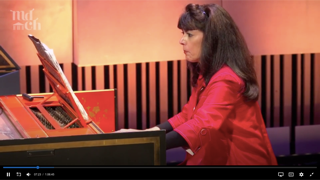
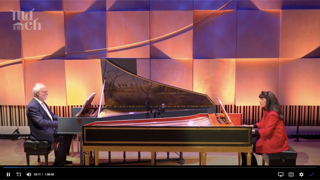
Accademia Arcadia musicians Jacqueline Ogeil and John O’Donnell performed 18th-century concertos and vignettes for harpischord duo in a concert from the Melbourne Recital Centre, live-streamed and with live audience. Positioned on the left of the stage, blue-suited John O’Donnell performed on a Bill Bright harpsichord of matching true blue hue, its lid raised to display a painted Australian scene of trees and reflecting river. To the right, Jacqueline Ogeil harmonised in red concert dress at the green, gold and red William Dowd instrument. Nestled between the harpsichord bentsides were two microphones.
The concert began with three miniatures in the key of A major by François Couperin, pre-eminent French keyboard player and composer of his day. His four volumes of harpsichord music contain a multitude of movements with evocative titles. The Allemande which opens his ninth keyboard ordre (suite) is set for two harpsichords. There was a good clear balance between the two instruments, with the low registers decently resonant, and the performers captured the character of this stylish courtly dance by means of elegant notes inégales and deftly mastering the conglomeration of decoration.
La Muséte de Choisi and La Muséte de Taverni from the fifteenth suite took us to the French countryside. The descriptive names indicate Couperin’s personal associations with royalty – one of his pupils, the Princess de Conti lived in Choisy, while the Duke of Orléans (Louis XIV’s brother) owned a country residence in Taverny. The two harpischords executed an excellent evocation of the nasal droning musette (bagpipe). John O’Donnell pointed out that harpsichords are unable to sustain a drone; instead, notes of the 5th (A and E) were continuously repeated to generate the rustic effect. Both keyboards created a full vibrant sound as they alternated between A major and A minor.
During the 1730s Bach significantly wrote a number of concertos for multiple harpsichords. In the baroque period the keyboard would usually provide the basso continuo with added harmonies, or be used for solo pieces. His Concerto a due Cembali in C major is the most substantial work written for two harpsichords. While dispossessed of orchestral accompaniment, the duo were manifestly self-reliant, achieving full-bodied tutti sections and contrasting solo passages. The music abounded with Bach’s typical energy, brimming joyful figurations and ever-remarkable rigorous counterpoint. Following the opening stately gesture, the players participated in antiphonal dialogue, with a pleasant variance of shade and colour imparted by using the different harpischord manuals. Proceeding from this jubilant mood, a sparsely textured minor-key pastoral interlude favoured the continuance of musical exchange and effective echoes. (This was an appropriate point for the sun to rise in the UK!) There was no let-up with the final elaborate fugue, cheerful in spirit, and it’s entertaining to imagine Bach performing these works with the collegium musicum in Leipzig alongside his talented sons and pupils.
Little is know about Giovanni Bernardo Zucchinetti (1730 – 1801). He held positions as organist and director of music in the northern Italian cathedrals of Varese, Monza and Milan. His two-movement Concerto for Two Organs in Bb major (performed on harpsichords) was delicately ornamented and wonderfully charming within classical proportions. The Spirituoso measured up to its name – a binary structure with playful themes and numerous echoing passages, while the following Allegro was more subdued and gently tuneful in nature. Jacqueline and John created an interesting variety of tone quality and textures with their considered changes of string ranks.
 The German organist and composer Johann Ludwig Krebs was one of Bach’s most accomplished pupils. He remained in Leipzig beyond his student years and performed in the collegium musicum, all giving rise to the quip about a crayfish (Krebs) being caught in a brook (Bach). Bach’s influence is clearly heard in the skilled contrapuntal writing and highly virtuosic passages of his Concerto a II Cembali obblgati in A minor, another work of substance for the paired combination. The piece opened with a brazenly angular tutti, followed by lively musical dialogue and an excitingly extended cadenza. The slow movement affettuoso was beautifully tender, the two performers in constant equal partnership. Elegantly galant in style, the final Allegro ended in solid unison. This was a most enjoyable concert featuring unique works and the rare combination of double harpsichord – testament to a happy alliance!