BUŊGUL
Gurrumul’s Mother’s Buŋgul, Gurrumul’s Grandmother’s Buŋgul, Gurrumul’s Manikay
Wed June 14, Hamer Hall, Arts Centre Melbourne
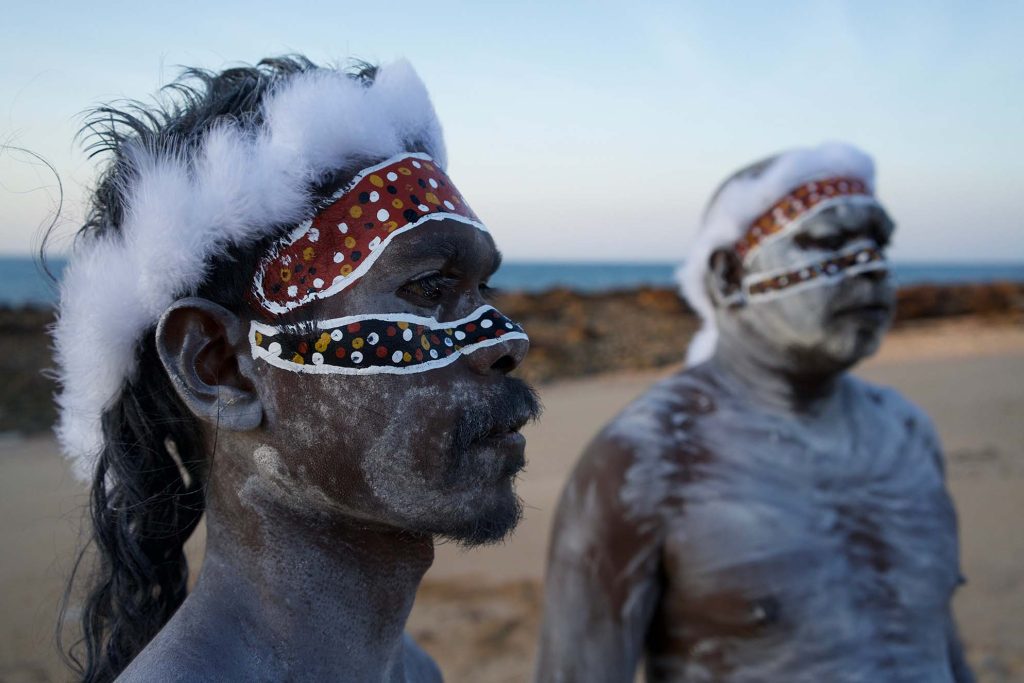
Buŋgul – Gurrumul’s Mother’s Buŋgul, Gurrumul’s Grandmother’s Buŋgul, Gurrumul’s Manikay is an immersive experience, a journey in song and dance, and a cultural gift from the Yolŋu people. Started by the late, great Gurrumul Yunupingu and finished by his collaborators, the composer Erkki Velheim and music director/producer Michael Hohnen.
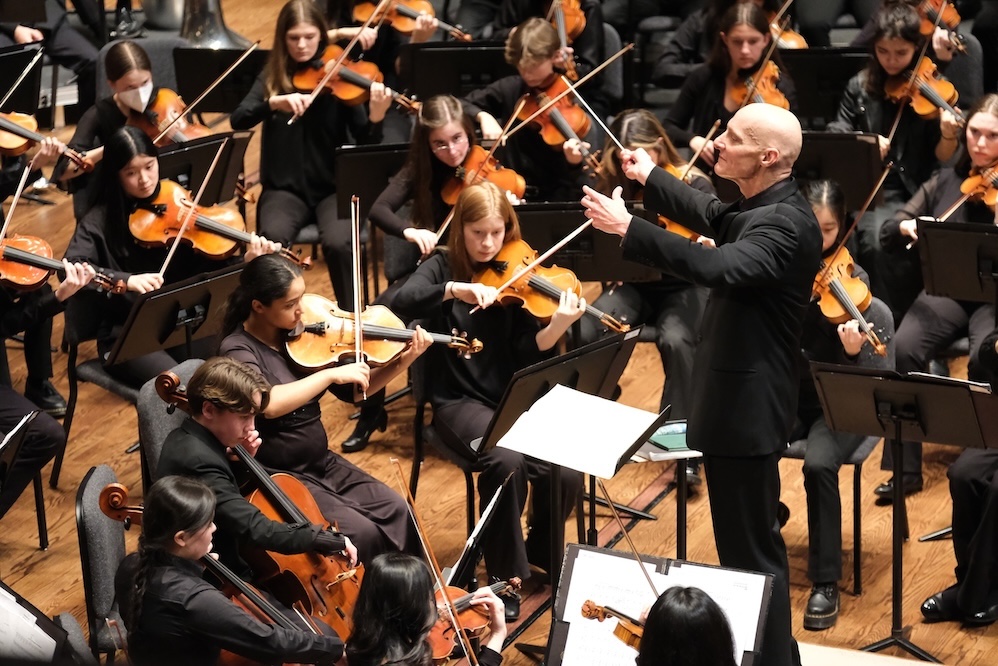
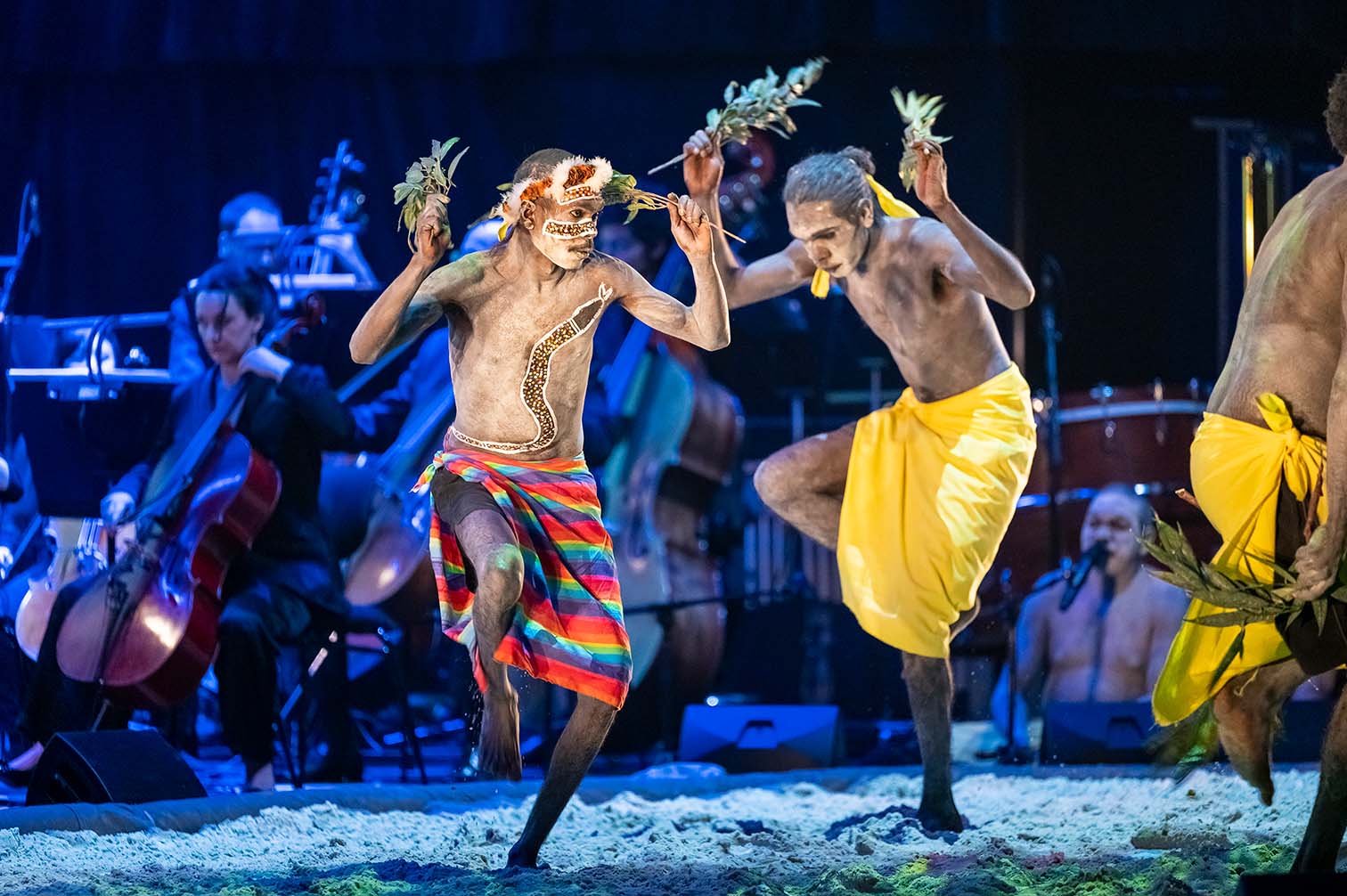
Buŋgul is a real festival showpiece. The Melbourne Symphony Orchestra provide a rich and expressive orchestral sound, the background is a huge screen which draw us in with scenes of unparalleled beauty from Arnhem Land, close ups of indigenous artworks and the performers on stage in action, all of which is joined together with live singers, dancers and performers of the Yolŋu people telling us stories passed down from ancestors.
The result is astounding, the creation of something deeply moving and original.

I was a bit nervous about how to write about such an important work that has already been shown in other festivals around Australia, perhaps because right now we are at a crucial moment in the life of this country with the upcoming referendum on the Voice to Parliament.
Hamer Hall was bathed in the glow of a sun-like circle of light reflecting the bright colour of the sand on the stage in the massive screen dwarfing the orchestra, showing landscapes and seascapes above and beneath the waves from North East Arnhem Land. These scenes were interspersed with live camera footage of the action on stage from different angles and viewpoints bringing us closer to the performers than traditionally we might be at an orchestra concert.
The music comes alive with dancing, singing and yiḏaki, the Yolŋu name for the didgeridoo, who performing live onstage, stirring and kicking sand which is spread over the floor. Over the course of the performance we hear manikay, 12 songs which have survived thousands of years and been passed down through generations, which describe animals, ancestral beings, stories, histories and aspects of country, such as fresh water, dark clouds and the sunset of a glowing red sun.

Depicting these scenes above the performers and orchestra is the keen and clear cinematography of Paul Shakeshaft and video designer Mic Gruchy. Dramatic vision that seems to bleed from the screen onto the stage and over us, amplified by the excellent lighting design of Mark Howett and Chloe Ogilvie.
Each manikay is unique and character-filled. There were cheeky moments, the splashing of imaginary fresh water over the dancers and the audience during the Gapu section and a rockstar moment for performance and audience in the section called Djoliŋ, where the performer took his role as a Djiŋarra, a gifted musician very seriously, and to our great delight.
Other sections such as those with stories about the Rainbow Serpent, Gopuru or blue fish tuna and octopus, were beautifully crafted with artworks of country, and sympathetic dress and decoration displayed on the performers. We were captivated by the action on stage.
Erkki Velheim knows the work well, as composer, collaborator, orchestral arranger, and conductor. The Melbourne Symphony melded and blended with the performers and the visual display. There was no sense of competition between the elements but a gentle confluence of sounds and musician traditions, neither one trying to rob the other of stage presence, but coming together to offer something of incredible beauty.
When the face of Gurrumul Yunupingu emerged on the large screen with the orchestra playing, songmen singing and dancing, I was especially moved. Dr Yunupingu died young in 2017 at the age of 46. First Nations people do not enjoy the same life expectancy as the rest of us in this country. It is a collective shame that he and many others have not lived out their full years, and we are all poorer as a result.
Djungaya of Gumatji Clan and Leader, Don Wininba Ganambarr along with Nigel Jamieson directed Buŋgul and in doing so are continuing a legacy of 60,000 years of songlines and traditions, generously joining these much older traditions to the much younger western classical orchestra tradition. If you can, tune into composer Deborah Cheetham Fraillon AO on this subject, I could listen to her talk about it for days.
It’s so easy to feel pride at being Australian in the presence of such a fusion of culture, music and technology. If you can, catch one of the remaining performances as part of the Rising Festival I have no doubt you too will be warmed by the generosity of the performance and inspired. My original apprehension was forgotten and I couldn’t help but leap to my feet at the conclusion joining in the cheering with others.
Perhaps in the upcoming referendum we have an opportunity to do right by Dr Yunupingu and his people, not just with a standing ovation, but to ‘walk together’ an invitation I felt came to life during this performance of Buŋgul.
Photo Credit: Key image Buŋgul by Anna Reece
Photo Credit: body images Tiffany Garvie