On 9 November 2018, an appreciative audience gathered at Old Government House to experience a recreation of a concert held in exactly the same location on the same date 112 years before, in 1906. The original concert celebrated King Edward VII’s birthday, and the version presented by Soirées Musicales Quintette replicated the original program faithfully. (Except for one piece, which appears to have never been published – more about that further on.)
Under the stunning, earring-like chandelier mimicking the cascading seed pods of a Bangalow palm, cloaked by rich wood panelling, parchment-coloured walls, floorboards muffled with a bold, contemporary designed rug, the grandeur of Old Government House set the scene for a evening of time travel.
The program opened with a Schumann piece for solo piano arranged by Liszt – Devotion – an appropriate title for the original 1906 concert which was, in addition to celebrating the King’s birthday, dedicating the then-new Bechstein piano to its new southern hemisphere home in Brisbane’s Old Government House (then simply known as Government House).
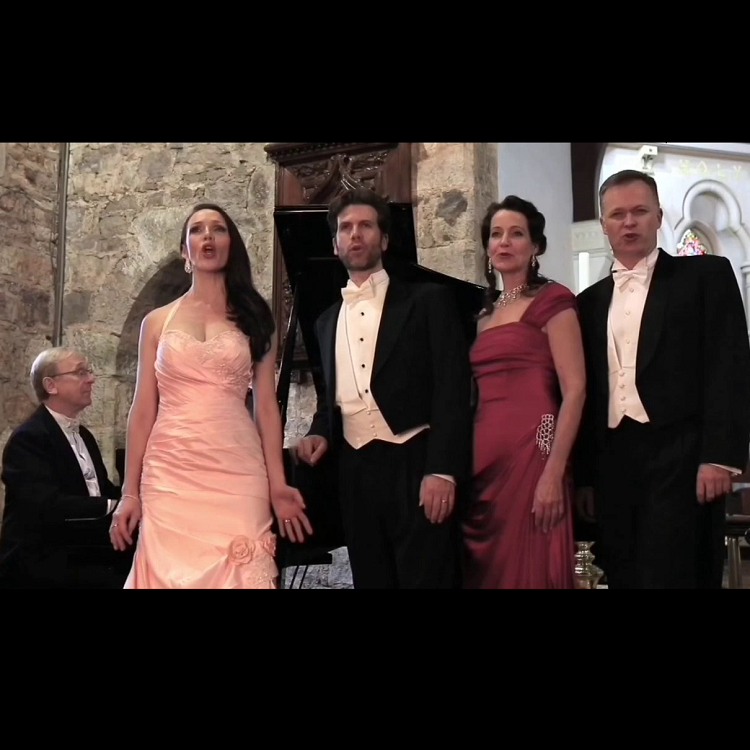
Peter Roennfeldt’s lyrical treatment let the piano – the same Bechstein, still in fine condition – tell its story through its warm, clear tone. During Liszt’s dramatic chords, the four vocal soloists appeared at the top of the grand staircase, slowly making their way down to the first landing. Introducing the first of four partsongs, Robert Lucas de Pearsall’s O, who will O’er the Downs revealed the singers’ strengths with an even, balanced interpretation.
The next piece was the sweet, lullaby-like O Hush Thee, My Babie by Arthur Sullivan, better known for his collaboration with WS Gilbert, but notable on his own merits.
Bringing a nice touch to the Mozart aria Non mi dir from Don Giovanni, Annie Lower slowly descended the stairs singing and gesturing to Matthias Lower – moments of coloratura bristling with emotion. Mirroring the dramatization, Matthias Lower sang the next piece, Beloved, it is morn, to his real-life beloved, Annie Lower, gently touching her cheek in a moment of tenderness, reflecting the lyrics by Irish poet Emily Hickey. Roennfeldt’s accompaniment ensured the Bechstein sang its own bright song, particularly shining in the Mozart aria.
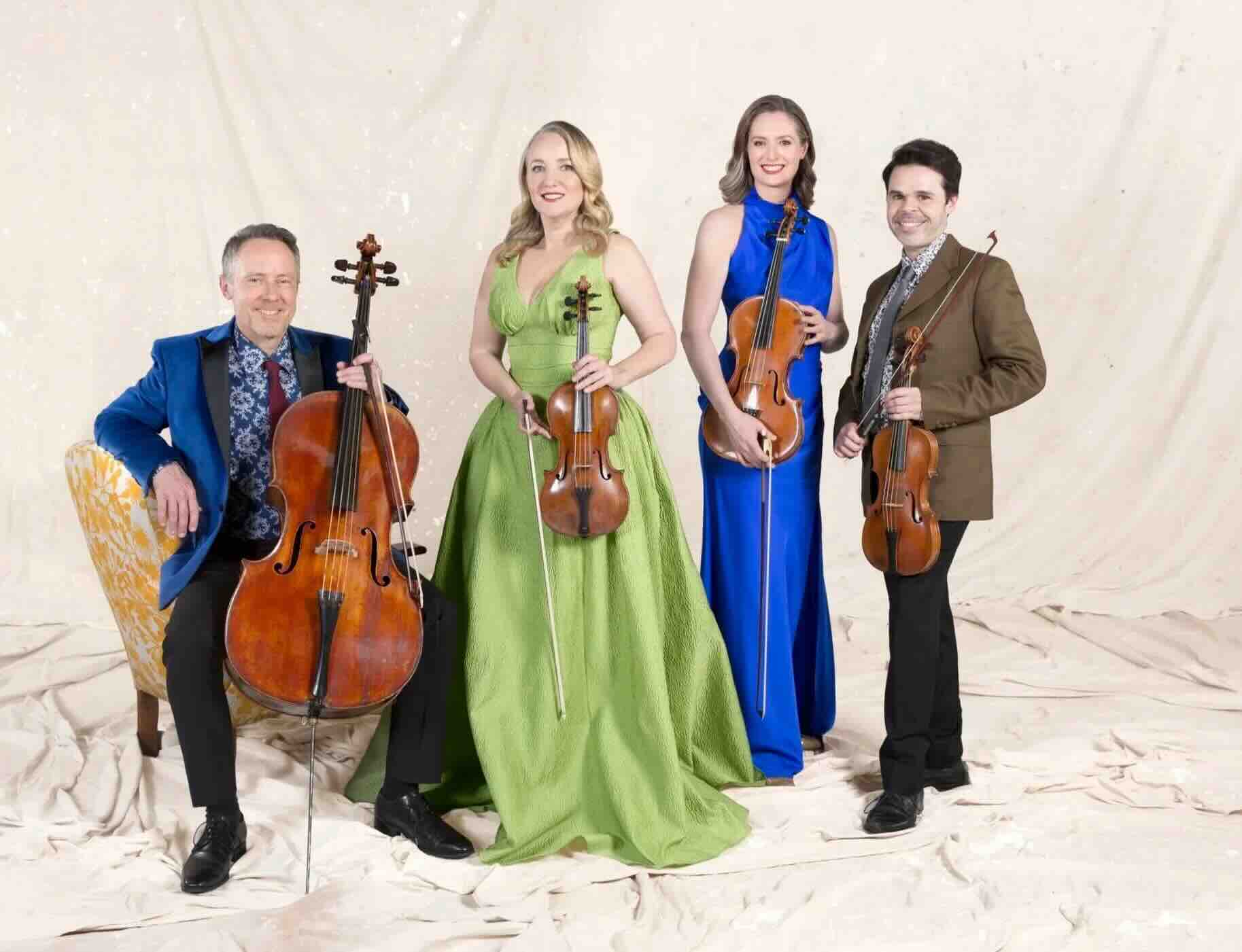
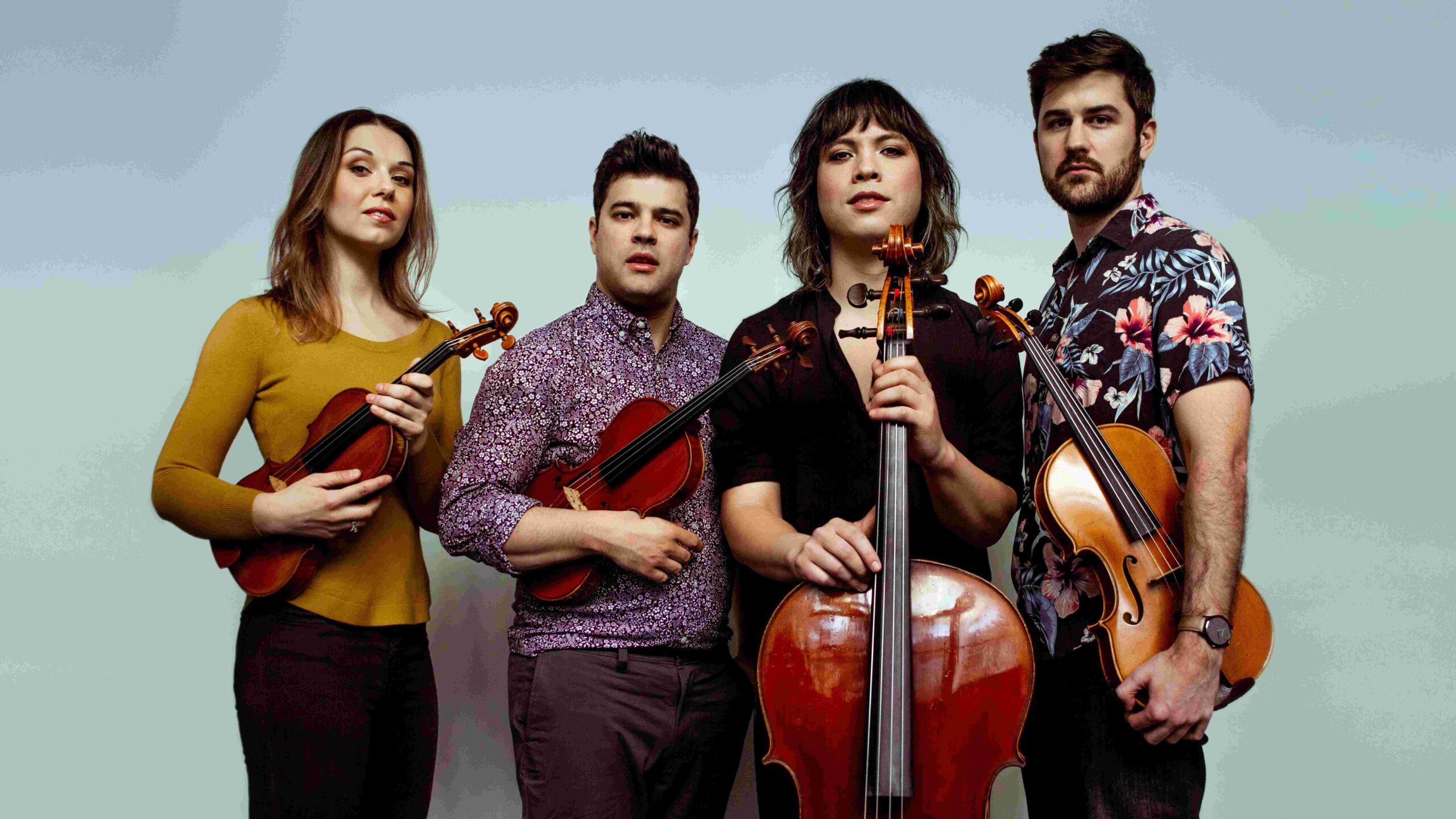
Dvorak’s String Quartet in F, ‘The American’ was warmly expressed by the string quartet – Margaret Connolly and Helen Travers on violin, Nicholas Tomkin, viola and Daniel Curro, cello. The acoustics of the space were well suited to the string instruments. The audience erupted into rousing applause as the finale drew to its dashing finish.
More performer interaction next, as baritone Leon Warnock offered soprano Rachael Griffin a rose, leading into her beautifully sincere rendition of Se Saran Rose by Luigi Arditi (Melba’s waltz song). In Gounod’s aria from The Queen of Sheba – She alone charmeth my sadness, Warnock’s mellifluously rich voice reverberated off the wood panelling, supported by equally dramatic accompaniment.
Introducing the next piano solo, Peter Roennfeldt explained how he had enjoyed researching the pieces for this performance, acknowledging the significance of the original event in Queensland’s musical and cultural history. The 1906 performance of the Dvorak quartet was its Brisbane premier, and the original concert featured a piano piece by English composer George Edmund Bambridge, Mazurka Caprice. Unfortunately, it seems that the work was never published, so Roennfeldt tracked down another piece by the same composer, Evaline Valse. (Thanks to Roennfeldt’s research skills, a copy of the music was obtained from the British Library.) The historical significance was not lost on the audience, who were likely to be have been the first in Brisbane to hear Evaline Valse performed live. With hints of Chopin’s Minute Waltz, the piece was an exuberant inclusion.
In one of the most moving items of the program, The Sands o’Dee, soprano Rachael Griffin expressed the sad story of a shepherdess who drowned in a storm only to haunt “her grave beside the sea”. Griffin’s heartfelt accentuation brought the story to life, with the lyrics reflected by impeccable phrasing on the piano, which painted a meteorological-musical picture: rain falling, mist closing, rowing arpeggios and ghostly calling.
Leon Warnock’s clear diction and precise expression took the audience along for a galloping ride in Maude Valérie White’s The Old Gray Fox, which told the uproarious story of a wily fox outwitting its hunters.
Violinist Margaret Connolly returned to perform Le Cygne (The Swan) by Saint-Saens, followed by Moto perpetuo by Franz Ries, a stunningly zippy piece that had the violin racing like a wind-up toy (or perhaps an old gray fox?). Connolly’s deftness with the staccato bow strokes in this showpiece made me think it must have already been part of her repertoire, but I discovered from Peter Roennfeldt afterwards that she had learned it especially for this recital.
Following Matthias Lower’s stirring, spring-like Amore amor by Pier Adolfo Tirindelli, Annie Lower once again sashayed down the imposing staircase delivering a joyful piece by Robert Batten, April morn, with glittering notes that echoed the hope and delight of a new season.
The four singers gathered for two final partsongs – Joseph Barnby’s soporific Sweet and low, with its Christmas carol-like nature that elicited murmurs of appreciation from the audience, and a suitably calming send-off with Good Night, Beloved by Ciro Pinsuti, giving each voice a moment to shine, while highlighting the group’s collective power. In a nice finishing touch, with the final “good night” the singers exited in pairs to the left and right of the room.
In a nod to the intention of the original recital 112 years ago, Peter Roennfeldt introduced the encore-finale, Beethoven’s version of God Save the King, rearranged by himself to include the string quartet and sung with great fervour – enough so that I caught myself humming it hours later.
These are voices that get straight to the heart. The level of interaction between the singers – and the obvious degree to which they enjoy performing – makes Soirées Musicales Quintette as agreeable to watch as they are to listen to.
This faithful recreation of a significant moment in Brisbane’s musical history was brought to life with dedication and devotion. Being able to host the event in exactly the same location – Old Government House – brought a true sense of place to this trip back in time.