Sydney Symphony Orchestra | Lyrical woodwinds in the city
7 August 2025, City Recital Hall Angel Place, Sydney, NSW
PROGRAM
R Strauss: Serenade for 13 wind instruments in E flat, Op.7 (1881)
R Strauss: Suite in B flat, Op.4 (1884)
Dvořák: Serenade in D minor, B77 (Op.44) (1878)
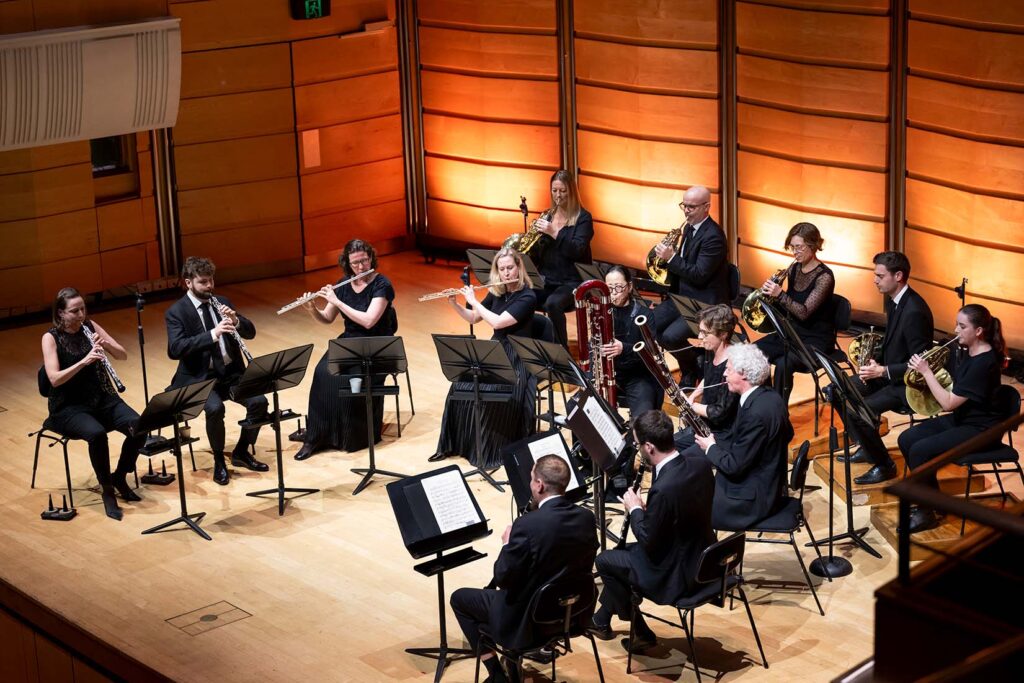
This short one hour concert in the Recital Hall featured works all written in the 1880s and performed by members of the Sydney Symphony Orchestra woodwind and horn sections and, in the case of the Dvořák Serenade, a couple of lower strings too.
Richard Strauss wrote the Serenade when he was only 17 and already showed a good understanding of the tonal blends of wind instruments. His precocious knowledge of instrumentation, combined with the experience and expertise in ensemble playing of the SSO musicians, rendered a satisfying blend of sonorities. While clearly rooted in the tradition of Mozart and early Beethoven, Strauss expands the colour possibilities well beyond those forebears. If anything he has a tendency towards the darker side, by having the instruments often playing all at once, and playing towards the middle and lower reaches of their respective ranges. His father was a horn player so Strauss understood the instrument well. He not only uses the horn as the conventional harmonic filler, but often gives them substantive melodic content. Quite musically mature for a teenager.

The Suite in B flat is basically for the same configuration of instruments; two each of flutes, oboes, clarinets and bassoons, a contrabassoon and 4 or 5 horns. Despite only having been written 3 years later (ignore the earlier opus number!), Strauss is here striving for a more orchestral approach. It is not merely a divertimento in the early classical style, but it is now influenced by the symphonies of Beethoven and early Brahms. Melodic fragments are passed between the instruments and themes are developed progressively. The work is a study in form and orchestration. Needless to say all the ensemble is at home with this style of repertoire and fully committed, but singled out for their particular expressiveness and enthusiasm are Shefali Pryor and Callum Hogan on oboes, and Olli Leppäniemi and Alexander Morris on clarinets.
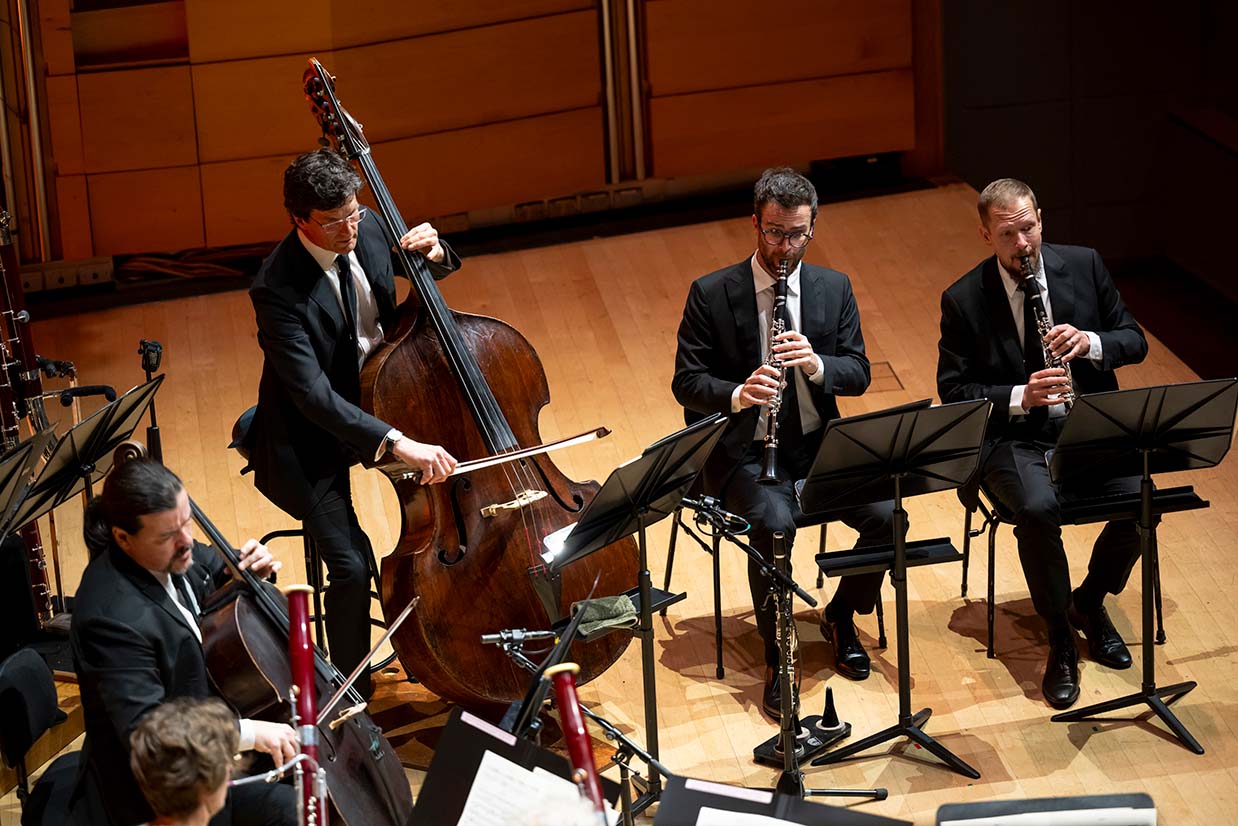
The Dvořák Serenade is also in the four-movement classical style of a divertimento for winds, but he adds a cello and double bass. Simon Cobcroft and Alexander Henerly matched the enthusiasm and musicality of the aforementioned oboes and clarinets, expanding the bass with a more orchestral sonority. As is often the case with Dvořák, this work is influenced by Czech folk music. The emphasis is on the melodic rather than the contrapuntal elements so strong in the Strauss Suite. Particularly enjoyable was the 3rd movement, the Andante con moto. The musicians looked quite serious but the scherzo was bursting with musical humour and delight. To quote Woody Alan, “It is the most fun I have had without laughing”, although in that instance he was talking about sex… At any rate audience responded most warmly to the Dvořák.
Presenting a program of three short works, all from the same period and with the same instrumental configuration made for an easy-to-take concert and it gave the winds of the orchestra their day in the sun, without that wall of strings to obscure them from the audience. It was a “diverting” concert.