The Tallis Scholars | Australian Tour
5 October, 2025, Melbourne Recital Hall, VIC
The Occasion
Sunday, October 5th, 5pm in Melbourne. The day after the NRL Final, with Annie and MJ drawing crowds elsewhere, and Yom Kippur just passed. Spring was returning, softening the edges of winter. At the Melbourne Recital Centre, though, the calendar shifted back five centuries. This was not just a concert, but a gentle act of time travel, reminding us that our busy “now” is but a fleeting moment against the vast sweep of history.
The Venue
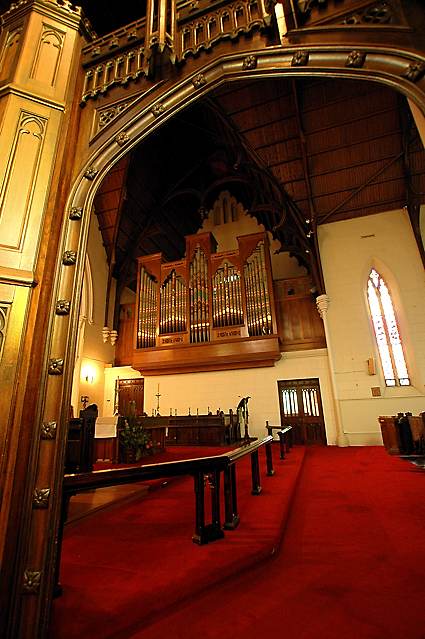
Elisabeth Murdoch Hall is one of Melbourne’s treasures: a luminous, shoebox-shaped space of hoop pine and golden warmth. Its acoustics are among the finest in the world, the entire hall resting on steel springs, suspended against the city’s hum. Inside, every detail — timber panels, sculpted surfaces, generous foyers — prepares the listener for immersion. It is a room that makes silence profound, and music radiant.
The Performers
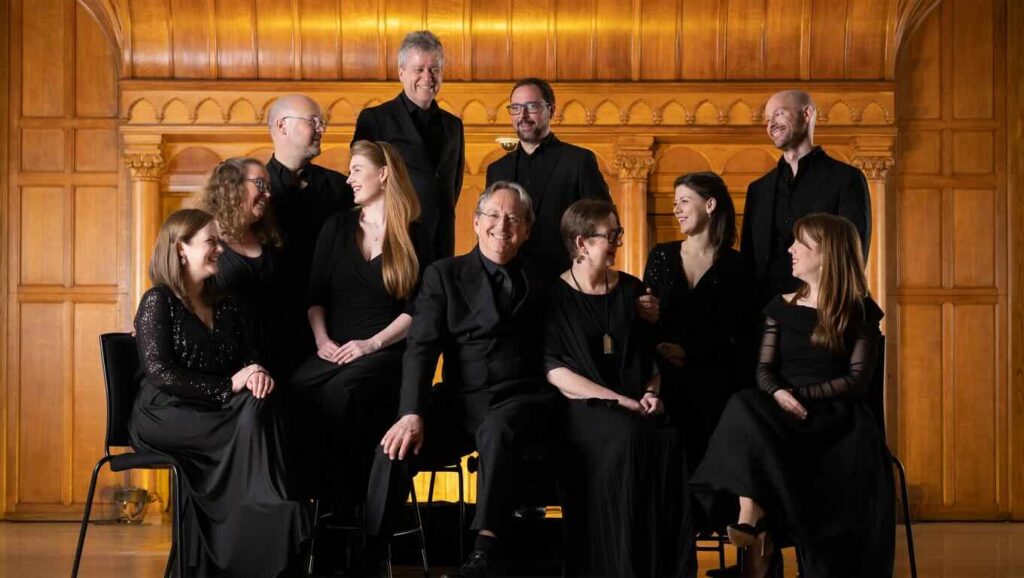
Founded in 1973 by Peter Phillips, The Tallis Scholars remain the gold standard of Renaissance choral performance. With a core of ten singers, their luminous blend and precision have redefined how the world hears sacred polyphony. Over five decades, they have given more than 1,800 concerts, released over 60 acclaimed recordings on their Gimell label, and earned honours including induction into the Gramophone Hall of Fame. Celebrating their 50th anniversary in 2023, the ensemble’s legacy continues to inspire choirs worldwide.
The Program
Central to the evening was Tomás Luis de Victoria’s Requiem for the Dowager Empress Maria, composed in 1603. Written at the end of his life, it is both a farewell and a culmination—music of luminous serenity, touched with sorrow yet radiant with faith. Victoria himself, priest and composer, stands beside Palestrina and Lassus as one of the Renaissance’s supreme masters, his sacred works prized for their intensity and spiritual depth.
The Music in Context
The Renaissance was a flowering of complexity and clarity: polyphonic lines weaving voices into architecture, Masses and motets carrying both grandeur and intimacy. From Josquin to Byrd, from Tallis to Palestrina, the era’s music embodies balance, devotion and humanist grace. To hear it live is to step into the sound world of cathedrals, courts and chapels — where art sought to echo eternity.
The Outlier — Nico Muhly (very much alive!)
Muhly’s, A Glorious Creature is an ecstatic, luminous setting of a passage from Thomas Traherne’s Christian Ethicks. The text’s innate musicality inspired contrapuntal and unison writing. It opens with four vast crescendi from middle C on “the sun,” followed by an elusive, chromatic line evoking “every grain of dust, every sand, every spire of grass.” Later, an intimate quartet sings “Yet the Sun is but a little spark…” in rhythmic unison before being overtaken by earlier material on “the soul.” The piece culminates in layered canons and fades away — a radiant, fiery contrast to the composer’s earlier, more somber works.
The Performance
Most of the time it was a ten-piece ensemble, although, as in the second item, there were eight performers on stage. They were clad in black and assembled from stage left to stage right — two basses, two tenors, three altos, and three sopranos. The chief conductor (and founder) stood aloft his vessel, and the sounds that were made by this dectet certainly filled the auditorium without the need for greater vocal resources. This was not so much a choir as a thoroughbred champion comprised of its constituent parts.
The program was done as advertised, with a wonderful Henry Purcell O Lord, Hear My Prayer performed as a fitting encore. From the first hushed entries, The Tallis Scholars enveloped the hall in sound that seemed less sung than suspended in air. Every phrase of Victoria’s Requiem felt at once intimate and monumental, like light refracted through stained glass.
From a subjective standpoint, a different auditory attention is required to appreciate early liturgical music. The textures and broad aural soundscapes are beautiful, yet we must allow ourselves to nestle comfortably into this environment and not seek melody, structure, or conventional signposts from the Baroque period onward. Once submission is granted, and we flow with the series of canons, sequences, cascades, suspended fourths, accented passing notes, perfect and plagal cadences — and, of course, ending with the obligatory ‘Tierce de Picardie’ – spiritual elevation ensues.