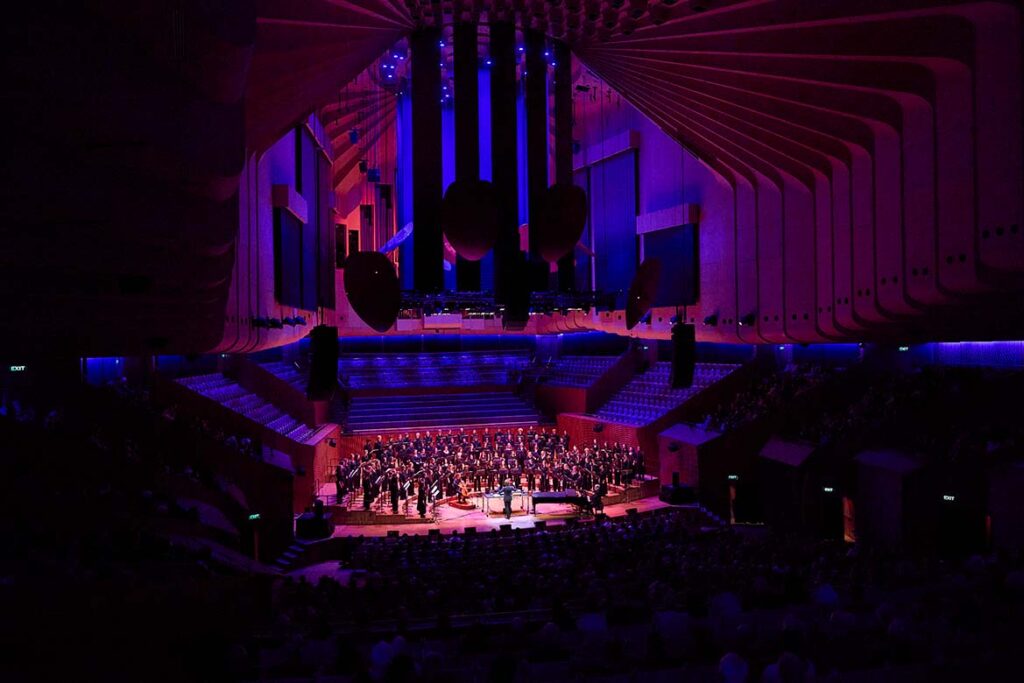
VOX conducted by Eric Whitacre | Eternity in an Hour
27 June 2025, Sydney Opera House Concert Hall , NSW
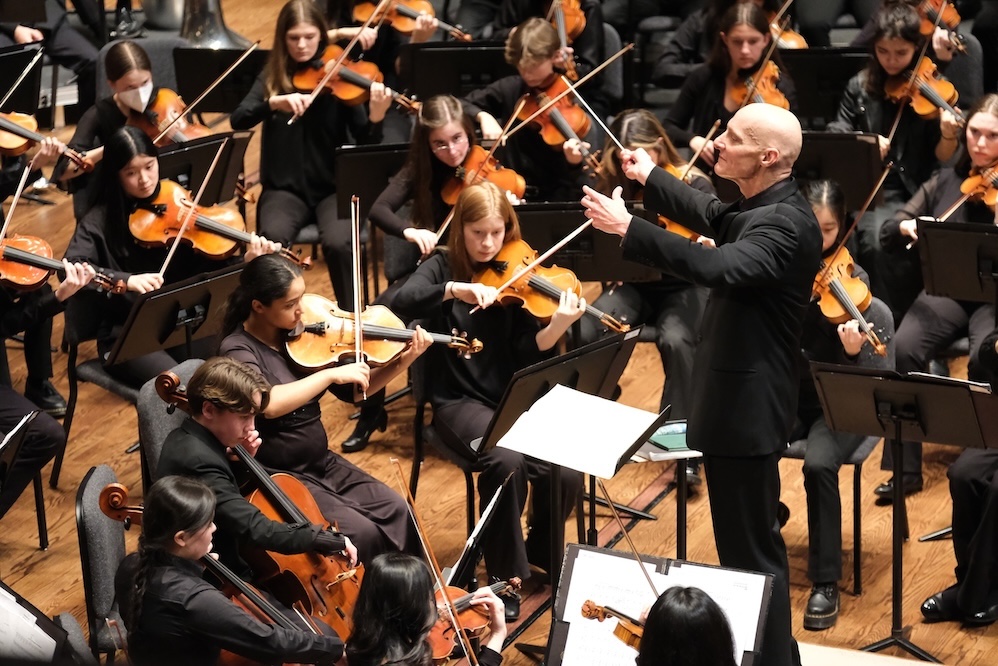
Eric Whitacre doesn’t just conduct music. He sculpts it, shaping sound like putty in his hands. Watching him lead Sydney Philharmonia Choir’s 150 voice strong youth ensemble VOX at the Opera House was an experience that was as visual as it was sonic. And while the major work, Eternity in an Hour, came after interval, the first half of the program was already an astonishing piece of choral theatre.
We opened in near darkness. Tarimi Nulay – Long time living here, the choir’s familiar Acknowledgement of Country song has never sounded better. It was sung without conductor as the lights slowly rose and the singers found their voices. Hauntingly effective, it set the tone for an evening where breath, language and landscape were deeply entwined.
Whitacre’s Lux Aurumque followed, with its signature shimmer and warmth. It’s a piece we’ve come to associate with the birth of the Virtual Choir movement, but in the hands (literally) of the composer himself, it became much more intimate. The clarity of the soprano lines was ethereal, their purity carrying the “light and gold” of the text in radiant waves.
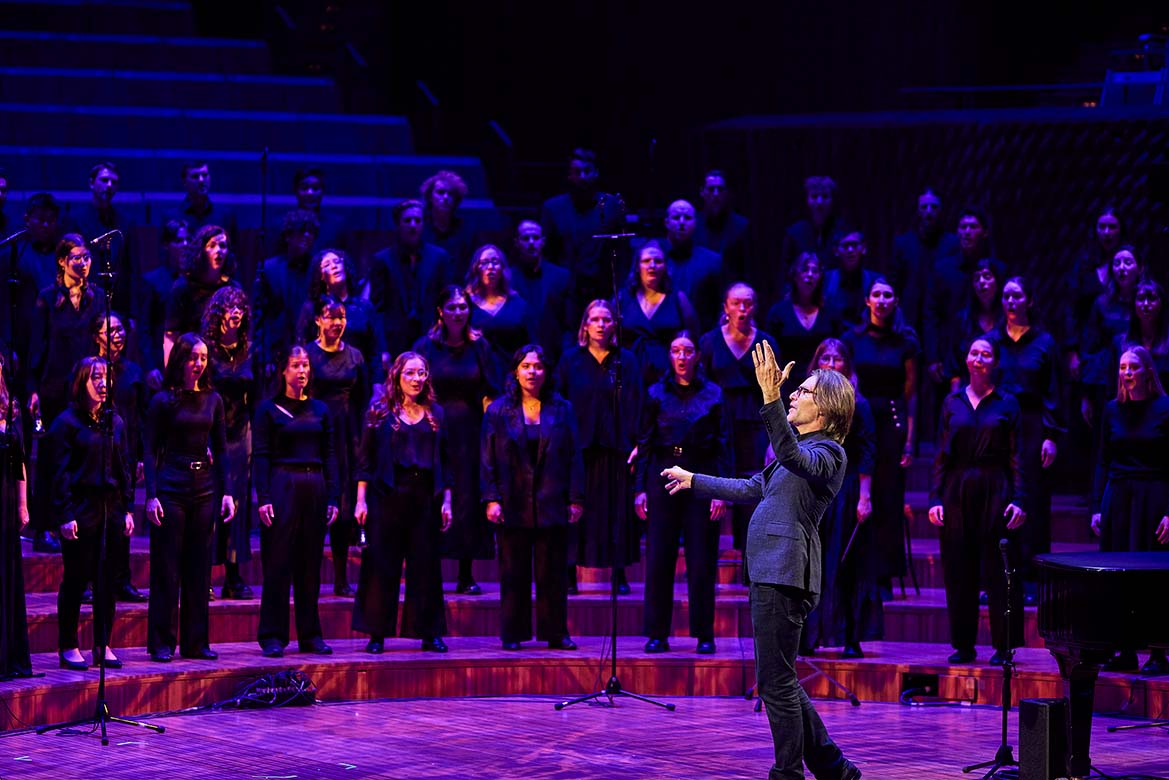
Australian composer Sarah Hopkins’ Past Life Melodies, arguably one of the most widely performed Australian choral works globally, is curiously underperformed in its country of origin. This was a deeply resonant inclusion in the program. It’s a piece that reaches deep into the mystery of the Australian bush, using overtone singing and earthy drones to conjure up something ancient. Watching Whitacre conduct a work not his own was a new experience for me, he conducts with his whole body as if drawing sound from space itself.
Then came Come Sweet Death, reimagined by Edwin London and arranged by Rhonda Sandberg. A Bach chorale stretched and smeared like a hand across a wet oil painting – Whitacre’s own words, and a perfect image for what unfolded. VOX handled this slow, dramatic unravelling with quiet power. The subtle “choralography” added visual depth without being gimmicky. At one point Whitacre stepped aside, letting VOX take it home, each singer seemingly walking their own journey toward the peaceful, inevitable end. Quiet, poignant, beautiful.
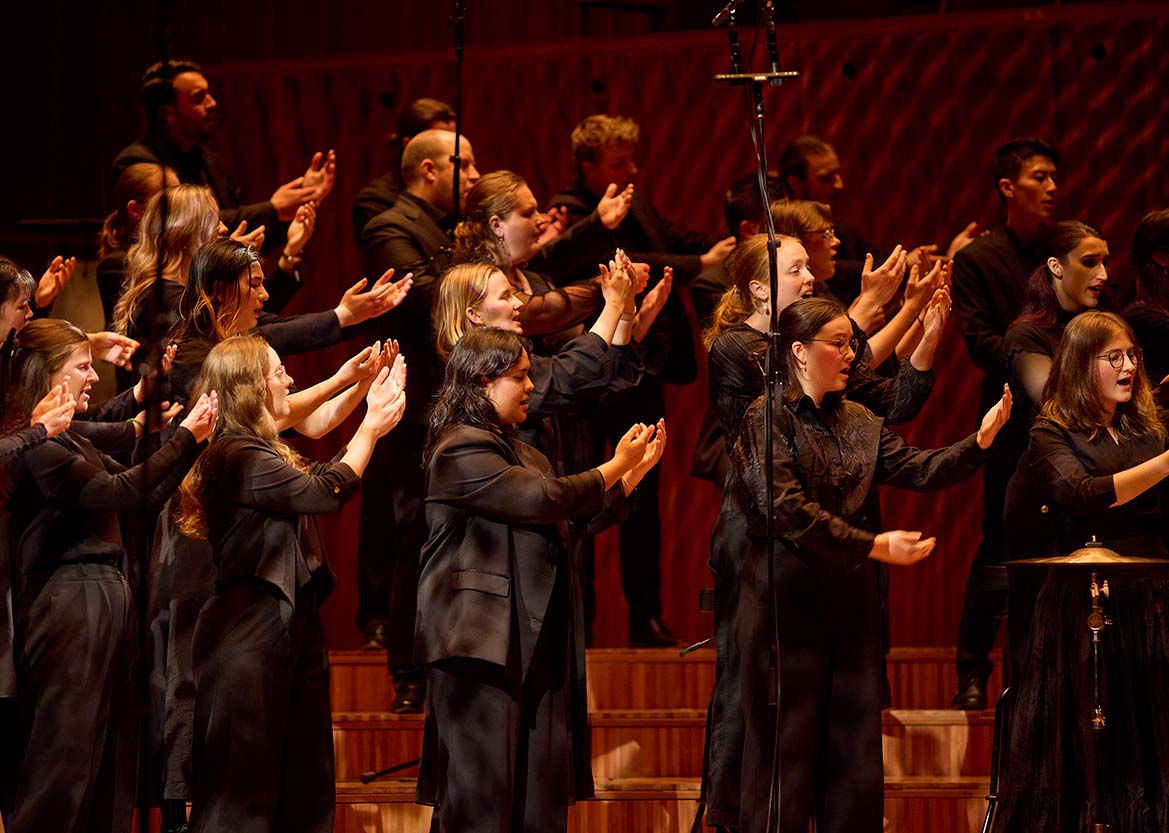
The first half closed with Cloudburst (1992), Whitacre’s early masterpiece based on an Octavio Paz poem. A storm imagined in sound, it featured chimes, handbells, finger clicks and body percussion – performed not just by the choir, but by the audience too. Invited to join in, we became part of the weather system exploding around us. The effect was immersive and theatrical, the hall electric with rhythm and hum. Tim Cunniffe’s piano glistened beneath it all, and the booming thunderous percussion completed a soundscape full of elemental energy. What a way to end the first half!
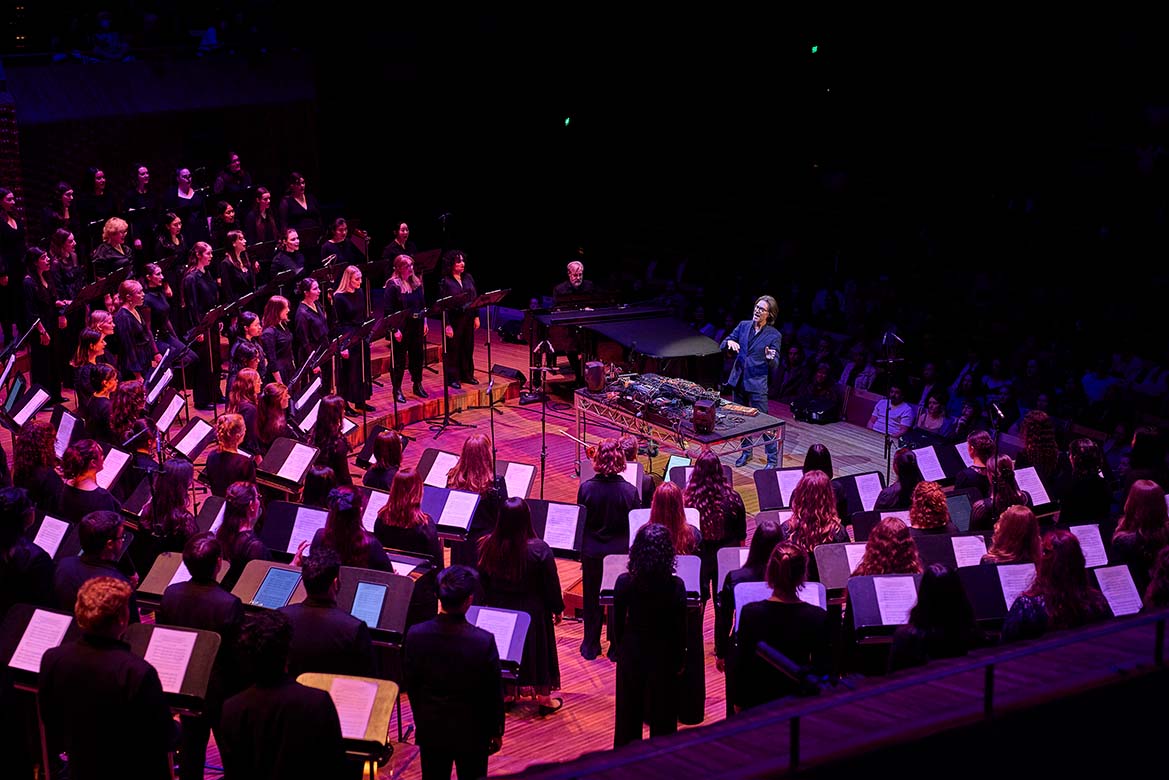
After interval, the stage was transformed. A sea of music stands surrounded Whitacre, who stood at the helm behind his synth rig. In a gesture both futuristic and strangely Baroque, he imagined himself, as he explained in the pre-concert talk, “like a harpsichordist leading from the keyboard… but with electronics.” That image was oddly fitting. This was conducting as real-time composition, and the atmosphere definitely shifted from theatrical spectacle to meditative immersion. The stage, once alive with movement, stilled.
Eternity in an Hour unfolds over eight movements, each revealing a fragment of Blake’s famous lines from Auguries of Innocence, you know the one: “To see a world in a grain of sand…” Over an hour, it moves through drones, harmonics, loops and gentle electronics to finally deliver the full text. The pacing, marked by occasional crotales, made time feel both suspended and multi-dimensional. As Whitacre put it, “the idea is to lose expectation.” The result is a kind of sonic meditation – minimalist in form, yet expansive in impact. Julian Smiles’ highly expressive cello added soul, and Cunniffe’s piano lines, fed through synth effects, became unrecognisable in timbre but central in atmosphere.
‘It’s about taking a single moment, or something as insignificant as a grain of sand, and seeing within it an entire universe,’
Whitacre described the use of a technique called “granular synthesis” as essential to capturing Blake’s vision. “It’s the only way to express this,” he said. And that focus on grain, both from a poetic and sonic perspective, allowed the piece to feel both vast and intimate all at once. With each tiny gesture something kind of cosmic could open up and it was captivating to listen to it all unfold.
VOX were superb. They weren’t just performing this piece, they were part of its evolution. As chorus master Elizabeth Scott noted, the work has changed during rehearsal; VOX’s flexibility and youth brought freshness. “I love this group,” glowed Whitacre pre-concert, “This choir is so warm and flexible and fun and joyous… this is the first time it’s felt as fresh as I imagined it – there’s a kind of sparkle.”
This wasn’t a premiere in the traditional sense, technically, it was the third performance, but it felt like the work was still becoming. And perhaps that’s the point. As Whitacre lets go of his famously “hyper-meticulous” style and steps into the unpredictable world of live electronics, he’s also letting go of form. He’s making space. For the music, for the singers, and for us.
Whitacre invited us not just to listen but to float. And we did… with pleasure.
Photo Credit: Keith Saunders