Canberra International Music Festival | Tissages du temps
May 2, 2026, Snow Concert Hall, Canberra, ACT
There is something particularly satisfying about a program that doesn’t simply present music across time, but actively reimagines it. Tissages du temps (“weavings of time”) did exactly that, tracing a distinctly French lineage across some 300 years, not through historical reconstruction, but through transformation. Baroque gestures refracted through brass, Ravel’s massive orchestral shimmer distilled into piano, and finally, that same harmonic world dismantled and rebuilt at a microscopic level.
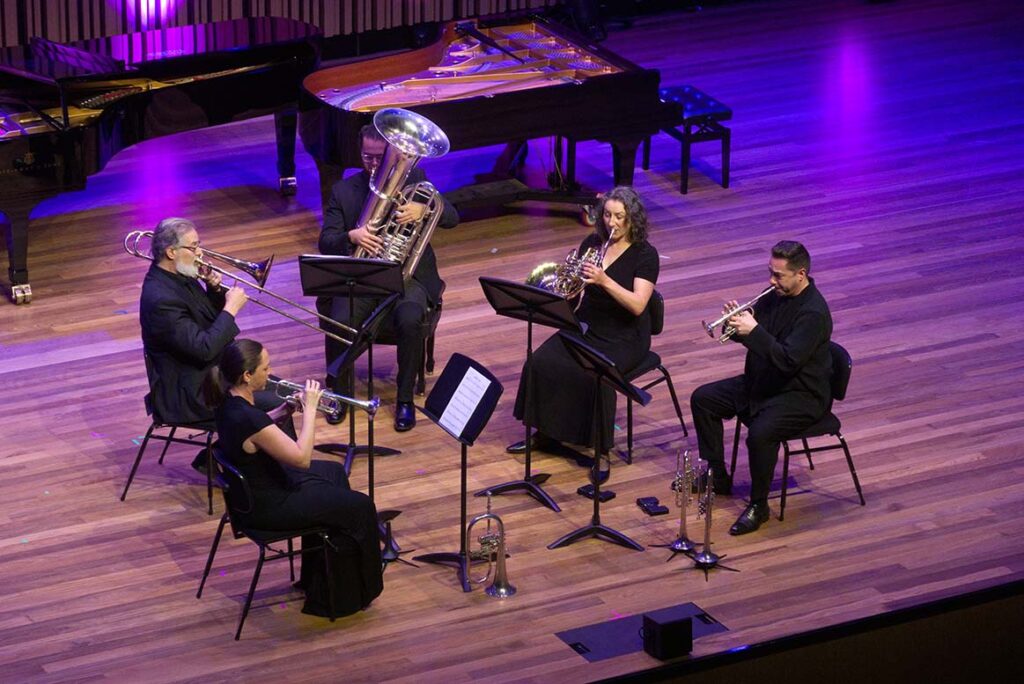
The opening set from Lyrebird Brass placed us firmly in a courtly imagination. In Charpentier’s Te Deum Prelude in D Major was all regal fanfares ringing out with ceremony and conjuring images of royal entrances and promenades. It was joyous, theatrical, and full of occasion. Couperin’s Les Barricades Mystérieuses offered something more unexpected. Reimagined for brass, what may once have been a more intimate texture unfolded with surprising gentleness, almost lullaby-like at first, before expanding into something broader and more resonant. Watching a brass ensemble up close added another layer: the physical preparation of the instruments, the clearing of valves, the breath, all became part of the performance.
Jean-Philippe Rameau’s Dardanus Suite brought heightened theatricality. Fast, high trumpet lines danced above an agile tuba, how great it was to see an instrument rarely seen so closely in full action. The overture carried unmistakable French grandeur, while a measured triple-time Air Vie suggested a grand waltz – long dresses sweeping the floor, gestures poised and controlled. The final Air Vivement (lively) lifted the energy again, anchored by a steady bass line and a beautifully blended ensemble sound. The finely etched gestures of the french clavecin tradition took on a new life in brass: less salon, more spectacle, very wonderful.
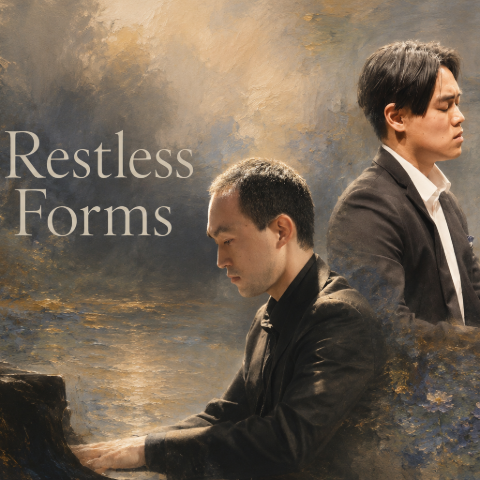
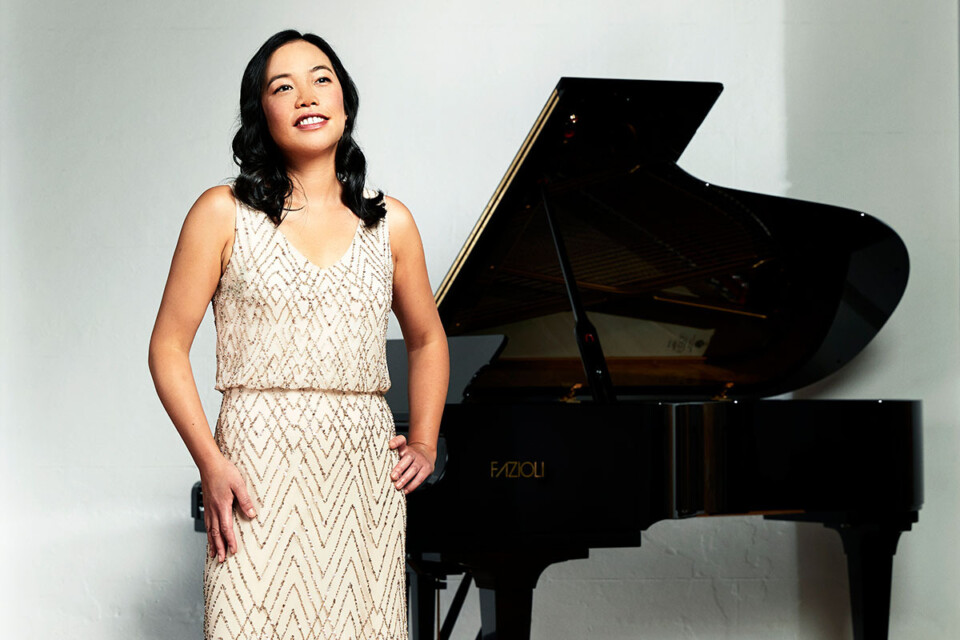
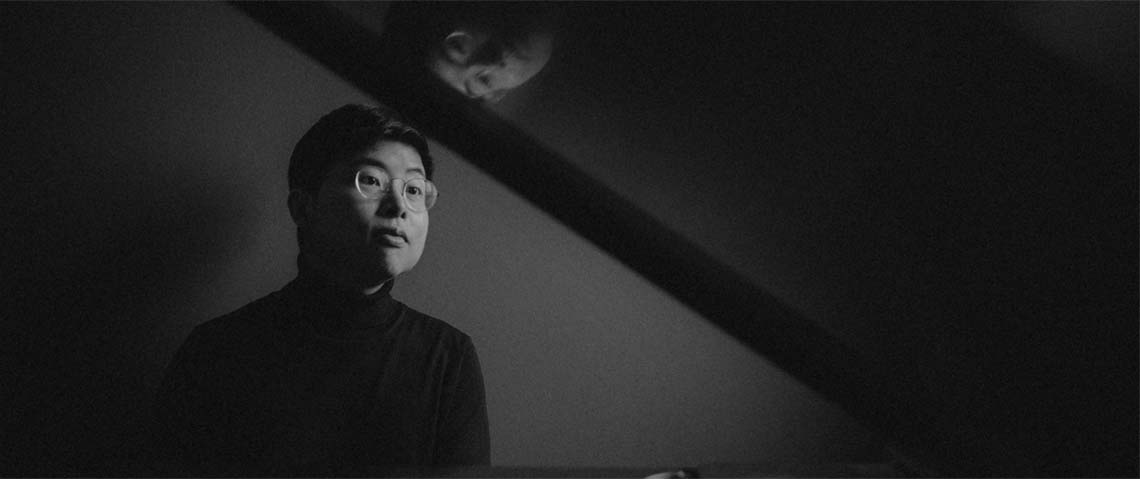
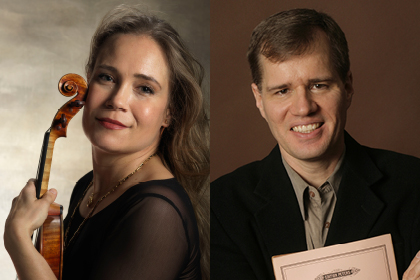
Then came Maurice Ravel’s Daphnis et Chloé, Suite No. 2, in the piano duet arrangement by Gryaznov, performed by Kristian Chong and Timothy Young. For anyone who knows this work, the orchestral original is a thing of luminous wonder. And yet here, on two pianos, that world was weirdly undiminished.
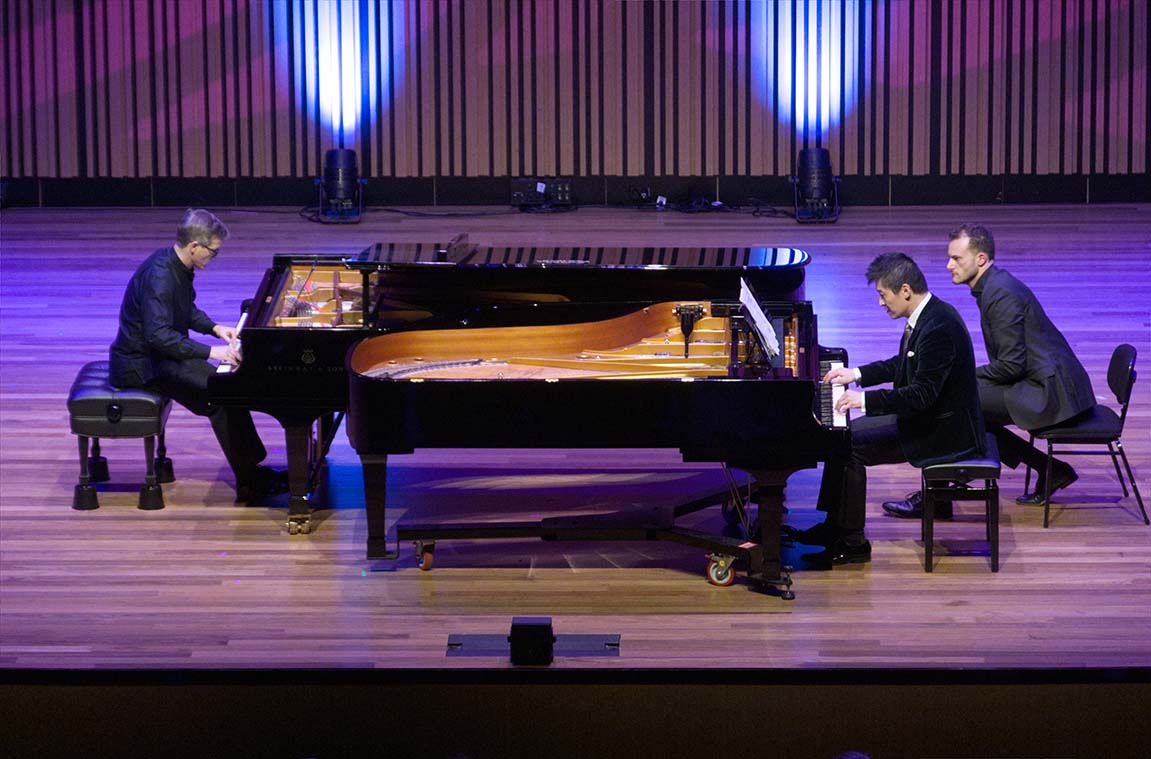
The opening Lever du jour (daybreak) unfolded with extraordinary sensitivity. Somehow, through the percussive nature of the piano, we still heard birdsong, the shimmer of light, the sense of nature awakening. Cascades of notes suggested harp glissandi, woodwind arabesques, the gradual warming of the air. It was surprisingly immersive. The Pantomime that followed brought intimacy of the lovers’ first embrace, hinted at through soft gestures and lush chords. Then the Danse general burst forth in a deliriously exciting rush, driving to a final, emphatic conclusion. Who would have thought that two pianos could create something like this? The audience responded with audible delight, even the occasional whoop!
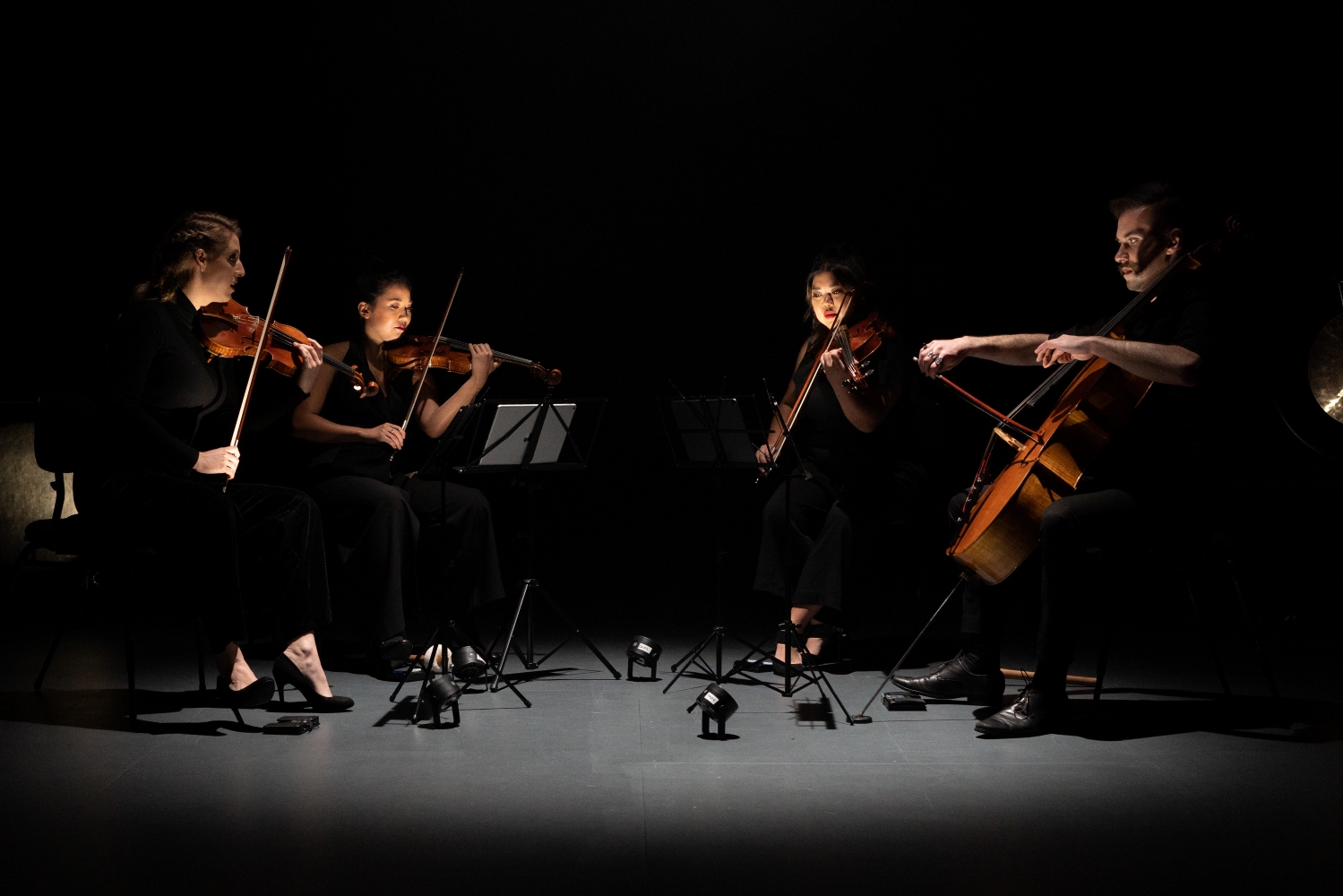
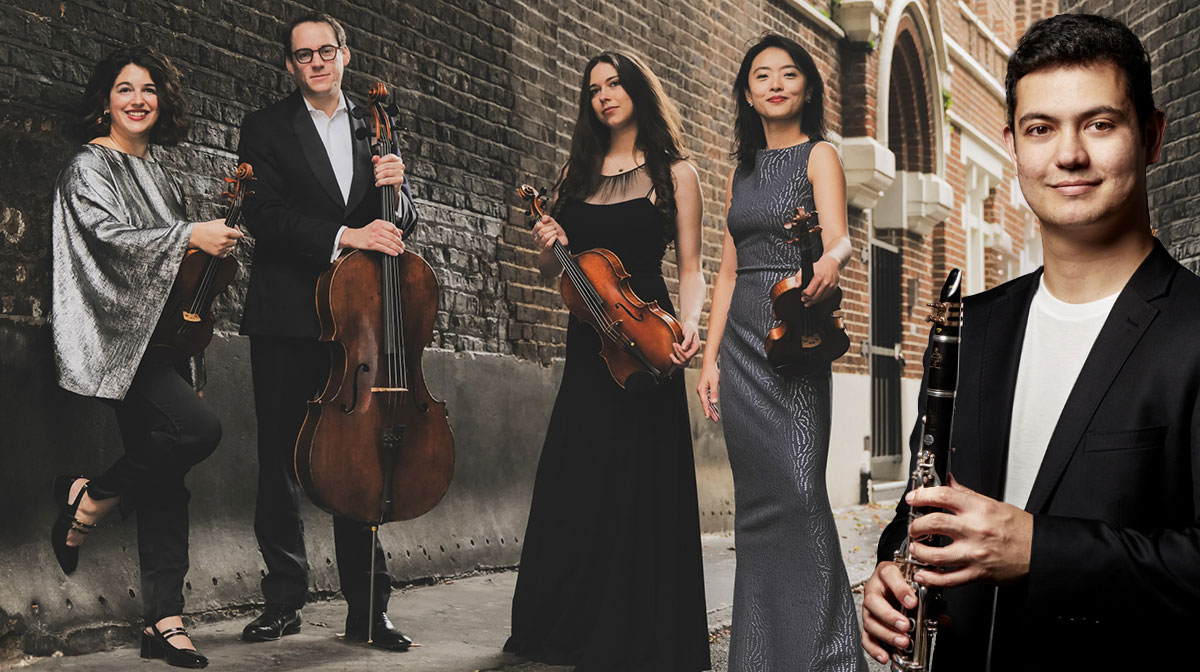
From there, Ensemble Contretemps leapt into Gérard Grisey’s Vortex Temporum. Grisey, is the foremost proponent of Spectralism, a compositional approach in which music is built from the acoustic properties of sound itself. He has spoken of deriving the harmonic material of this work from a chord in Ravel’s Daphnis et Chloé, and one could indeed hear echoes of that familiar arpeggiated world in the opening flute line. But this wasn’t a quotation. It was as though the harmony had been turned inside out and analysed, stretched, then reassembled.
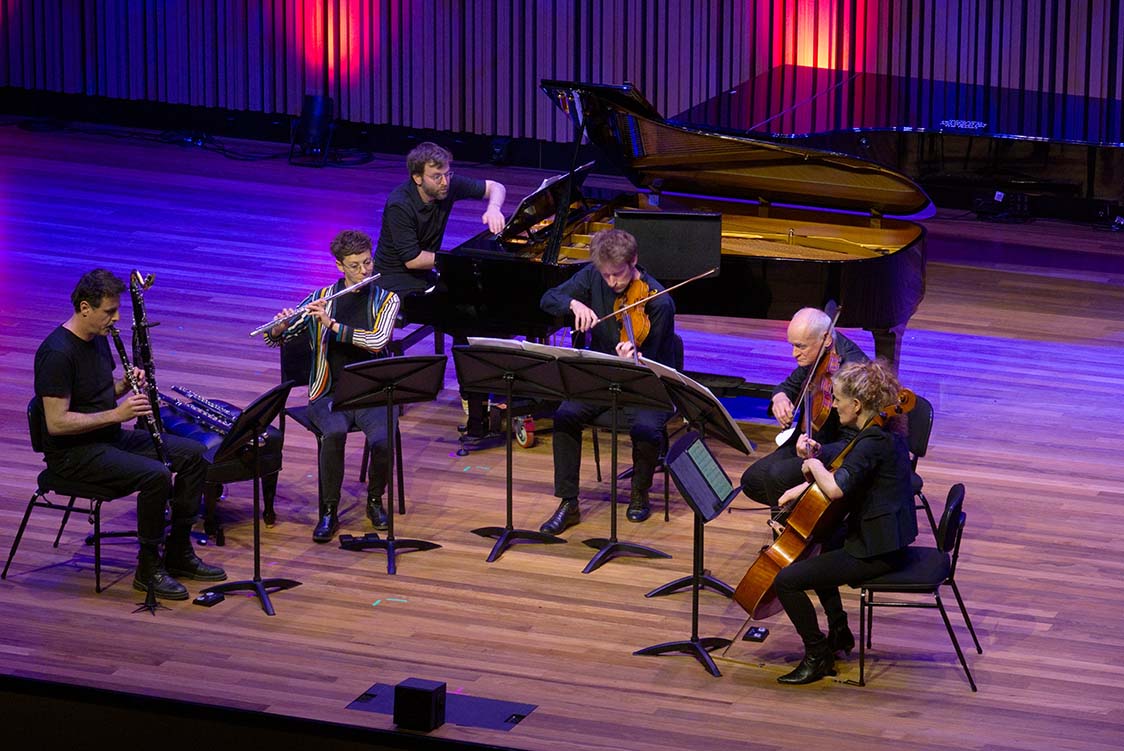
What followed was illuminating. The strings, heavily muted, attacked their instruments with force, producing a sound far more restrained than the physical gesture suggested. There was energy everywhere, but not always volume — a sense of pressure held within the sound. At times only these muted strings were heard, their timbre flattened and strange, while the piano throbbed beneath with low, insistent pulses.
With little in the way of traditional melody to guide them, the players were visibly tracking time, holding the structure together through their sheer musical precision. It made the act of performance part of the overall audience experience. A piano solo emerged that felt almost chaotic in its physicality, yet perfectly aligned with the sonic result. It was so intense at one point it seemed the Steinway might disintegrate or fall through the stage!
Then the world opened out. A final crashing piano chord hung in the air for literally seconds, and from it emerged the most delicate and exquisite harmonics — violin and viola barely audible, the cello taking up the thread, the piano spiralling slowly downward. Time… was… stretched. A bass flute and bass clarinet coloured the texture with deep, breathy tones, while gentle pizzicato in the cello bubbled up through the sound. Here we experienced “whale time” — vast, expanded, suspended. Sound moved slowly, almost imperceptibly, and instruments began to lose their individual identities, blending into a single, shifting spectrum.
The contrast was striking when the music snapped into a more condensed, volatile state of rapid, high gestures, unmuted strings and sharp piano attacks. At moments it felt almost electronic despite being entirely acoustic. The performers pushed their instruments beyond the limits of our expectation. Breath sounds replaced pitch, bows crackled against strings and the piano was reached inside of to alter its resonance. It was extraordinary to watch, and to hear.
Perhaps not everyone found it comfortable listening. But that, too, felt part of the experience. It was certainly immersive and deeply compelling.
Across the program, French music was not simply presented, but reimagined: from the finely etched gestures of the Baroque, through Ravel’s luminous expansion of colour, to Grisey’s exploration of sound itself. It was a bold piece of programming, and a reminder of what festivals like the Canberra International Music Festival do so well — placing familiar and unfamiliar worlds side by side, and inviting us to listen differently. A program like this doesn’t happen by accident. All credit to Eugene Ughetti for drawing us into such a mind-bending exploration of sound and time.
Photo credit: Peter Hislop
READ OTHER REVIEWS OF CIMF on ClassikON >>
Pianos & Percussion: Festival Finale >
Luminescence and the Machine >